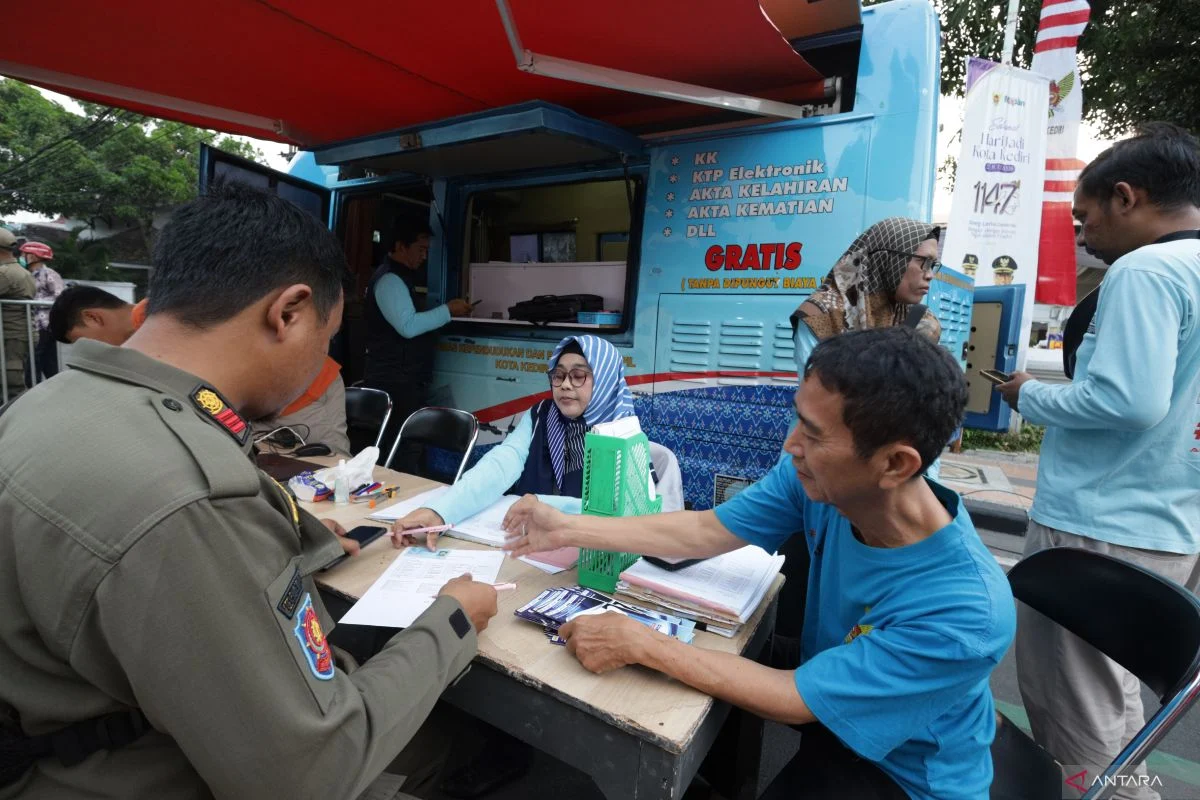
The Indonesian Ministry of Home Affairs, through the Directorate General of Population and Civil Registration (Dukcapil), has officially implemented a streamlined policy that eliminates the requirement for introductory letters from Neighborhood Associations (RT) and Community Associations (RW) for a wide range of essential population administration services. This strategic move is designed to accelerate public service delivery, reduce bureaucratic hurdles, and empower citizens to access their legal identity documents with greater ease. By removing these traditional gatekeeping layers, the government aims to create a more direct, transparent, and efficient relationship between the state and its citizens, ensuring that administrative processes are no longer hindered by redundant local-level permits.
Under the new regulatory framework, the majority of civil registration tasks can now be completed directly at the local Population and Civil Registration Office (Disdukcapil) or through authorized digital platforms. The Ministry has clarified that while the RT/RW structure remains a vital part of Indonesia’s social fabric, their formal role as a mandatory prerequisite for basic document processing has been significantly curtailed. This policy shift is rooted in the government’s commitment to the "Dukcapil Go Digital" initiative, which seeks to modernize the nation’s identity management system and align it with international standards of efficiency.
Scope of the Simplified Documentation Process
The elimination of the RT/RW introductory letter requirement applies to the most frequently requested documents by the Indonesian public. This change covers several critical areas of civil administration, ensuring that the lifecycle of a citizen’s identity—from birth to death—is managed with minimal friction.
1. Electronic Identity Cards (KTP-el)
For citizens seeking to record their biometrics for the first time or those needing to update their data on an existing Electronic Identity Card (KTP-el), the requirement for a letter from the RT/RW has been abolished. Applicants can now proceed directly to their local Disdukcapil office or sub-district (Kecamatan) service point. This applies to changes in marital status, educational updates, or address modifications within the same district. The primary requirement is now simply the presentation of the existing Family Card (KK) or other supporting documents that prove the validity of the requested data change.
2. Family Cards (KK)
The Family Card, which serves as the foundational document for almost all social services in Indonesia, can now be issued or revised without neighborhood-level intervention. Whether a family is adding a new member, removing a member due to marriage or relocation, or correcting typographical errors in names or birthdates, the process is handled directly by civil registrars. This simplification is particularly beneficial for young families and those living in urban centers where coordinating with local neighborhood heads can often be time-consuming.
3. Domicile Transfer and Relocation
One of the most significant changes involves the process of moving one’s legal residence. Previously, moving from one city to another required a "surat pindah" (transfer letter) that necessitated signatures from the RT, RW, and the Village/Kelurahan head. Under the current regulations, specifically Presidential Regulation Number 96 of 2018 and Minister of Home Affairs Regulation Number 108 of 2019, citizens only need to bring their Family Card to the Disdukcapil office of their current residence to initiate the transfer. The system then electronically updates the data, facilitating a seamless transition to the new domicile without the need for physical paperwork from the local neighborhood leadership.
4. Birth Certificates
The government has prioritized the registration of every child born in Indonesia to ensure they receive a National Identity Number (NIK) immediately. For parents whose data is already recorded in the national database, obtaining a birth certificate no longer requires an RT/RW letter. The essential documents are now limited to the birth certificate from the hospital or midwife, the parents’ marriage certificate, and the Family Card. This policy supports the national goal of achieving 100% birth certificate coverage, a key metric in the protection of children’s rights.
5. Death Certificates
In the event of a death, the family can process the death certificate directly through Disdukcapil. This document is crucial for managing inheritance, insurance claims, and updating the national population database to prevent data bloating. By removing the need for local introductory letters, the government acknowledges the need for a dignified and efficient process for grieving families.
6. Child Identity Cards (KIA)
The Child Identity Card (KIA), which serves as a form of identification for citizens under the age of 17, is also part of the simplified regime. Parents can apply for the KIA by presenting the child’s birth certificate and the family’s KK. Since the KIA is linked to the existing database, the involvement of RT/RW officials is no longer deemed necessary for its issuance.
Legal Framework and Historical Context
The shift toward a more streamlined administration is not an overnight occurrence but the result of a multi-year legislative evolution. The cornerstone of this reform is Presidential Regulation (Perpres) Number 96 of 2018 concerning Requirements and Procedures for Population Registration and Civil Registration. This was further operationalized by Minister of Home Affairs Regulation (Permendagri) Number 108 of 2019.
Historically, the RT/RW system was utilized as a security and monitoring mechanism. During previous decades, every movement of a citizen was closely tracked through these local administrative tiers. While this provided a granular level of social control, it also created significant bottlenecks and opportunities for "pungli" (illegal levies). As Indonesia moved toward a more democratic and digitally integrated society, the need for such micro-level approvals for basic identity documents became redundant. The Centralized Population Information System (SIAK Terpusat) now allows the Ministry to verify a citizen’s data against a national master file, rendering local physical verification unnecessary for those already in the system.
The Role of Digital Innovation: The Case of "Alpukat Betawi"
The simplification of physical requirements has been bolstered by the rapid adoption of digital platforms. In the Special Capital Region of Jakarta, the provincial government has introduced the "Alpukat Betawi" application (Akses Langsung Pelayanan Dokumen Kependudukan Cepat dan Akurat). This mobile and web-based platform allows residents to upload digital copies of their documents, schedule appointments, or even request home delivery of completed certificates.
Such digital ecosystems have effectively replaced the traditional role of the RT/RW in the administrative chain. When a citizen uses an app to update their data, the verification is performed by civil service officers using encrypted databases rather than neighborhood heads. This model is being replicated across various regencies (Kabupaten) and cities (Kota) throughout Indonesia, with the aim of creating a unified digital identity experience for all 278 million citizens.
Exceptions to the Rule: When RT/RW Letters Are Still Required
Despite the broad push for simplification, the Ministry of Home Affairs maintains that the RT/RW structure still plays a role in specific, sensitive scenarios. The introductory letter is still mandatory for:
- New Registrations: Individuals who have never been recorded in the national population database and do not have a National Identity Number (NIK) must obtain local verification to prove their residency and identity.
- Data Discrepancies: In cases where there is a significant conflict between the data provided by an applicant and the records held in the national database, local verification may be requested to confirm the truth of the situation.
- Specific Local Ordinances: While national law supersedes local regulations, some regions still utilize the RT/RW for social mapping and the distribution of localized social assistance, which may require separate neighborhood-level documentation.
Analysis of Socio-Economic Implications
The removal of these bureaucratic layers carries profound implications for Indonesia’s socio-economic landscape. First, it directly combats the culture of illegal fees. By minimizing the number of "desks" a citizen must visit, the government reduces the points of contact where unauthorized payments might be solicited. This is a crucial step in Indonesia’s broader anti-corruption agenda.
Second, the policy promotes social inclusivity. Vulnerable populations, including the urban poor and migrant workers who may not have strong relationships with local neighborhood heads, often found the previous system intimidating or exclusionary. A direct-to-Disdukcapil model ensures that every citizen, regardless of their local social standing, has equal access to the state’s administrative services.
Third, the accuracy of the national database is improved. When the process is easy, citizens are more likely to report changes in their status—such as births, deaths, or moves. This results in "cleaner" data, which is essential for the government to plan infrastructure, healthcare, and education services effectively. It also ensures that social safety nets, such as subsidized rice (Raskin) or direct cash transfers (BLT), reach the intended recipients based on real-time data.
Reactions from Stakeholders and the Path Forward
Public reaction to these changes has been largely positive, with many praising the government for "cutting the red tape." However, some neighborhood heads have expressed concerns that their role in social monitoring is being diminished. In response, the Ministry of Home Affairs has emphasized that the RT/RW should pivot their focus toward community welfare, security, and social cohesion rather than administrative paperwork.
The Ombudsman of the Republic of Indonesia, which monitors public service delivery, has signaled its support for the policy but has also warned that Disdukcapil offices must be prepared for the increased foot traffic and digital load. The Ombudsman has urged the government to ensure that the removal of RT/RW letters does not lead to "new bottlenecks" at the sub-district level.
Looking ahead, the Indonesian government is moving toward the full implementation of the Digital Identity (Identitas Kependudukan Digital or IKD). The IKD will eventually reside on a citizen’s smartphone, serving as a virtual KTP, KK, and even a health insurance card. As this technology matures, the concept of "introductory letters" will likely become an artifact of the past, replaced by biometric authentication and blockchain-secured data exchanges.
The commitment of the Ministry of Home Affairs to simplifying population administration reflects a broader vision of a modern, efficient Indonesia. By trusting its digital systems and empowering its citizens to manage their own identities, the government is laying the groundwork for a more transparent and responsive civil service. The elimination of the RT/RW letter is more than just a procedural change; it is a significant milestone in the nation’s journey toward bureaucratic reform and digital transformation.