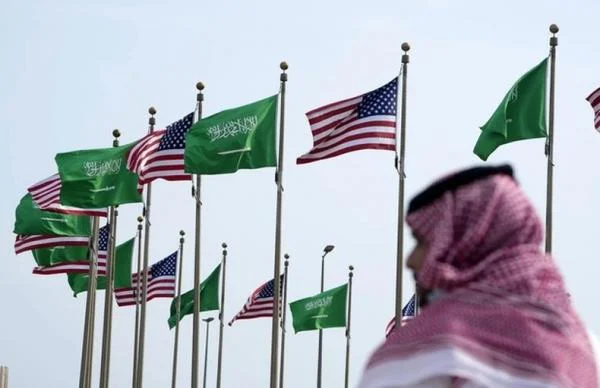
The landscape of Middle Eastern geopolitics has been significantly altered following the formalization of a civil nuclear cooperation agreement between the United States and the Kingdom of Saudi Arabia. Announced on Wednesday, July 22, 2026, by United States Secretary of Energy Chris Wright, the pact—widely known as a "Section 123 Agreement"—aims to provide Riyadh with the technical framework and American expertise necessary to develop a domestic civilian nuclear energy program. While the Biden administration and its successors have framed this as a milestone for energy diversification and regional stability, the announcement has ignited a firestorm of criticism within the Israeli political establishment. Lawmakers in Jerusalem argue that the deal represents a "strategic failure" that could inadvertently trigger a nuclear arms race in an already volatile region.
The agreement serves as a legal prerequisite for the transfer of nuclear material, equipment, and components from the United States to another nation. For Saudi Arabia, the deal is a cornerstone of its "Vision 2030" initiative, which seeks to reduce the Kingdom’s reliance on hydrocarbons and transition toward a more diversified energy portfolio. However, the core of the Israeli objection lies in the specific provisions regarding the nuclear fuel cycle—specifically, the potential for Saudi Arabia to enrich uranium on its own soil.
The Israeli Response: A Warning of Strategic Failure
While the top echelons of the Israeli government, including Prime Minister Benjamin Netanyahu, Defense Minister Israel Katz, and Foreign Minister Gideon Saar, have yet to release an official diplomatic communiqué, the silence from the Prime Minister’s Office has been filled by vocal opposition from other political figures. Former Prime Minister and prominent opposition leader Naftali Bennett issued a scathing critique of the development on Thursday, July 23, 2026.
"The nuclear agreement agreed upon with Saudi Arabia, apparently without the full prior knowledge or consent of the Israeli security establishment, constitutes a serious strategic failure that endangers our long-term security," Bennett stated in a briefing. He emphasized that by granting Saudi Arabia the potential to develop sensitive nuclear technologies, the United States may be opening a "Pandora’s box" that could eventually lead to military applications. Bennett and other critics argue that once a nation possesses the infrastructure for civilian enrichment, the "breakout time" to producing weapons-grade material is significantly shortened.
The sentiment within the Knesset reflects a deep-seated fear that the "qualitative military edge" (QME) that the United States is legally bound to maintain for Israel could be eroded. For decades, Israel has maintained a policy of "nuclear ambiguity" while working tirelessly to prevent any other regional power from acquiring nuclear capabilities—a doctrine often referred to as the "Begin Doctrine."
Understanding the Section 123 Agreement
A Section 123 Agreement is named after Section 123 of the U.S. Atomic Energy Act of 1954. It establishes the terms for significant nuclear exports and ensures that the receiving country adheres to specific non-proliferation standards. Typically, the United States seeks the "Gold Standard" in these agreements, which requires the partner nation to renounce the pursuit of uranium enrichment and plutonium reprocessing technologies.
In the case of the Saudi agreement, the specifics regarding enrichment have been a point of intense negotiation for years. Saudi officials, led by Crown Prince Mohammed bin Salman, have historically insisted on the right to enrich their own domestic uranium reserves rather than importing fuel rods from abroad. They argue that this is a matter of national sovereignty and energy security.
The 2026 agreement reportedly includes stringent oversight mechanisms and safeguards managed by the International Atomic Energy Agency (IAEA). However, Israeli security analysts remain skeptical. The fear is that any concession on domestic enrichment sets a precedent that other nations in the region—such as Turkey or Egypt—might seek to follow, effectively dismantling the non-proliferation regime in the Middle East.
Chronology of the US-Saudi Nuclear Negotiations
The road to the 2026 signing has been long and fraught with diplomatic hurdles. The timeline of these negotiations reflects the shifting priorities of Washington and Riyadh:
- 2017–2020: The Trump administration initiates early-stage discussions with Riyadh regarding nuclear cooperation as part of a broader strategy to counter Iranian influence and secure major commercial contracts for U.S. nuclear companies like Westinghouse.
- 2021–2023: The Biden administration initially approaches the deal with caution, citing human rights concerns and the need for the "Gold Standard" of non-proliferation. However, as the U.S. seeks to broker a historic normalization deal between Israel and Saudi Arabia, the nuclear program becomes a primary Saudi demand.
- 2024–2025: Negotiations intensify as Saudi Arabia explores alternative partnerships with China and Russia. To keep Riyadh within the American orbit and prevent the proliferation of Chinese or Russian nuclear technology in the Gulf, Washington begins to signal flexibility on the enrichment issue.
- Early 2026: Final technical hurdles are cleared. The U.S. State Department and Department of Energy finalize the safeguards and "stop-back" provisions intended to satisfy congressional oversight.
- July 22, 2026: Secretary Chris Wright officially announces the signing of the agreement, marking a new era in U.S.-Saudi relations.
The Iran Factor and the Regional Arms Race
A central driver of Saudi Arabia’s nuclear ambition is the perceived threat from the Islamic Republic of Iran. Riyadh has watched with growing concern as Iran’s nuclear program has advanced despite international sanctions and the fluctuating status of the Joint Comprehensive Plan of Action (JCPOA).
Crown Prince Mohammed bin Salman famously stated in a 2018 interview that "if Iran developed a nuclear bomb, we will follow suit as soon as possible." This statement remains the lens through which Israeli intelligence views the current civil agreement. If the civil program provides the infrastructure, personnel, and technical "know-how," the transition to a military program becomes a matter of political will rather than technological capability.

Israeli officials are concerned that the Middle East is entering a "multipolar nuclear era." Unlike the Cold War, which featured a bipolar stability between the U.S. and the Soviet Union, a Middle East with multiple nuclear-capable states (or states with a clear path to a weapon) is viewed as inherently unstable. The risk of miscalculation, accidental escalation, or the transfer of materials to non-state actors increases exponentially.
Economic and Strategic Implications for the United States
From the perspective of the United States, the Section 123 Agreement is not merely about energy; it is a vital tool of statecraft. The global nuclear energy market is currently a battleground for influence. Russia’s Rosatom and various Chinese state-owned enterprises have been aggressively marketing nuclear technology to developing nations, often with fewer strings attached regarding human rights or democratic governance.
By securing the Saudi contract, the U.S. ensures that Riyadh’s nuclear infrastructure is built on American standards, serviced by American companies, and monitored by American-aligned protocols. This creates a decades-long dependency that anchors Saudi Arabia to the U.S. strategic sphere, even as the Kingdom seeks to balance its relationships with Beijing and Moscow.
Furthermore, the deal is seen as a necessary "carrot" in the ongoing efforts to bring Saudi Arabia into the Abraham Accords. The normalization of ties between the custodian of the Two Holy Mosques and the Jewish state is a primary goal of U.S. foreign policy, viewed as the ultimate linchpin for a "New Middle East."
Technical Safeguards and Congressional Oversight
Despite the optimism from the Department of Energy, the agreement must still pass through a period of Congressional review. Under the Atomic Energy Act, the agreement will lie before Congress for 90 days of continuous session. If Congress does not pass a joint resolution of disapproval, the agreement automatically enters into force.
Proponents of the deal point to several "unprecedented" safeguards included in the 2026 text:

- Real-time Monitoring: Enhanced IAEA "Additional Protocol" measures that allow for intrusive, short-notice inspections of all Saudi nuclear facilities.
- Fuel Supply Guarantees: A commitment from the U.S. to provide a reliable supply of nuclear fuel, intended to remove the "necessity" for domestic enrichment.
- Snapback Sanctions: Provisions that would immediately terminate technical cooperation and impose economic penalties if any diversion toward military use is detected.
Critics in the U.S. Congress, however, echo Israeli concerns. Senatorial leaders from both parties have expressed reservations about the "enrichment loophole," arguing that once the technology for centrifuges is on Saudi soil, international inspectors can be expelled, as has happened in other jurisdictions.
Conclusion: A Delicate Balance of Power
The signing of the US-Saudi civil nuclear agreement on July 22, 2026, represents one of the most significant and controversial diplomatic maneuvers in recent history. While it offers a pathway to a post-oil future for Saudi Arabia and a strategic win for American industry and diplomacy, it simultaneously challenges the foundational security doctrines of the State of Israel.
The reaction from Israeli politicians like Naftali Bennett highlights a profound rift in the "unshakeable" U.S.-Israel alliance regarding regional proliferation. As the 90-day Congressional review period begins, the world will be watching to see if the safeguards promised by the Wright-led Energy Department are sufficient to assuage the fears of a region where the margin for error is non-existent. For now, the agreement stands as a testament to the complex, often contradictory nature of modern geopolitics, where the pursuit of clean energy and diplomatic normalization must be weighed against the existential risks of nuclear expansion.