JAKARTA – Forensic expert Rismon Sianipar has vehemently denied allegations from the camp of Roy Suryo that he received billions of rupiah, potentially up to Rp50 billion, following his public apology and admission of error to former President Joko Widodo (Jokowi). Sianipar, whose recantation earlier sparked considerable debate, has now issued a direct challenge to Roy Suryo, demanding scientific proof for the claims presented in the controversial book, "Jokowi’s White Paper." This latest development, unfolding on Wednesday, April 15, 2026, escalates an already protracted and politically charged dispute surrounding the authenticity of President Widodo’s academic qualifications.
The controversy dates back several years, rooted in persistent claims questioning the legitimacy of President Jokowi’s diploma from Gadjah Mada University (UGM). These allegations, often amplified in online discourse and by political opponents, gained traction and led to public scrutiny. At the heart of these claims was "Jokowi’s White Paper," a document or publication reportedly detailing purported inconsistencies and anomalies in the President’s educational background. Roy Suryo, a prominent figure known for his background in information technology and multimedia, became a vocal proponent of these claims, lending his perceived expertise to the arguments presented in the White Paper. His involvement amplified the controversy, positioning it as a matter requiring expert forensic scrutiny.
Rismon Sianipar, an expert in forensic analysis, initially entered the fray, reportedly contributing to or supporting the narrative that questioned the authenticity of President Jokowi’s diploma. His early statements and analyses, presented within the public domain, were interpreted by some as bolstering the claims made in "Jokowi’s White Paper." His involvement was significant because, as a forensic expert, his opinions carried a certain weight, potentially influencing public perception regarding the veracity of the allegations. The public awaited a definitive resolution, often caught between conflicting expert opinions and politically motivated narratives.
However, the narrative took a dramatic turn when Sianipar, after conducting what he described as further in-depth research, publicly retracted his earlier statements and issued a formal apology to President Jokowi. In a move that surprised many observers, Sianipar admitted that his prior findings or interpretations had been erroneous. This recantation was a pivotal moment, as it undermined a significant pillar of the claims against the President’s diploma. Sianipar’s rationale for this shift, as he explained, was a commitment to scientific integrity and the rectification of any inaccuracies discovered through continued research. He emphasized that as a researcher, an independent and unbiased approach is paramount, and the admission of error is an ethical obligation when new evidence or understanding emerges.
Following Sianipar’s recantation and apology, a new wave of accusations emerged from Roy Suryo’s camp. These allegations suggested that Sianipar’s change of stance was not driven by scientific discovery but by financial inducement. Specifically, it was claimed that Sianipar had received a substantial sum of money, with figures ranging into the billions of rupiah, some reports even citing Rp50 billion, from President Jokowi’s side as a payoff for retracting his earlier statements. These claims quickly circulated, adding another layer of complexity and suspicion to an already sensitive issue. The accusations implied a deliberate attempt to manipulate expert testimony for political gain, raising serious questions about the integrity of the individuals involved and the broader implications for public trust in expert opinions.
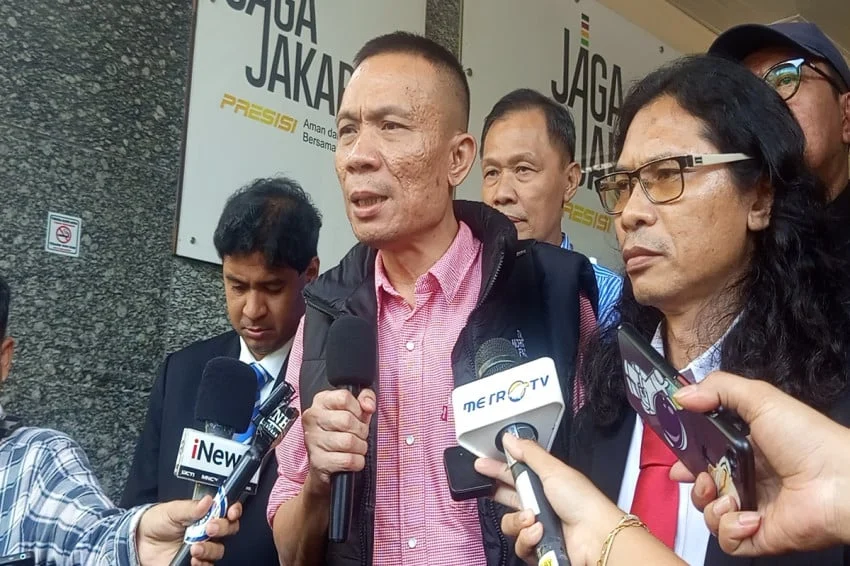
In response to these grave allegations, Rismon Sianipar convened a press conference on Wednesday, April 15, 2026, to unequivocally refute the claims of financial impropriety. "I want to clarify the issue circulating outside that I received billions, even tens of billions, up to Rp50 billion," Sianipar stated firmly. "I vehemently deny this. The entire RJ process was my initiative, based on the research I conducted." The "RJ process" Sianipar referred to, while not explicitly defined as a formal legal mechanism in this context, appears to denote his personal initiative for reconciliation and correction based on his updated research findings. He underscored that his actions were a result of his independent investigative work and a commitment to scientific truth, not any external pressure or financial incentive.
Sianipar further elaborated on the illogical nature of the accusations. He argued that it defies common sense for someone who has admitted an error and apologized to the wronged party to then receive a substantial payment from that very party. "I admitted my mistake and apologized to Jokowi, so logically it wouldn’t be possible," he explained. "If anything, I should be the one compensating Jokowi for the error I made." This argument highlights Sianipar’s position that his actions were driven by remorse and a commitment to rectifying his research, rather than being a transaction. He painted a picture of a researcher upholding ethical standards, even when it meant publicly acknowledging a previous mistake, and saw the accusations of bribery as a smear campaign.
Beyond simply denying the financial allegations, Sianipar issued a direct and pointed challenge to Roy Suryo. He called upon Suryo to scientifically substantiate the claims made in "Jokowi’s White Paper." This challenge elevates the dispute from a personal attack to a demand for rigorous scientific evidence, placing the onus on Suryo to demonstrate the academic and forensic integrity of his assertions. Sianipar’s demand implies that the White Paper, if it purports to be based on expert analysis, must withstand scientific scrutiny and peer review, rather than relying on unsubstantiated allegations or politically motivated interpretations. This move shifts the focus back to the core subject matter: the scientific validity of the claims against President Jokowi’s diploma.
The dispute between Sianipar and Roy Suryo, alongside the broader diploma controversy, carries significant implications for various stakeholders and the wider public. Primarily, it underscores the critical importance of scientific integrity and independence, particularly for forensic experts whose opinions can profoundly influence public perception and legal outcomes. When experts are perceived to be swayed by political agendas or financial incentives, it erodes trust in scientific methodology and the impartiality of expert testimony. This erosion of trust can have far-reaching consequences, making it difficult for the public to discern truth from misinformation, especially in politically charged environments.
From a political standpoint, the ongoing saga highlights the weaponization of information and expert opinions in political discourse. Allegations surrounding a leader’s qualifications, regardless of their veracity, can be potent tools for delegitimizing an administration or individual. The constant back-and-forth, with accusations of bribery and demands for scientific proof, serves to prolong the controversy, keeping it alive in the public consciousness and potentially creating an atmosphere of doubt and suspicion. For President Jokowi’s administration, while Sianipar’s apology offered some vindication, the continued allegations of payoff introduce a new layer of complexity that requires careful management.
Legal implications are also a significant consideration. The accusations of bribery against Sianipar, if proven false, could potentially lead to defamation lawsuits. Conversely, if there were any credible evidence of financial inducement, it could open avenues for legal action against those involved. The demand for scientific proof of "Jokowi’s White Paper" could also lead to legal challenges, forcing the proponents of the paper to present their evidence in a court of law or face accusations of spreading unsubstantiated claims. The legal ramifications could extend to professional bodies governing forensic experts, potentially leading to ethical inquiries or sanctions if misconduct is established.
Reactions from other parties involved in the wider political landscape have been anticipated. While no direct statements from President Jokowi’s office were immediately available regarding the latest allegations, it is plausible that any official response would emphasize the importance of truth, the rule of law, and the President’s legitimate qualifications. For Roy Suryo’s camp, a likely response would be to double down on their accusations, perhaps questioning Sianipar’s credibility further or demanding a more transparent account of his finances and the circumstances surrounding his recantation. Legal representatives for Suryo might also reiterate their belief in the claims made in "Jokowi’s White Paper," perhaps indicating a willingness to present their evidence if challenged in a formal setting. Independent legal and ethical experts would likely stress the need for evidence-based claims, the perils of trial by media, and the importance of due process in resolving such disputes.
The future trajectory of this dispute remains uncertain. Sianipar’s challenge to Roy Suryo could potentially lead to a formal scientific review or debate, a development that would be welcomed by those seeking clarity and evidence-based conclusions. Alternatively, the dispute could devolve into further legal battles, with both parties seeking redress through the courts. What is clear, however, is that this ongoing controversy transcends the immediate individuals involved. It serves as a stark reminder of the challenges in maintaining factual integrity in an age of rapid information dissemination, particularly when political stakes are high. The public’s demand for transparency, accountability, and verifiable truth will continue to press for a definitive resolution to the lingering questions surrounding President Jokowi’s diploma and the conduct of those involved in the public discourse. The resolution of this specific contention will undoubtedly influence future standards for expert testimony and public debate in Indonesia’s dynamic political landscape.