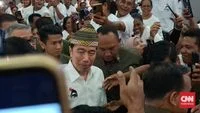
President Joko Widodo arrived in East Nusa Tenggara (NTT) on Wednesday afternoon, continuing a series of intensive regional working visits aimed at addressing local crises, connecting with grassroots communities, and overseeing government relief efforts. Touching down in Sikka Regency at approximately 13:00 WITA, the President’s primary agenda centered on delivering direct support, assessing infrastructure damage, and boosting the morale of residents still recovering from a notable seismic event that struck the region in mid-August.
The visit highlights the central government’s ongoing commitment to disaster-prone regions across the Indonesian archipelago, ensuring that recovery processes following natural calamities receive executive-level attention and prompt bureaucratic acceleration.
Main Facts and Arrival Details
According to local government representatives, the presidential aircraft landed smoothly, initiating a tightly scheduled itinerary tailored to maximize engagement with the affected populace. The public relations hotline for the Sikka Regency government confirmed the timing of the arrival prior to the touchdown, noting that local administrative bodies had prepared security protocols and coordination frameworks to facilitate a seamless visit.
"The information we received confirms his arrival at 13:00 WITA," stated a spokesperson for the Sikka Regency Public Relations office during initial communications.
While the arrival marked a significant event for the regency, official statements from the presidential secretariat prior to landing did not immediately detail the complete roster of ministers, state officials, or security details accompanying the head of state on this specific leg of the journey. Nevertheless, local security forces, including regional military and police units, were mobilized extensively across key arterial roads and designated gathering points in Sikka to manage crowds and ensure presidential safety.
Background Context: The Mid-August Earthquake in NTT
The impetus for President Widodo’s journey to Sikka Regency traces back to a tectonic disturbance that struck the East Nusa Tenggara region in mid-August. While Indonesia, positioned along the seismically volatile Pacific Ring of Fire, frequently experiences tectonic shifts, regional earthquakes often inflict severe structural damage to traditional and semi-permanent housing, disrupt local supply chains, and induce psychological distress among rural and coastal communities.
The earthquake, which registered notable magnitude levels and triggered localized tremors across several districts in NTT, left behind a trail of damaged public facilities, residential dwellings, and local infrastructure. Although emergency response teams deployed by the National Disaster Management Agency (BNPB) alongside regional authorities moved quickly in the immediate aftermath to clear debris, establish emergency shelters, and distribute basic humanitarian aid, long-term reconstruction posed persistent challenges.
President Widodo’s decision to visit Sikka was strategically designed to evaluate the efficacy of these immediate relief measures and to reassure local residents that the central government remains actively invested in their long-term recovery and housing reconstruction initiatives.
Chronology of Recent Presidential Regional Engagements
President Widodo’s trip to Sikka represents one of several high-profile regional tours undertaken in recent weeks, reflecting an active travel schedule aimed at maintaining direct contact with diverse communities across the country.
Earlier in the month, the President’s itinerary included a notable visit to Cirebon, West Java, on Saturday, September 12. During that visit, he attended a traditional community and religious ceremony—specifically the khitanan (circumcision) celebration for the son of KH Muhammad Busthomi, the esteemed caretaker of the Al-Busthomi Islamic Boarding School. On that occasion, the President was accompanied by local regional leadership of the Indonesian Solidarity Party (PSI) in West Java, as well as his youngest son, Kaesang Pangarep, who serves as the General Chairperson of the Central Executive Board of the PSI. The Cirebon visit underlined the President’s engagement with religious leaders and traditional institutions.
Furthermore, this visit to NTT is part of a broader geographical focus on the eastern province. Just weeks prior, President Widodo completed an extensive three-day working visit to Kupang, the capital of NTT, spanning from July 31 to August 2, 2026. During that multi-day engagement, his schedule was packed with economic and social development activities. He held direct dialogues with local seaweed farmers along the coast of Oesina in Kupang Regency—a vital agricultural sub-sector supporting coastal livelihoods in the region. Additionally, he attended a regional coordination meeting (Rakorda) for the PSI in Kupang City, participated in a public health-oriented community walk during a Car Free Day (CFD) event, and immersed himself in cultural diplomacy by attending a vibrant regional cultural carnival.
In addition to NTT and West Java, the President’s recent domestic travels have taken him to various corners of the archipelago, including Lampung on the island of Sumatra. In Lampung, his participation in a traditional cultural ceremony—which notably included stepping on a buffalo head as part of local customary rites—drew widespread public discussion, media analysis, and cultural debate across national news platforms and social media channels.
Official Responses and Local Expectations
The arrival of the head of state in Sikka generated considerable anticipation among local residents and regional officials alike. For communities grappling with the psychological and physical aftermath of the August earthquake, a presidential visit carries both symbolic and practical weight. Local leaders anticipated that the visit would serve as a catalyst for expedited financial disbursements earmarked for permanent housing reconstruction and public infrastructure rehabilitation.
Regional disaster management representatives emphasized that presidential oversight helps cut through red tape, ensuring that bureaucratic hurdles do not delay the distribution of calamity funds to vulnerable families. Civil society organizations in Sikka also expressed hope that the dialogue between the President and disaster survivors would lead to more comprehensive disaster mitigation planning, particularly concerning structural reinforcement standards for schools, clinics, and residential buildings in earthquake-prone zones.
While opposition figures or critics occasionally scrutinize the frequency and political timing of high-profile regional visits—particularly given the involvement of political party affiliates in surrounding itineraries—supporters maintain that direct executive presence in disaster zones is an essential duty of the presidency. Proponents argue that on-the-ground inspections provide a firsthand reality check that reports from administrative desks simply cannot replicate.
Broader Economic and Social Implications
Analyzing the broader implications of President Widodo’s ongoing regional tours reveals a dual administrative strategy: maintaining macroeconomic and infrastructural development momentum while simultaneously engaging in high-visibility social diplomacy at the community level.
In regions like East Nusa Tenggara, which historically face developmental disparities compared to the economic centers of Java, presidential attention serves to direct national budget allocations toward critical sectors such as disaster resilience, agricultural modernization, and local trade infrastructure. Seaweed farming, marine fisheries, and regional tourism—all focal points during his earlier Kupang visit—represent vital pillars of NTT’s regional gross domestic product (GRDP). By spotlighting these industries, the central government aims to stimulate local economic multipliers and attract private sector investment.
Simultaneously, disaster recovery management in NTT holds significant implications for national disaster preparedness frameworks. As climate anomalies and seismic vulnerabilities continue to threaten Indonesian populations, the lessons learned from post-earthquake interventions in Sikka contribute to policy refinements within the National Disaster Management Agency. Ensuring that disaster-stricken communities receive not only immediate food and shelter assistance, but also resilient structural rebuilding, is critical for sustainable regional development.
As the afternoon progressed in Sikka Regency, President Widodo’s engagements with earthquake survivors underscored the human dimension of governance. By listening to grievances, inspecting damaged homesteads, and offering direct words of encouragement, the administration sought to bridge the gap between national policy formulation and regional reality. The long-term success of these visits, however, will ultimately be measured by the speed, transparency, and durability of the physical and economic reconstruction that follows long after the presidential motorcade departs for the capital.