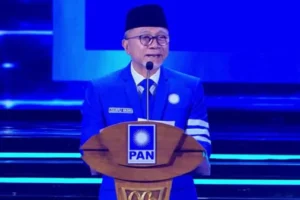
In a significant display of inter-party camaraderie, the Secretary General of the Perindo Party, Ferry Kurnia Rizkiyansyah, officially extended warm congratulations to the National Mandate Party (PAN) on the occasion of its 28th anniversary. The event, held on the evening of Friday, September 18, 2026, at the Jakarta International Convention Center (JICC) in Senayan, Jakarta, served as a platform for political discourse regarding the future of national collaboration. As PAN commemorates nearly three decades of existence, Perindo has signaled a strong intent to deepen ties, particularly concerning humanitarian initiatives and grassroots economic empowerment.
The Significance of the 28th Anniversary
The 28th anniversary of PAN is a milestone that marks the party’s longevity within the Indonesian democratic landscape. Founded in the wake of the 1998 Reformation, PAN has consistently positioned itself as a major player in the nation’s political trajectory. For the 2026 celebration, the party adopted the theme "Bantu Rakyat Gerak Cepat" (Helping the People, Moving Fast), a slogan that reflects a commitment to agility in addressing socioeconomic challenges.
Ferry Kurnia Rizkiyansyah, representing the Perindo leadership, attended the gala to underscore the shared values between the two organizations. He noted that the theme chosen by PAN is remarkably aligned with the fundamental vision of the Perindo Party, which prioritizes the welfare of the ordinary citizen and the pursuit of a more equitable economic climate. According to Ferry, the resonance between these two parties is not merely coincidental but reflects a broader understanding of the urgent needs of the Indonesian public in the current post-pandemic and global economic recovery era.
Chronology of PAN’s Political Journey
To understand the weight of this 28th-anniversary celebration, one must look at the historical timeline of PAN. Born from the reformist fervor that ended the New Order regime, the party was established on August 23, 1998. Since its inception, PAN has navigated numerous electoral cycles, forming coalitions that have shaped executive and legislative branches of the government.
- 1998–2004: The formative years of PAN, marked by its role as a reformist entity that championed democratization and civil society empowerment.
- 2004–2014: A period of institutional consolidation where PAN played a central role in several cabinet compositions, contributing to the development of national policy frameworks.
- 2014–2024: A decade characterized by shifts in coalition politics, where the party balanced its ideological roots with the pragmatic demands of national governance.
- 2026: The current milestone, where the party is emphasizing "rapid action" as a response to persistent inflation and the digital transformation of the national economy.
The presence of high-profile political figures at the JICC event, including President Prabowo Subianto, who remarked on the importance of "loyal comrades in the struggle," emphasized that this anniversary was as much about political consolidation as it was about celebration.
Supporting Data and Socioeconomic Context
The urgency behind the "Bantu Rakyat Gerak Cepat" theme is supported by current economic indicators. With Indonesia aiming for a "Golden Indonesia 2045" vision, political parties are under increasing pressure to demonstrate tangible benefits for the public. Recent data from the Central Statistics Agency (BPS) suggests that while national growth remains stable, the challenge of household purchasing power persists due to global supply chain fluctuations.
Perindo’s alignment with this theme is indicative of a broader strategy. Perindo, which has historically focused on MSMEs (Micro, Small, and Medium Enterprises) and grassroots economic support, views its partnership with PAN as a vehicle to scale these initiatives. By pooling resources and legislative influence, both parties aim to implement policy interventions that simplify business licensing for small vendors and enhance digital literacy among rural populations.
Official Responses and Internal Perspectives
Speaking to the press after the ceremony, Ferry Kurnia Rizkiyansyah articulated that his presence was a direct instruction from the Perindo Chairwoman. "I am here representing our Chairwoman to convey our deepest congratulations to PAN on their 28th anniversary. It is an extraordinary age, and PAN remains a pivotal party that truly embodies the spirit of the reform era," Ferry stated.
Beyond the pleasantries, Ferry highlighted that Perindo’s policy is to remain "open to synergy with all political parties." He argued that the current climate of Indonesian politics demands that parties move past tribalism and focus on common denominators. "We are not here just to talk about power sharing. We are here to talk about being part of the solution for the people. Whether it is in democratic development, policy-making, or economic recovery, we are ready to work with PAN to ensure the state is present for the citizens," he added.
Political analysts suggest that such statements from Perindo represent a tactical shift. By proactively engaging with established parties like PAN, Perindo is positioning itself as a constructive bridge-builder in a parliament that often risks becoming polarized.
Broader Impact and Implications for 2026 and Beyond
The implications of this closer cooperation between Perindo and PAN are multifaceted:
1. Legislative Cooperation: In the Indonesian House of Representatives (DPR), the ability to push through populist legislation often requires a unified front. By aligning on the goal of "helping the people," the two parties can create a voting bloc that prioritizes social safety nets and economic subsidies, effectively pressuring other factions to follow suit.
2. Strengthening Democratic Climate: The willingness of parties to acknowledge each other’s successes and align on thematic issues contributes to a healthier democratic culture. It signals to the public that political parties are capable of collaborative governance rather than perpetual competition.
3. Economic Policy Focus: Both parties have indicated that the next phase of their collaboration will involve focusing on the "economic front." This likely means a push for legislative initiatives that support the "warung" economy and the digitalization of traditional markets. Given that MSMEs contribute over 60% of Indonesia’s GDP, any collaborative policy effort in this sector will have a significant macroeconomic impact.
4. Coalition Building: While it is premature to discuss the 2029 electoral coalitions, the rapport built between these parties during events like this is the foundation upon which future electoral alliances are constructed. The show of support at the JICC is a clear message to the political establishment that these two entities are keeping their options open for long-term strategic alignment.
A Future-Oriented Partnership
As the event at the JICC concluded, the prevailing sentiment was one of optimism regarding inter-party relations. The collaboration between Perindo and PAN represents a pragmatic approach to governance. In a nation as diverse and geographically sprawling as Indonesia, the ability of political parties to coordinate their efforts is essential for effective service delivery.
The commitment expressed by Ferry Kurnia Rizkiyansyah is not merely a diplomatic formality. It reflects an evolving political landscape where the "reformist" identity of older parties like PAN and the "populist-grassroots" focus of newer entities like Perindo can find common ground. As both parties look toward the remainder of the current term, the success of their "synergy" will likely be measured by the tangible improvements in the lives of the citizens they claim to serve.
In summary, the 28th anniversary of PAN has served as more than just a celebratory event; it has acted as a catalyst for a renewed dialogue between political stakeholders. By prioritizing synergy over competition, and focusing on the urgent need to support the grassroots economy, Perindo and PAN have set a tone for the coming legislative sessions that favors collective problem-solving. Whether this leads to a formal coalition remains to be seen, but the intent to work together toward a more prosperous Indonesia is clear. As the political calendar moves forward, the synergy between these two parties will be an important indicator of the broader trends in the Indonesian parliamentary landscape, reflecting a move toward more integrated and action-oriented governance.