The persistent environmental crisis caused by forest and land fires (karhutla) in Central Kalimantan has reached a critical juncture, prompting a significant humanitarian response from the private sector. Paragon Kahf, a prominent brand under ParagonCorp, has announced a strategic partnership with Youth Act Kalimantan—an initiative under the Ranu Welum Foundation—to bolster the operational capacity of 25 Smoke-Free Shelters (Rumah Aman Asap) across the region. This intervention comes at a time when the province is grappling with severe air quality degradation, which poses immediate and long-term health risks to the local population.
The initiative aims to provide essential medical and life-sustaining equipment to these shelters, which serve as vital hubs for residents seeking refuge from the hazardous haze. As the thick smoke blankets communities, these shelters provide a sanctuary where air quality is filtered, and basic medical support is readily available for those suffering from respiratory distress.
Chronology and Escalation of the Crisis
The current wildfire season in Kalimantan has been characterized by extreme weather patterns, including prolonged dry spells that have fueled the rapid spread of flames across peatland areas. Since August 2026, the situation has steadily deteriorated, placing immense pressure on both the local ecosystem and public health infrastructure.
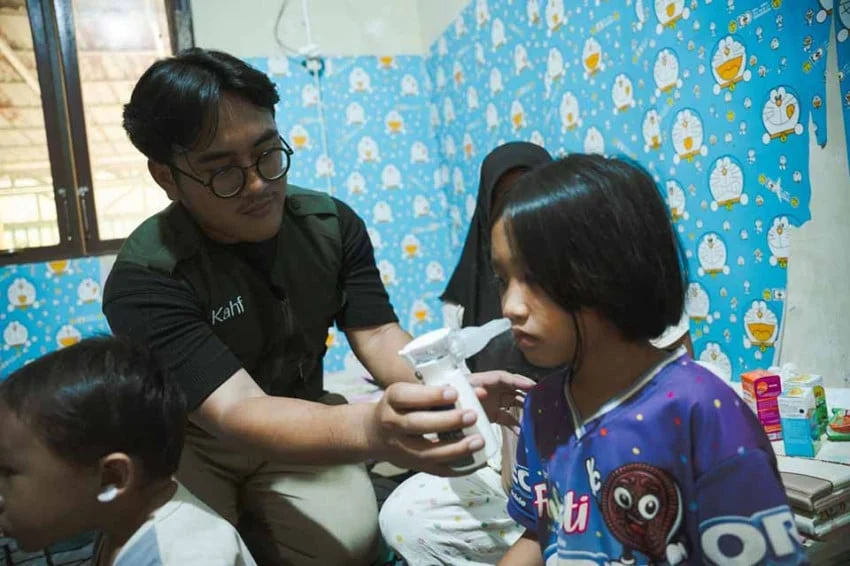
Youth Act Kalimantan, working in conjunction with local volunteers, established a network of 25 dedicated shelters to mitigate the impact of the smoke. Data provided by the organization indicates that these sites have facilitated over 2,500 visits by residents seeking relief from the toxic air. These visits serve a dual purpose: they provide immediate medical aid, such as nebulizer treatments and oxygen, and they offer a safe environment for vulnerable groups, including children and the elderly, to wait out the worst of the daily air quality index (AQI) spikes.
The intervention by Paragon Kahf was finalized following a rigorous assessment of the most urgent needs on the ground. By collaborating with local stakeholders, the organization ensured that the aid package was tailored to the specific challenges faced by the shelters in rural districts like Pulang Pisau.
The Scope of Humanitarian Support
The support package provided by Paragon Kahf is comprehensive, reflecting a deep understanding of the medical complexities associated with prolonged smoke exposure. The donation includes high-grade medical equipment such as oxygen tanks, nebulizers, and specialized respirator masks (including KF94 and industrial-grade filter respirators). These tools are critical for addressing the spike in acute respiratory infections (ARIs) that frequently accompany haze events.
Furthermore, the donation addresses logistical needs to ensure the continuous operation of the shelters. This includes the provision of:
- Air Purification Systems: High-efficiency particulate air (HEPA) units to maintain indoor air quality.
- Nutritional and Medicinal Supplies: Essential vitamins and basic medications to support immune health among those living in high-risk zones.
- Water Infrastructure: Provision of potable water and water pump equipment to aid in local fire-suppression efforts, preventing the spread of fire near residential areas.
The official handover of these supplies occurred at the Rumah Aman Asap in Desa Pilang, Pulang Pisau. This site is symbolic of the grassroots struggle against the haze, serving as a primary point of contact for the surrounding communities to receive initial screenings and respiratory aid.
Perspectives from Stakeholders and Corporate Leadership
The involvement of ParagonCorp reflects a shift in corporate social responsibility (CSR) strategy, moving toward proactive, on-the-ground engagement. Dwi Lesmana, Head of Corporate Affairs at ParagonCorp, emphasized the necessity of local expertise in disaster response. "Youth Act Kalimantan has been on the front lines since the onset of this crisis," Lesmana noted. "They possess the vital data and community trust required to ensure that our contributions reach the people who need them most. Our goal is to provide a sustainable buffer for the volunteers and the citizens they protect."
The event was attended by Roro A. Garini, Executive Director of the Ranu Welum Foundation, who underscored the exhaustion faced by local volunteer networks. The collaboration also saw the presence of Jerhemy Owen, an environmental content creator known for his active advocacy. Owen’s participation highlights the growing intersection between digital activism and physical disaster relief, as he has been documented participating in field-level firefighting efforts alongside local crews.
Fact-Based Analysis: The Health and Economic Implications
The environmental impact of the forest fires in Central Kalimantan extends far beyond immediate air quality concerns. From a public health perspective, the fine particulate matter (PM2.5) produced by burning peatlands is particularly hazardous, as it can penetrate deep into the respiratory and circulatory systems. Chronic exposure is linked to increased hospitalizations for asthma, cardiovascular disease, and reduced lung function in children.
Economically, the haze forces a contraction in daily activities. Schools, markets, and local businesses often face closures during peak smoke events, leading to a significant loss of productivity and income for rural communities. The 25 Smoke-Free Shelters effectively act as a socioeconomic stabilizer; by keeping the community healthy and providing a safe space, these centers allow for a semblance of normalcy to be maintained, preventing total paralysis of the local economy.
The effectiveness of this model—using community-led shelters supported by corporate funding—serves as a potential blueprint for future disaster management in Indonesia. By decentralizing the response, the partners are able to reach remote areas that might otherwise be overlooked by large-scale government aid packages.
Looking Toward Long-Term Sustainability
While the current partnership between Paragon Kahf and Youth Act Kalimantan addresses immediate survival needs, the recurring nature of the karhutla crisis suggests that long-term strategies are required. Analysts suggest that the sustainability of these shelters depends on several factors:
- Supply Chain Stability: The continued availability of medical supplies like oxygen and filters.
- Volunteer Retention: Preventing burnout among the 25 dedicated volunteers who manage these sites across the region.
- Preventative Education: Scaling up local programs that teach residents how to manage air quality at home and monitor fire risks in their vicinity.
The data gathered by Youth Act Kalimantan during this crisis—specifically the volume of visits and the types of illnesses reported—will be instrumental for policymakers in drafting future disaster mitigation plans. Understanding the peak times and geographic clusters of respiratory issues can help the government allocate health resources more effectively in the future.
Conclusion
The collaborative effort between Paragon Kahf and Youth Act Kalimantan represents a vital intervention in one of Indonesia’s most vulnerable environmental hotspots. By providing the necessary medical infrastructure and logistical support to the 25 Smoke-Free Shelters, the initiative has provided a tangible shield for the people of Central Kalimantan against the ravages of the annual haze.
As the fires continue to challenge the region, the commitment of private entities to support local, community-driven solutions remains essential. This partnership not only provides life-saving equipment but also reinforces the importance of unity and localized action in the face of a changing climate and the escalating risks of regional forest fires. The efforts in Pulang Pisau and across the province stand as a testament to the resilience of the local community and the impact of focused, data-driven humanitarian support.