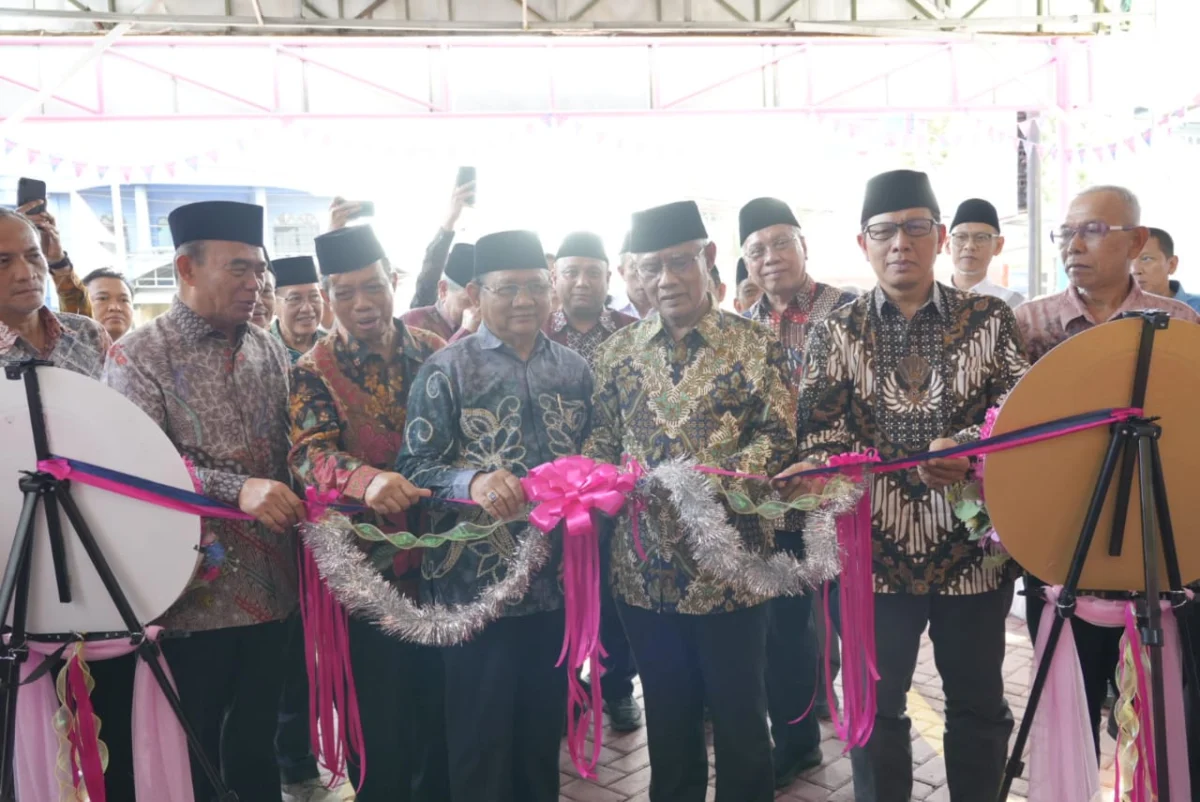
The Central Board (PP) of Muhammadiyah, one of Indonesia’s largest Islamic organizations, continues its concerted efforts to fortify the economic pillars of the Persyarikatan, or association, as a fundamental strategy for building self-reliance and enhancing community welfare. This unwavering commitment was markedly underscored by the grand inauguration of the fifth Mentari Mart retail outlet in Banjarmasin, South Kalimantan, on Friday, July 24. The strategic expansion into Banjarmasin represents a significant step in Muhammadiyah’s broader vision to establish a robust and inclusive economic ecosystem that serves its members and the wider Indonesian populace.
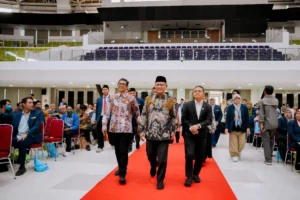
The auspicious ceremony was led by the esteemed Chairman of PP Muhammadiyah, Haedar Nashir, alongside fellow Chairman Muhadjir Effendy, Secretary Muhammad Sayuti, and a delegation from the Majelis Pendidikan Tinggi, Penelitian, dan Pengembangan (Council for Higher Education, Research, and Development, or Diktilitbang) PP Muhammadiyah. The presence of such high-ranking officials highlighted the strategic importance Muhammadiyah places on its economic initiatives, viewing them as integral to its comprehensive dakwah (Islamic mission) which extends beyond spiritual guidance to encompass social, educational, health, and economic development.
This particular agenda formed a crucial segment of a broader working visit by the PP Muhammadiyah leadership to Banjarmasin. The itinerary also included the ceremonial groundbreaking for the construction of the Faculty of Medicine Building at Universitas Muhammadiyah Banjarmasin (UMBJM) and the South Kalimantan Muhammadiyah Da’wah Center. This multi-faceted visit demonstrates Muhammadiyah’s holistic approach to community development, simultaneously investing in education, religious outreach, and economic empowerment, thereby creating synergistic growth opportunities across various sectors. The integration of these initiatives underscores Muhammadiyah’s long-standing philosophy of "dakwah bil hal" – preaching through action – where tangible contributions to societal well-being serve as a testament to its principles.
Muhammadiyah’s Economic Vision: Fostering Independence and Welfare
In his address during the inauguration, Haedar Nashir meticulously elaborated on the Persyarikatan’s strategic move to bolster its economic sector through the systematic development and expansion of the Mentari Mart network. He articulated that strengthening the economy is not merely a commercial endeavor but an indispensable component of Muhammadiyah’s dakwah, aimed at realizing comprehensive community welfare. This perspective aligns with Muhammadiyah’s historical trajectory, which has consistently prioritized empowering its members and the broader community through various programs since its inception in 1912. From establishing schools and hospitals to orphanages and social welfare institutions, Muhammadiyah has always sought to address societal needs through practical, actionable solutions.
The concept of economic independence within Muhammadiyah is deeply rooted in its modernist Islamic reformist ideology, which emphasizes self-reliance, hard work, and responsible management of resources. By fostering economic strength, Muhammadiyah aims to reduce dependency on external funding, allowing it to sustain and expand its vast network of social and educational institutions. Furthermore, it seeks to create a model of Islamic economics that is ethical, just, and beneficial for all segments of society, particularly the vulnerable. Mentari Mart, in this context, is envisioned not just as a retail chain but as a living manifestation of these economic principles, designed to circulate wealth within the community and provide opportunities for local entrepreneurs.
Haedar Nashir expressed profound optimism that Mentari Mart would continue to proliferate across various regions of Indonesia. He emphasized its dual role: first, as a powerful instrument for economic empowerment, and second, as a vital platform for micro, small, and medium-sized enterprises (UMKM) to market their diverse products. This focus on UMKM is particularly significant in the Indonesian economic landscape, where these enterprises constitute the backbone of the national economy, contributing substantially to GDP and employment, yet often face significant challenges in market access and competitiveness.
A Strategic Network for National Reach: Mentari Mart’s Expansion Chronology
Echoing the sentiments of the Chairman, Muhadjir Effendy strongly encouraged Pimpinan Daerah Muhammadiyah (PDM), or Regional Muhammadiyah Boards, particularly those possessing strategically located assets, to actively develop and convert these properties into Mentari Mart outlets. This call to action highlights a decentralized yet coordinated strategy, leveraging Muhammadiyah’s extensive organizational network and property holdings across the archipelago to accelerate the expansion of its retail footprint. The organization’s vast asset base, accumulated over more than a century through community contributions and prudent management, presents a unique advantage for rapid market penetration.
Muhadjir Effendy further contextualized the Banjarmasin outlet’s significance by detailing its position as the fifth Mentari Mart. The preceding four outlets had already been successfully established in various regions, including strategic locations in East Java, Sulawesi, and Riau. These initial ventures served as crucial pilot projects, providing valuable insights into operational models, supply chain management, and community engagement strategies before the broader rollout. The lessons learned from these initial outlets are instrumental in refining the Mentari Mart concept and ensuring its long-term viability and success.
Looking ahead, Muhammadiyah has ambitious plans for further expansion in the near future. Muhadjir Effendy revealed that the organization is targeting the imminent opening of new outlets in Jember, Jambi, and Palembang. These locations are strategically chosen to strengthen Mentari Mart’s presence across different islands and economic hubs, ensuring a wider reach and greater impact. Beyond these immediate targets, several other regions are currently undergoing feasibility surveys, indicating a robust pipeline for future development. "Perhaps later North Sumatra. Then those already surveyed are Magetan and Madiun," Muhadjir noted, signaling the meticulous planning and assessment involved in selecting new sites, which likely includes market analysis, demographic studies, and logistical considerations. This systematic approach underscores Muhammadiyah’s commitment to sustainable growth rather than haphazard expansion.
Empowering UMKM: Mentari Mart as a Distribution Hub
Muhadjir Effendy emphatically asserted that the Mentari Mart network is designed to transcend the conventional function of a modern shopping center. Instead, it is strategically projected to evolve into a pivotal distribution hub, or "hub," specifically for products originating from Muhammadiyah-affiliated UMKM, as well as those from the broader community that have historically struggled to gain access to the competitive national retail supply chain. This dual role is perhaps the most innovative and socially impactful aspect of the Mentari Mart initiative.
Indonesia’s UMKM sector is a powerhouse, accounting for over 97% of domestic employment and contributing approximately 60% to the national Gross Domestic Product (GDP). Despite their crucial role, many UMKM face formidable barriers, including limited capital, lack of technical skills, inadequate marketing capabilities, and, most critically, restricted access to broader markets and modern retail channels dominated by large corporations. Mentari Mart directly addresses this systemic challenge by providing a dedicated, accessible, and supportive retail environment. By acting as a central distribution point, Mentari Mart aims to streamline logistics, reduce costs for small producers, and ensure their products reach a wider consumer base. This model not only boosts the visibility and sales of UMKM products but also empowers entrepreneurs, fostering local economic resilience and job creation.
The integration of UMKM products into the Mentari Mart ecosystem involves a multi-pronged approach. This includes curating products that meet certain quality standards, providing mentorship and training to UMKM on packaging and presentation, and establishing fair pricing mechanisms. Furthermore, by linking various Mentari Mart outlets across different regions, Muhammadiyah is effectively creating an internal supply chain that can facilitate the inter-regional exchange of UMKM products, opening up new markets for producers who might otherwise be confined to their local areas. This collaborative model embodies the spirit of mutual cooperation and collective progress that Muhammadiyah champions.
Strategic Implications and Broader Impact
The expansion of Mentari Mart carries profound strategic implications for Muhammadiyah and the broader Indonesian society. Economically, it represents a significant push towards fostering local economies, particularly in regions where formal retail infrastructure might be less developed. By prioritizing local sourcing and UMKM integration, Mentari Mart contributes directly to wealth creation at the grassroots level, potentially leading to increased income, improved living standards, and reduced economic disparities. The development of these modern retail outlets also creates direct employment opportunities, from store management and staff to logistics and merchandising.
Socially, Mentari Mart serves as a tangible expression of Muhammadiyah’s commitment to social justice and empowerment. By providing a platform for UMKM, it helps cultivate an entrepreneurial spirit within communities, encouraging innovation and self-reliance. It also offers consumers access to a diverse range of locally produced goods, often at competitive prices, while fostering a sense of community pride in supporting local businesses. This initiative strengthens the social fabric by building trust and cooperation between producers, retailers, and consumers within the Muhammadiyah ecosystem and beyond.
For Muhammadiyah as an organization, Mentari Mart contributes to its long-term financial sustainability. A successful retail network can generate revenue that can be reinvested into its vast social, educational, and health programs, reducing reliance on donations and external grants. This economic independence allows Muhammadiyah to expand its dakwah efforts and respond more effectively to societal needs. Furthermore, the unified brand and operational model of Mentari Mart can enhance organizational cohesion among different PDM, fostering a sense of shared purpose and collective achievement in the economic sphere.
However, challenges inevitably accompany such an ambitious undertaking. The modern retail sector in Indonesia is highly competitive, dominated by well-established national and international chains. Mentari Mart will need to differentiate itself effectively, not only through its community-centric approach but also through competitive pricing, product quality, and efficient service. Logistical complexities of managing a nationwide supply chain, particularly for diverse UMKM products, will require sophisticated management systems and strong partnerships. Ensuring consistent quality control for thousands of UMKM products will also be a continuous effort. Despite these challenges, Muhammadiyah’s strong organizational structure, extensive network, and deep community roots provide a solid foundation for overcoming potential hurdles.
Muhadjir Effendy concluded his remarks with a powerful call to action, encapsulating the grand vision for the initiative. "I hope this Mentari Mart can become a source of pride and can soon be built in all PDM," he stated. This aspiration underscores not only the economic ambitions but also the desire for Mentari Mart to become a symbol of Muhammadiyah’s collective capability and commitment to national development. The vision is clear: a nationwide network of Mentari Marts that not only serves as a commercial enterprise but also as a beacon of community empowerment, economic justice, and sustainable development, deeply embedded in the fabric of Indonesian society.
The inauguration in Banjarmasin, therefore, is more than just the opening of a new store; it is a reaffirmation of Muhammadiyah’s enduring mission to build a more just, prosperous, and self-reliant society through integrated efforts in all spheres of life. As Mentari Mart continues its expansion, it is poised to play an increasingly vital role in shaping Indonesia’s economic landscape, particularly for its vibrant UMKM sector, and reinforcing Muhammadiyah’s position as a leading force for positive change in the nation.