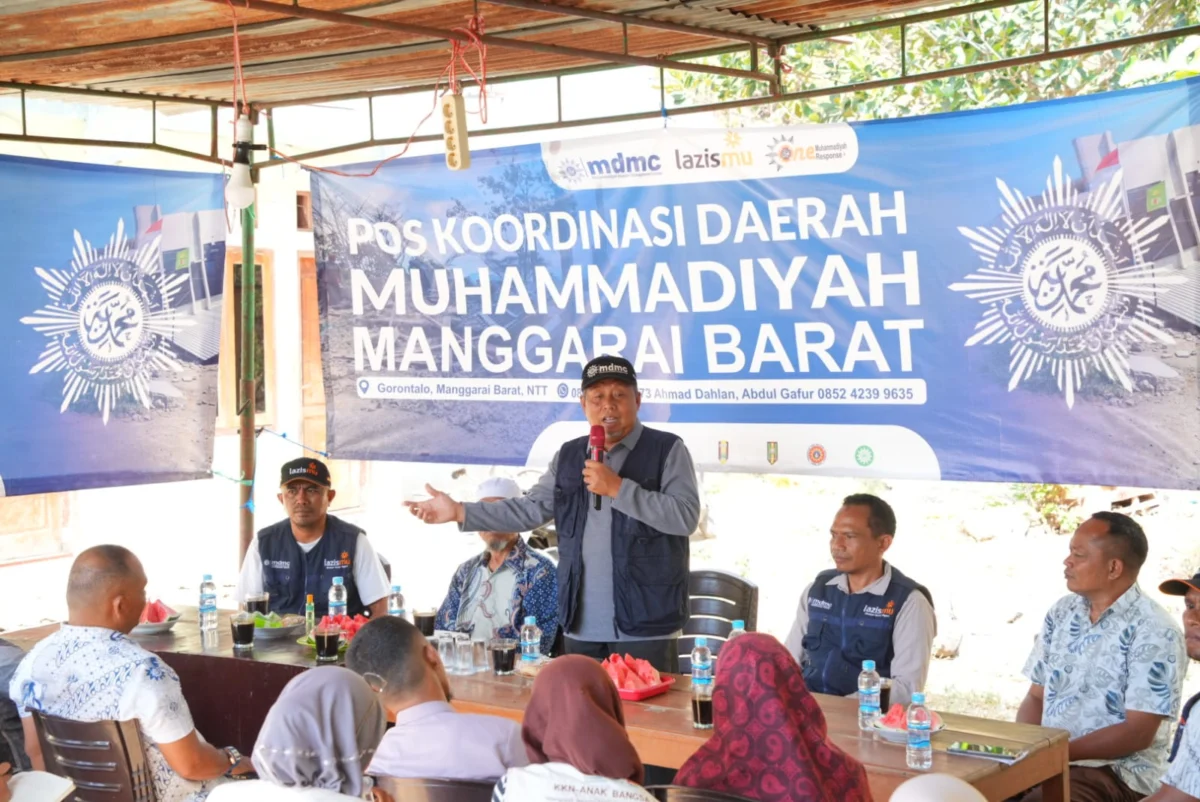
The landscape of humanitarian action in Indonesia is undergoing a profound structural evolution, moving away from reactive emergency response toward proactive community resilience and preparedness. This strategic shift was underscored during a recent high-level visit by the Central Leadership of Muhammadiyah (Pimpinan Pusat Muhammadiyah) to the eastern region of the archipelago, highlighting a comprehensive nationwide modernization of disaster risk reduction frameworks.
As one of Indonesia’s largest Islamic socio-religious organizations, Muhammadiyah has historically been among the first responders during national calamities, deploying medical personnel, search-and-rescue units, and logistical aid to disaster-stricken zones. However, growing vulnerability profiles driven by climate volatility and Indonesia’s unique geographical positioning along the Pacific Ring of Fire have necessitated a paradigm shift. Today, the organization views disaster risk reduction, public education, and infrastructural hardening as foundational pillars of its humanitarian mandate, aiming to drastically mitigate loss of life and property before natural hazards strike.
A Strategic Evolution in National Disaster Management
The philosophical cornerstone of this updated approach was articulated by Dr. Agus Taufiqurrahman, Chairperson of the Central Leadership of Muhammadiyah, during his official visit to the Regional Coordination Post (Poskorda) of Muhammadiyah in West Manggarai, East Nusa Tenggara (NTT), on Saturday, September 19. Addressing local leaders, volunteers, and community stakeholders, Agus emphasized that humanitarian interventions can no longer remain exclusively post-disaster in nature.
"Therefore, we are shifting toward ensuring that this nation is prepared when a disaster strikes," Agus stated, outlining an operational philosophy that prioritizes anticipatory governance and local capacity building.
Indonesia remains one of the most disaster-prone nations globally, frequently confronting complex hazards including major earthquakes, volcanic eruptions, tsunamis, hydro-meteorological floods, and landslides. These vulnerabilities are compounded by dense populations settled across fault lines and coastal corridors. In response, Muhammadiyah’s disaster management wing—coordinated primarily through the Muhammadiyah Disaster Management Center (MDMC)—has integrated pre-disaster planning into its core operations.
This modern strategy encompasses comprehensive community education programs, simulation drills in vulnerable villages, the establishment of resilient local disaster response units, and the promotion of disaster-safe building standards. Furthermore, the organization actively assists communities in organizing decentralized emergency stockpiles, ensuring that food, clean water, and medical provisions are accessible at the grassroots level before an emergency isolates a region.
Solidarity and Response to the Flores Earthquakes
The urgency of this resilience-first framework was brought into sharp focus during the visit to East Nusa Tenggara, a region historically susceptible to seismic activities. The region was recently shaken by seismic events, notably the Flores earthquakes, which tested the preparedness and responsiveness of local communities and humanitarian networks alike.
During his address, Agus took the opportunity to express profound gratitude to the expansive network of Muhammadiyah volunteers across NTT and other provinces who mobilized under the banner of ta’awun (mutual cooperation and assistance) to support the survivors. The rapid deployment of personnel demonstrated the efficacy of Muhammadiyah’s decentralized disaster response architecture, which relies on regional chapters coordinating seamlessly with central command structures.
Special recognition was extended to student volunteers participating in the Community Service Program (Kuliah Kerja Nyata – KKN) from Universitas Ahmad Dahlan (UAD). These students had integrated into the disaster-affected communities immediately following the initial tremors, providing psycho-social support, assisting in debris clearance, and helping manage local aid distribution centers. Their involvement underscored Muhammadiyah’s strategy of leveraging its extensive higher education network to bolster civil protection efforts during national crises.
To further reinforce local operational capabilities on the ground, the visit included the symbolic handover of financial humanitarian assistance amounting to Rp10 million from the Central Leadership of Muhammadiyah to the West Manggarai Poskorda. This financial injection is earmarked for operational enhancement and logistical strengthening as recovery and resilience-building initiatives continue in the district.
Local Perspectives and Institutional Challenges
The arrival of the central delegation was warmly received by the Regional Leadership of Muhammadiyah (Pimpinan Daerah Muhammadiyah – PDM) in West Manggarai. Local leaders viewed the visit not only as a morale boost but as an essential strategic dialogue to align regional development with national organizational goals.
Muhammad Arun, Chairperson of PDM West Manggarai, highlighted the ongoing challenges faced by the regional chapter in expanding its humanitarian footprint and educational services across a geographically challenging terrain.
"We deeply welcome guidance from the Central Leadership regarding our sustainability here. Frankly, PDM West Manggarai still requires continuous support," Arun remarked during the consultative session.
Despite logistical hurdles and capacity constraints in remote areas, PDM West Manggarai has maintained an active role in local community development. Alongside disaster preparedness initiatives, the regional leadership updated the central delegation on the continuous expansion of educational services designed to elevate human capital indices in the regency.
A focal point of regional strategic planning is the prospective utilization of a sprawling 60-hectare plot of waqf (endowment) land. PDM West Manggarai is currently steering initiatives to harness this land for broad societal benefit, intending to develop comprehensive socio-economic infrastructure, educational institutions, and community empowerment centers that will serve both the local Muslim population and the broader public in the district.
Broader Socio-Economic Implications and the Spirit of Solidarity
Beyond operational logistics and spatial planning, Agus Taufiqurrahman used the platform to emphasize the socio-cultural prerequisites of disaster resilience. He stressed that technological preparedness and logistical stockpiles must be complemented by social cohesion and collective solidarity.
In times of national crisis, Agus warned against the creeping influence of individualism, asserting that community survival heavily relies on mutual empathy and communal support systems. Drawing upon ethical frameworks of social responsibility, he reminded attendees that hoarding resources or maintaining indifference toward distressed neighbors undermines the collective resilience of the nation.
"One must not be stingy, because there is an obligation to help one another in difficult situations," Agus emphasized, invoking traditional Indonesian values of gotong royong (mutual assistance) integrated with religious mandates of altruism.
This sociological perspective holds significant implications for public policy and community-based disaster risk reduction (CBDRR). Analysts note that communities with high social capital recover significantly faster from systemic shocks than those fragmented by individualism. By actively fostering institutional trust and inter-community solidarity, Muhammadiyah aims to build psychological resilience that matches its physical preparedness initiatives.
Institutional Growth and Future Outlook
The visit to West Manggarai encapsulates Muhammadiyah’s dual trajectory: expanding grassroots humanitarian infrastructure while simultaneously scaling up its institutional capacity in education and asset management. As climate change accelerates the frequency of extreme weather events and tectonic activities persist along the Indonesian archipelago, the organization’s proactive stance offers a viable blueprint for civil society-led disaster governance.
The integration of higher education students into emergency response, the professionalization of local coordination posts, and the strategic utilization of endowments like the 60-hectare waqf land illustrate a holistic approach to sustainable development. By bridging immediate humanitarian relief with long-term capacity building, Muhammadiyah continues to solidify its role as a vital pillar of national stability, community welfare, and disaster resilience in Indonesia.