The At-Tanwir Mosque, operating under the auspices of the Central Leadership (Pimpinan Pusat or PP) of Muhammadiyah, has launched a strategic initiative to revolutionize mosque financial administration through modern digital recording systems. Aimed at instilling rigorous accountability, orderly bookkeeping, and long-term financial sustainability, the initiative centers on a comprehensive training program designed to equip mosque administrators with cutting-edge accounting tools. This development reflects a growing nationwide movement within Indonesia’s Islamic organizations to modernize institutional governance, transitioning away from traditional, manual record-keeping methods toward transparent, technology-driven frameworks.
The Catalyst for Change: Literacy and Modernization in Jakarta
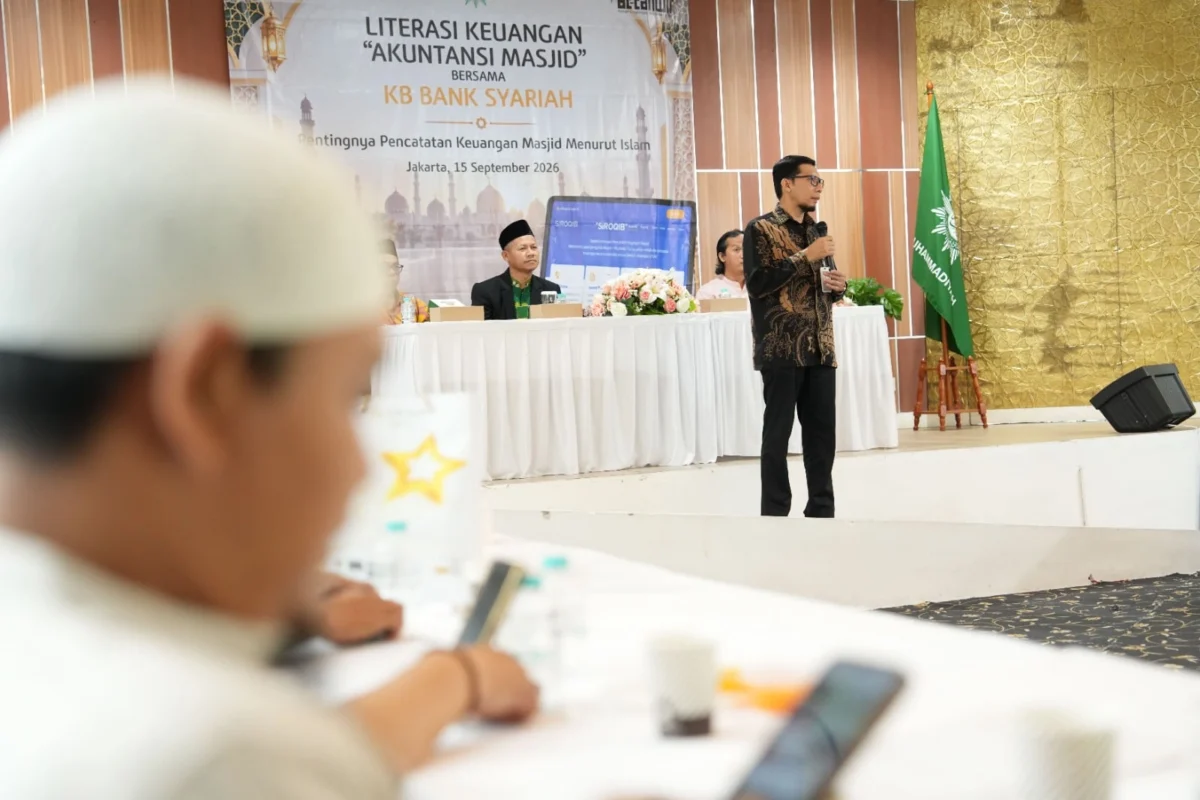
On Monday, September 15, the Aula on the sixth floor of the At-Tanwir Mosque in Central Jakarta hosted a landmark event titled the Financial Report and Mosque Accounting Literacy Program. The gathering brought together 40 designated representatives from various mosques operating within the Muhammadiyah network. These administrators were invited to participate in intensive workshops designed to address systemic vulnerabilities in traditional mosque bookkeeping, such as undocumented transactions, delayed reporting to congregations, and the inherent risks of human error in manual ledgers.
The hosting of this event was spearheaded by KH Nur Ahmad, a prominent representative of the At-Tanwir Mosque’s Prosperity Council (Dewan Kemakmuran Masjid or DKM). According to Nur Ahmad, the program represents a crucial, proactive intervention to elevate the administrative standards of Muhammadiyah-affiliated houses of worship. He emphasized that as mosques expand their social, educational, and community welfare programs, the volume of financial inflows and outflows increases correspondingly, necessitating a parallel upgrade in managerial sophistication.
"This activity is designed to assist mosques in achieving financial management that is structured, orderly, sustainable, easily monitored, easily reported, and efficiently managed," Nur Ahmad stated during his opening address to the attendees. His remarks underscored the practical difficulties many local mosque committees face when attempting to balance traditional community service models with contemporary administrative demands.
The Ethical Foundation of Financial Management: Trust and Accountability
At the core of the PP Muhammadiyah initiative is the deeply rooted religious and ethical principle of amanah (trustworthiness). Nur Ahmad articulated that managing a mosque’s finances is fundamentally distinct from corporate financial management; it involves safeguarding funds entrusted by the broader Muslim community (umat). Consequently, every rupiah collected through Friday collections, endowments (wakaf), alms (zakat), and voluntary donations (infaq and shadaqah) carries a profound moral obligation of stewardship.
"Because we are managing funds belonging to the community, the foundational principle that must never be abandoned is amanah. To safeguard that trust, orderly bookkeeping, proper data management, and, whenever possible, the use of dedicated applications are absolutely necessary," Nur Ahmad explained.
This perspective resonates with broader discussions within contemporary Islamic philanthropy regarding governance standards. As congregations become increasingly sophisticated and discerning, donors expect a high degree of transparency. The modern congregant no longer relies solely on verbal assurances of financial health; they demand verifiable, data-backed reports that clearly demonstrate how contributions are allocated toward operational costs, maintenance, social outreach, and educational programs. By embracing digital recording tools, mosque administrators can bridge the gap between traditional ethical obligations and modern administrative expectations.
Introduction to SIROQIB: Bridging Technology and Administration
A central component of the day-long literacy program was the introduction and technical demonstration of SIROQIB, a specialized digital platform engineered to streamline financial record-keeping for religious institutions. The software is designed to guide mosque treasurers through the systematic entry of daily transactions, categorize diverse revenue and expenditure streams, and automatically generate standardized financial statements.
During the technical sessions, participants were walked through the software’s interface, learning how SIROQIB mitigates common accounting pitfalls. Traditional ledger systems often suffer from illegible handwriting, misplaced receipts, and discrepancies between physical cash counts and recorded balances. By transitioning these processes to a digital environment, the platform ensures that every financial entry is timestamped, categorized, and securely archived.
Mosque financial administration typically revolves around three critical pillars: accurate transaction recording, rigorous internal control, and transparent public reporting. The training sessions emphasized that SIROQIB is tailored to support all three dimensions. By standardizing the input process, the software assists treasurers in maintaining strict control over cash flows. Furthermore, the system’s reporting modules enable administrators to produce comprehensive financial summaries with minimal delay, making it significantly easier to present periodic updates to mosque congregants and supervisory boards.
Background Context: The Evolution of Mosque Governance in Indonesia
The initiative undertaken by the At-Tanwir Mosque does not occur in a vacuum. Over the past decade, Indonesian Islamic organizations, led by major entities like Muhammadiyah and Nahdlatul Ulama, have increasingly recognized that the traditional role of the mosque has expanded far beyond daily congregational prayers. Modern mosques frequently function as community hubs, managing substantial economic resources that include educational institutions, healthcare clinics, disaster relief funds, and micro-enterprise development programs.
Historically, mosque treasuries were managed by volunteer committees using rudimentary cash books. While this system relied heavily on personal integrity and social trust, it frequently lacked institutional resilience. When committee members rotated, institutional knowledge regarding past financial commitments or ongoing projects was often lost, occasionally leading to administrative friction or diminished public confidence.
Recognizing these vulnerabilities, national leadership bodies have initiated systematic campaigns to professionalize mosque administration. These efforts align with the broader national push toward digital transformation in public and religious sectors. By integrating digital accounting tools, religious institutions not only protect themselves against financial mismanagement and potential fraud but also enhance their capacity to attract larger philanthropic investments from institutional donors and corporate social responsibility (CSR) programs.
Timeline of the Digital Literacy Campaign
The rollout of the Financial Report and Mosque Accounting Literacy Program on September 15 represents the culmination of months of logistical planning by the At-Tanwir Mosque management team in coordination with PP Muhammadiyah’s administrative directorates.
- Phase One (Early 2024): Preliminary assessments conducted by Muhammadiyah’s religious and social welfare councils identified widespread administrative inconsistencies among smaller and mid-sized community mosques, highlighting an urgent need for standardized accounting frameworks.
- Phase Two (Mid 2024): Development and adaptation of specialized digital tools, culminating in the optimization of platforms such as SIROQIB for religious institutional use.
- Phase Three (September 15, 2024): Official launch of the literacy program at the At-Tanwir Mosque in Central Jakarta, featuring practical training workshops for 40 initial mosque administrators.
- Phase Four (Projected Late 2024 and Beyond): Expansion of the training modules to regional branches, with the long-term objective of scaling digital financial literacy across thousands of Muhammadiyah-affiliated mosques throughout the archipelago.
Broader Implications and Strategic Impact
The implications of the At-Tanwir Mosque’s initiative extend well beyond the immediate boundaries of the 40 participating organizations. By establishing a replicable model for digital financial governance, PP Muhammadiyah is setting a benchmark for religious administration nationwide.
First, the transition to digital accounting systems drastically reduces the administrative burden on volunteer treasurers. Many mosque administrators serve out of civic and religious dedication while maintaining full-time careers in other sectors. Complex, manual accounting procedures often consume excessive time and can lead to burnout or inaccuracies. Automated systems like SIROQIB simplify data entry, thereby freeing up valuable time for administrators to focus on community-building and pastoral care.
Second, enhanced transparency directly correlates with increased congregational engagement and financial generosity. Behavioral studies in philanthropic giving consistently demonstrate that donors are more inclined to contribute—and to give larger amounts—when they receive clear, timely, and verifiable reports on how their funds are utilized. By utilizing standardized digital reports, Muhammadiyah mosques can build a stronger foundation of public trust, which in turn can stimulate higher levels of community support for local social and religious initiatives.
Finally, the institutionalization of rigorous financial controls ensures long-term sustainability. Mosques that maintain orderly, audited digital records are better positioned to weather economic uncertainties, plan multi-year capital projects, and comply with emerging regulatory standards regarding non-profit and religious fund management in Indonesia.
Conclusion and Future Outlook
As the pilot program concluded on Monday afternoon, organizers expressed optimism that the participating administrators would serve as change agents within their respective local communities. The integration of platforms like SIROQIB into daily mosque operations marks a decisive step toward modernizing Islamic philanthropy in Indonesia.
Through the combined efforts of the At-Tanwir Mosque, PP Muhammadiyah, and dedicated local administrators, the initiative demonstrates that adherence to traditional ethical mandates such as amanah is enhanced, rather than diminished, by the adoption of modern technological tools. As this digital literacy campaign expands in the coming months, it holds the potential to redefine the operational standards of houses of worship across the nation, ensuring that community funds are managed with the highest levels of precision, integrity, and transparency. (Reported by Taufik)