The global corporate landscape is undergoing a profound paradigm shift where environmental stewardship, social responsibility, and robust governance are no longer peripheral concerns, but rather the fundamental pillars of long-term economic viability. In a decisive move to address these evolving demands, President University of Indonesia, the University of Southern Queensland (UniSQ) from Australia, and industrial township developer Jababeka have formally united to spearhead a transformative initiative. This collaborative venture is designed to empower the industrial sector by modernizing sustainability management and reporting practices through the cutting-edge implementation of advanced technologies, specifically Artificial Intelligence (AI) and unmanned aerial vehicles, commonly known as drones.
This ambitious cross-border partnership has received significant financial backing from the Australian Government through the Department of Foreign Affairs and Trade (DFAT). Securing an Indonesia-Australia collaborative cooperation grant valued at approximately AUD 42,000, the initiative bridges the academic rigor of higher education institutions with the pragmatic needs of the industrial sector. By leveraging this grant, the consortium aims to deploy technologically driven solutions that foster measurable and accountable environmental management across industrial clusters, starting primarily within the vast manufacturing and business ecosystems developed by Jababeka.
Running intensively from July through September 2026, the collaborative program serves as a melting pot for academia, technological innovators, and industrial leaders. Its primary objective is to redefine how corporations conceptualize sustainability. Historically, many businesses have viewed sustainability merely as a mechanism for mitigation—a way to minimize the negative environmental footprints generated by their operational processes. However, this joint initiative champions a more sophisticated, two-way perspective on corporate-environmental dynamics. Enterprises must now comprehensively understand how broader environmental shifts, ecological degradation, and localized climate conditions actively impact their own supply chains, worker health and safety, operational continuity, regulatory compliance, corporate reputation, and overall business survival.
The Imperative for Verifiable and Transparent Environmental Data
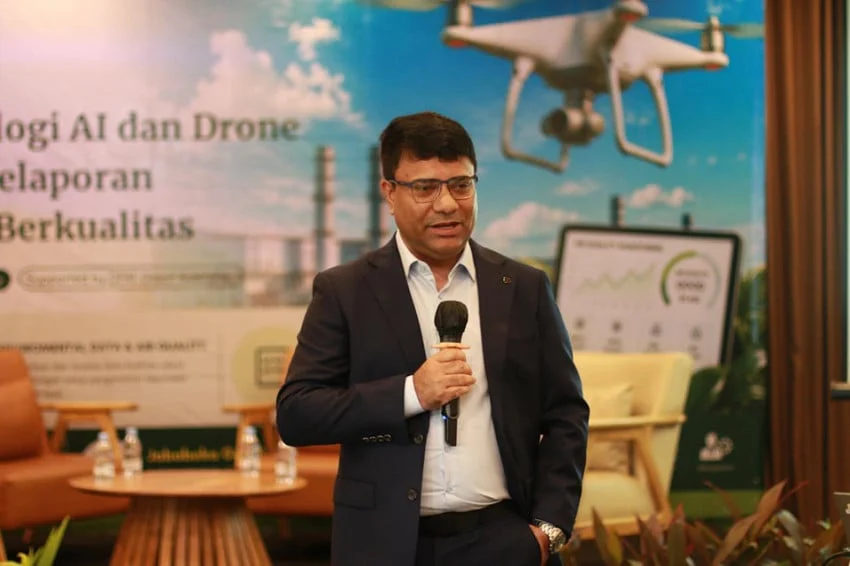
The timing of this collaborative effort is closely aligned with sweeping regulatory reforms taking place within the Indonesian financial and corporate sectors. As regulatory bodies tighten oversight and global markets demand greater transparency, the need for empirical, highly accurate, and easily verifiable environmental data has never been more critical. To address this urgent requirement, President University hosted a comprehensive workshop tailored for industrial practitioners on September 3, 2026. The educational event focused heavily on recent developments in sustainability reporting frameworks and the practical integration of digital tools to streamline environmental monitoring and compliance.
A central theme of the workshop was the deep dive into PSPK 1 and PSPK 2, which represent Indonesia’s domestic sustainability reporting standards that formally adopt the International Financial Reporting Standards (IFRS) S1 and S2 guidelines. These international standards demand unprecedented levels of disclosure regarding general requirements for sustainability-related financial disclosures and climate-related disclosures. The ability of manufacturing firms, logistics providers, and corporate tenants within industrial estates to produce precise, quantified environmental data is no longer just an administrative preference. With the mandatory enforcement of these sustainability-based accounting standards slated to take effect in 2027, companies failing to adapt risk facing severe regulatory penalties, restricted access to capital, and diminished market competitiveness.
Academic Insights and Economic Implications
The integration of advanced technologies like AI and drones directly addresses the data-gathering bottleneck that many industrial firms face when attempting to comply with rigorous reporting frameworks. Drones equipped with multispectral sensors and high-resolution imaging can autonomously monitor vast industrial zones, assessing air quality, wastewater discharge, thermal emissions, and land-use changes with pinpoint accuracy and minimal human error. Meanwhile, Artificial Intelligence algorithms process these massive influxes of real-time environmental data, generating predictive analytics that help facility managers preemptively identify ecological risks, optimize resource consumption, and automate compliance reporting metrics.
Weighing in on the long-term economic advantages of these technological integrations, Prof. Syed Shams from the University of Southern Queensland underscored the direct correlation between rigorous environmental transparency and corporate financial health. During the collaborative sessions, Prof. Shams emphasized that robust transparency is a powerful catalyst for enterprise value creation rather than a mere compliance burden.
"Previous empirical research consistently demonstrates that credible environmental and sustainability disclosure is directly associated with higher overall firm valuation, significantly lower costs of capital, and stronger expectations of future operational performance," Prof. Shams explained. He noted that investors, financial institutions, and global supply chain partners increasingly favor corporations that can transparently verify their sustainability metrics using hard data rather than generalized qualitative claims. By incorporating AI and drone technology into their daily operations, industrial firms can provide the cryptographic and empirical proof demanded by modern stakeholders, thereby securing a distinct competitive advantage in both domestic and international markets.
Chronology of the Indonesia-Australia Collaboration
The genesis of this impactful trilateral partnership traces back to extensive academic and diplomatic dialogues aimed at strengthening bilateral ties between Indonesia and Australia in the realms of education, sustainable development, and economic resilience.
- Early 2025: Initial exploratory talks take place between faculty members at President University and researchers at the University of Southern Queensland regarding the mutual challenges faced by emerging economies in meeting international climate targets and adopting stringent reporting standards.
- Late 2025: The consortium identifies PT Jababeka Tbk, a pioneer in industrial estate development in Indonesia, as an ideal strategic partner to serve as a living laboratory. Jababeka’s extensive industrial township in Cikarang provides a controlled yet expansive environment to pilot technological monitoring tools.
- Early 2026: The formal proposal is submitted to the Australian Government’s Department of Foreign Affairs and Trade (DFAT) under the Indonesia-Australia collaborative grant scheme, highlighting the potential for technology transfer, capacity building, and sustainable industrial transition.
- Mid-2026 (July): The grant of approximately AUD 42,000 is officially awarded, marking the official kickoff of the collaborative program. Preparations begin for joint research initiatives, curriculum enhancements, and practitioner-focused training modules.
- September 3, 2026: President University hosts the landmark industry workshop focusing on PSPK 1, PSPK 2, and the practical application of AI and drones for corporate sustainability accounting.
- September through December 2026: Implementation of pilot projects utilizing drone surveillance and AI-driven data analytics across select manufacturing facilities within the Jababeka industrial ecosystem, culminating in a comprehensive policy brief and technological adoption framework for Indonesian industries.
Broader Industry Impact and Future Outlook
The implications of the President University, UniSQ, and Jababeka partnership extend far beyond the immediate academic and corporate participants. As Indonesia accelerates its transition toward a low-carbon economy and works to meet its nationally determined contributions under global climate accords, the manufacturing and industrial sectors remain under intense scrutiny. Industrial estates are historically resource-intensive, consuming substantial quantities of energy and water while generating significant emissions and waste.
By introducing AI and drone technology as standard operational tools for environmental management, this initiative offers a scalable blueprint that can be replicated across other industrial hubs throughout the archipelago. Traditional methods of environmental auditing—often reliant on periodic manual sampling, delayed laboratory testing, and subjective record-keeping—are rapidly becoming obsolete in the face of fast-paced regulatory reforms and sophisticated international trade barriers, such as the European Union’s Carbon Border Adjustment Mechanism (CBAM).
Furthermore, the collaboration addresses a critical skills gap in the Indonesian labor market. By embedding these advanced technological paradigms into higher education curricula and executive training programs, President University and its partners are actively preparing the next generation of engineers, data scientists, accountants, and corporate executives to navigate the complexities of green economics. Students and professionals alike are being trained not only to understand regulatory compliance frameworks like IFRS S1 and S2, but also to harness the computational and aerial tools required to collect, analyze, and report the underlying data seamlessly.
As the program progresses toward its conclusion in late 2026, the consortium plans to publish a series of white papers and practical guidelines detailing the best practices for integrating AI and drones into industrial sustainability management. These resources are expected to serve as invaluable reference materials for policymakers, industry associations, and corporate leaders striving to align commercial profitability with ecological preservation.
Ultimately, the partnership between President University, the University of Southern Queensland, and Jababeka demonstrates the profound efficacy of cross-sectoral and international cooperation. By uniting academic excellence, government backing, visionary industrial management, and state-of-the-art technology, the initiative establishes a new benchmark for corporate accountability. It proves that sustainable industrialization is not an unattainable ideal, but a pragmatic, technologically achievable reality that safeguards both business continuity and the global environment for decades to come.