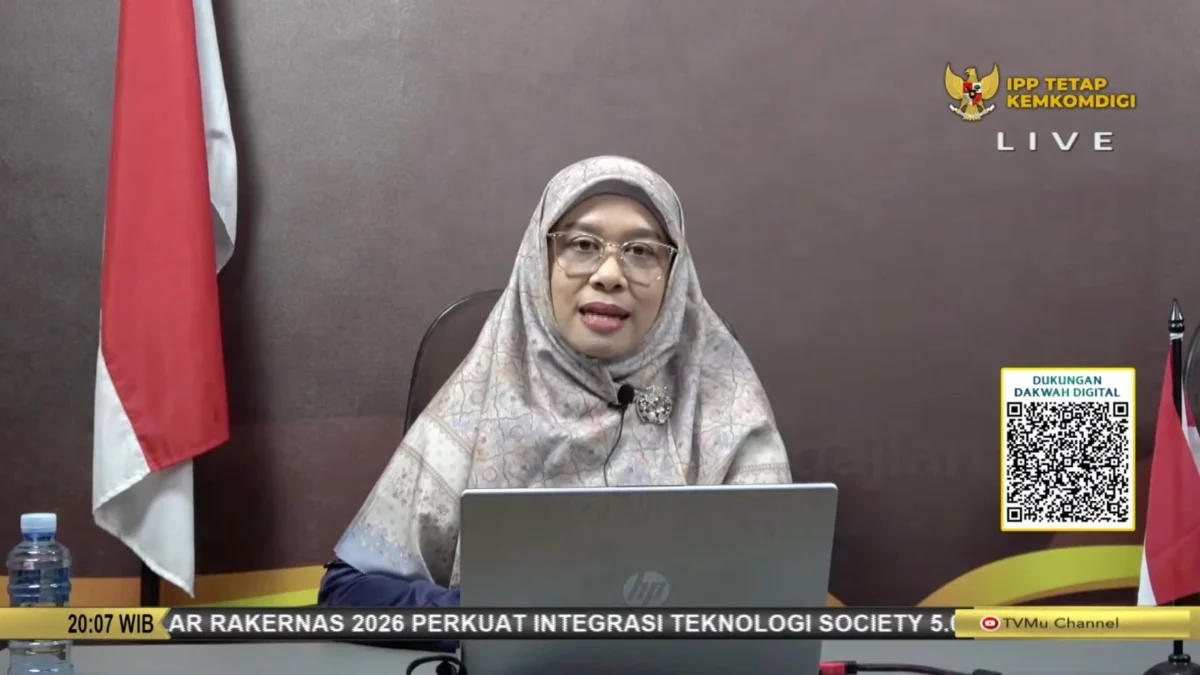
The debate surrounding marital roles, financial contributions, and domestic authority within contemporary Muslim households has gained renewed academic and theological attention. Speaking at the weekly Pengajian Tarjih forum, Lailatis Syarifah, a prominent member of the Tarjih and Tajdid Council of the Muhammadiyah Central Leadership, delivered a comprehensive discourse addressing the complex intersections of income disparity, spousal obedience, and Islamic jurisprudence. The session, held on Wednesday, September 16, directly challenged oversimplified interpretations of marital hierarchies, asserting that a husband’s financial standing does not dictate a wife’s moral obligation of obedience, nor does it diminish his inherent dignity as a partner.
As modern socio-economic landscapes evolve, shifting away from traditional single-earner household models, religious institutions are increasingly called upon to provide relevant guidance. The discourse hosted by Muhammadiyah—one of Indonesia’s largest and most influential Islamic organizations—serves as a vital theological framework for navigating the economic and social realities of contemporary families, where dual-income households, female breadwinners, and economically vulnerable spouses are becoming increasingly commonplace.
The Evolving Economic Reality of the Modern Household
The core of Syarifah’s address focused on dismantling the rigid, binary view of gender roles that has historically dominated domestic discourse. In many traditional settings, domestic authority is directly correlated with financial contribution: the primary earner holds ultimate decision-making power, while the dependent partner assumes a subordinate role. However, Syarifah emphasized that family structures are rarely uniform.
Modern households exist on a wide spectrum of economic arrangements. While traditional models feature husbands as the primary providers, contemporary society frequently witnesses households where wives outearn their husbands, couples share financial burdens equally through dual incomes, or husbands face unemployment while wives shoulder the entirety of the financial responsibility.
According to labor statistics and sociological studies across Southeast Asia, women’s participation in the formal workforce has risen steadily over the past few decades. This shift has altered traditional power dynamics within the home. Syarifah cautioned against applying blanket theological rulings to diverse economic realities without careful consideration. Viewing family dynamics through a simplistic lens, she noted, reduces complex human relationships to a rigid black-and-white dichotomy that fails to account for modern socio-economic pressures.
Foundational Principles of the Sakinah Family in Muhammadiyah Teachings
To construct a resilient and harmonious household—referred to in Islamic tradition as a sakinah (tranquil) family—Muhammadiyah relies on a specific set of foundational principles. These tenets are designed to protect the rights, dignities, and responsibilities of both spouses equally, moving away from patriarchal authoritarianism toward a framework rooted in mutual respect and divine justice.
The framework is anchored by five primary pillars: karamah insaniah (human dignity), equality, justice, mawaddah wa rahmah (love and compassion), and the fulfillment of both worldly and spiritual needs.
1. Karamah Insaniah (Human Dignity)
The principle of karamah insaniah dictates that both husband and wife share an equal and inherent dignity as human beings created by God. Syarifah referenced Surah Al-Isra, verse 70, which highlights the divine honor bestowed upon all humankind (Walaqad karramna bani adama). In the context of marriage, this principle ensures that the institution of matrimony does not strip away the personal dignity or autonomy of either partner. No spouse holds a divine right to subjugate or degrade the other based on gender or economic contribution.
2. The Principle of Equality
Building upon human dignity, the principle of equality asserts that husband and wife are partners of equal value. Syarifah clarified that equality does not necessitate identical roles; rather, it recognizes that partners may assume different responsibilities that are designed to complement one another rather than establish a hierarchy of worth.
3. Justice in Rights and Obligations
Justice within the Muhammadiyah family framework requires that rights and obligations be distributed fairly, taking into account the capabilities, needs, and responsibilities of each individual. This comprehensive view of justice extends beyond material financial support to encompass emotional, spiritual, and psychological well-being. It includes mutual obligations regarding religious education, emotional support, and shared nurturing within the home.
Redefining Spousal Obedience and Financial Contributions
Within traditional Islamic jurisprudence, the concept of taat (obedience) by a wife toward her husband has often been a subject of intense debate. Syarifah provided a nuanced clarification, stating that a wife’s obedience is not absolute or unconditional; rather, it is strictly bound by the parameters of truth and goodness (kebenaran dan kebaikan).
A wife is obligated to respect and obey her husband only within matters that align with Islamic ethical principles and moral rectitude. Furthermore, this obedience is reciprocal with the husband’s fulfillment of his duties. If a husband commands something unjust, harmful, or contrary to Islamic values, the obligation of obedience ceases.
Moreover, obedience does not mean silence. The framework outlined during the forum highlights that wives retain the right—and the duty—to respectfully advise, remind, and engage in constructive dialogue (makruf) when a husband falters or neglects his responsibilities. Concurrently, wives are expected to maintain the family’s honor, protect shared assets, and treat their spouses with kindness and courtesy.
On the other side of the equation, the husband retains his core religious obligation to provide financial maintenance (nafkah) to the best of his ability. However, Syarifah strongly emphasized decoupling financial contribution from personal worth and domestic authority.
"Even if a husband possesses minimal wealth, it does not diminish his honor as a human being and head of the household," Syarifah stated. "Conversely, if a wife or husband possesses significant wealth, it does not grant them absolute power or autocratic control over the family."
Collaborative Economic Models in the Family
Addressing situations where husbands face financial hardship or unemployment, Syarifah noted that Islamic jurisprudence provides flexible mechanisms for family survival. When a husband is temporarily or permanently unable to fulfill financial obligations single-handedly, the responsibility of providing for the household can be shared.
This cooperative approach relies on mutual consultation (musyawarah) and explicit agreement between spouses. Far from signaling a breakdown of traditional gender roles, this flexibility is viewed as a practical implementation of Islamic justice, ensuring that the survival and well-being of the family unit take precedence over rigid social expectations.
Sociological analysts observing the trajectory of family laws in Indonesia note that organizations like Muhammadiyah play a critical role in bridging classical Islamic jurisprudence (fiqh) with modern human rights standards. By emphasizing mutual consultation, shared responsibility, and the inherent dignity of both spouses, progressive religious rulings help mitigate domestic friction arising from economic shifts.
Broader Implications for Indonesian Society
The articulation of these progressive yet traditionally grounded family principles carries significant implications for Indonesian society. As urban migration, shifting employment markets, and economic pressures continue to transform the domestic landscape, families face unprecedented stressors. Traditional models that place the entire financial burden on men while restricting women to domestic spheres are increasingly untenable for a large segment of the population.
By validating the economic contributions of women and decoupling financial status from moral authority, Muhammadiyah’s Tarjih and Tajdid Council offers a theological blueprint that helps reduce domestic conflict, mental health pressures associated with unrealistic gender expectations, and marital instability.
Ultimately, the Muhammadiyah discourse underscores that a tranquil and prosperous family (keluarga sakinah) is not forged through authoritarian control or financial dominance. Instead, it is built upon a foundation of shared trust, divine justice, mutual respect, and the willingness of both partners to fulfill their respective covenants before God and each other.