Manchester City claimed a narrow 1-0 victory over Manchester United in a high-stakes Premier League encounter at Old Trafford, reinforcing their position as early-season title contenders. In a match defined by tactical attrition, moments of individual brilliance, and a resilient defensive display from the visitors, Erling Haaland’s 60th-minute strike proved the difference. Despite playing with ten men for the majority of the contest following Phil Foden’s first-half dismissal, Pep Guardiola’s side showcased the composure and structural integrity required to secure three points in one of football’s most hostile environments.
The Tactical Battle at Old Trafford
The Manchester Derby, historically one of the most significant fixtures in English football, arrived at a critical juncture in the 2026/27 Premier League campaign. Entering the match, both sides were looking to establish momentum. For Manchester United, under pressure to turn their home form around, the game represented an opportunity to bridge the gap with the league leaders. Conversely, City aimed to maintain their perfect start to the season and keep pace with an Arsenal side that has shown early dominance.
The first half was marked by physical intensity and tactical discipline. The momentum shifted significantly in the first 45 minutes when Phil Foden was shown a straight red card. The dismissal forced Guardiola into an immediate defensive recalibration, shifting from his trademark high-press system to a compact, low-block structure designed to neutralize United’s transition threats. This tactical pivot defined the remainder of the match, as City chose to concede possession in exchange for defensive solidity.
Chronology of the Match
The match remained scoreless through the first half, with both teams sizing each other up. However, the second period began with an immediate surge from the hosts. In the 51st minute, United’s young midfielder Kobbie Mainoo signaled intent when his long-range strike beat the diving Gianluigi Donnarumma, only to rattle the left post. The ball ricocheted off the woodwork and struck the Italian goalkeeper before being scrambled away by the City defense, a moment that epitomized United’s frustration throughout the afternoon.
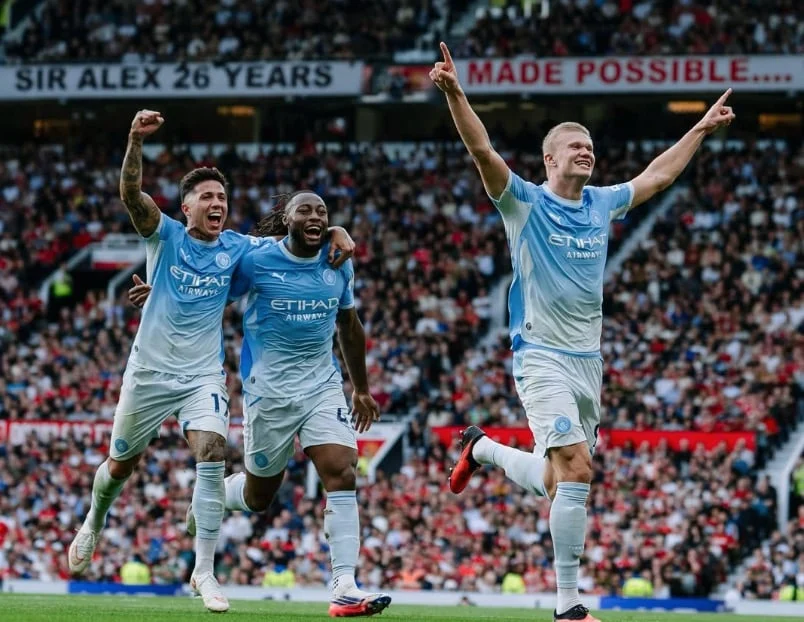
The decisive moment arrived at the hour mark. Josko Gvardiol, operating from the left flank, delivered a probing cross into the penalty area. The ball deflected off a United defender, falling fortuitously into the path of Erling Haaland. While the initial reaction from the linesman was to flag for offside, a lengthy VAR review confirmed that the ball had been redirected by a United player, rendering the striker onside. Haaland, demonstrating his characteristic clinical precision, rifled a volley past Senne Lammens from a tight angle to break the deadlock.
The final thirty minutes were a test of endurance for the ten-man City side. United pressed relentlessly, searching for an equalizer. Bruno Fernandes forced a sharp save from Donnarumma with a powerful long-range effort in the 70th minute, while Harry Maguire saw a headed attempt sail agonizingly wide of the post shortly after. City, meanwhile, proved dangerous on the counter-attack. Enzo Fernandez struck the woodwork with a curling shot from distance in the 68th minute, and Haaland missed a golden opportunity to double the lead in the 76th minute, firing wide from close range.

Supporting Data and Statistical Breakdown
The statistical profile of the match highlights the unique nature of the encounter. Despite the numerical disadvantage, Manchester City maintained a disciplined defensive shape that frustrated United’s creative output.
- Possession: Manchester United held 58% of the ball, reflecting their need to push for an equalizer, while City settled into a counter-attacking rhythm.
- Shots on Target: United registered four shots on target, all of which were dealt with by Gianluigi Donnarumma. City, despite the red card, managed three shots on target, with Haaland’s goal being the most significant.
- Discipline: The match was fractious, with Foden’s red card serving as the central disciplinary event. Total fouls committed reached 22, underscoring the physicality of the midfield battle.
The result leaves Manchester City with 12 points from their opening four matches. They sit in second place in the Premier League table, trailing Arsenal only on goal difference. For Manchester United, the defeat represents their second loss in four games, raising questions regarding their consistency in high-profile matches as they look to integrate new tactical systems under their current management.
Post-Match Analysis and Official Outlook
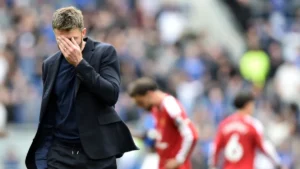
While the clubs have yet to release formal post-match press conference transcripts, sources close to the teams suggest a stark contrast in sentiment. Pep Guardiola is expected to praise his side’s "mentality and defensive resilience," particularly highlighting how the team managed the game after being reduced to ten men. The ability to control the tempo of a game while shorthanded against a club of United’s stature is a hallmark of a championship-caliber team.
For Manchester United, the post-match discourse is likely to center on missed opportunities. Managerial staff will likely emphasize the "near misses"—specifically the Mainoo shot and the Maguire header—as evidence that the team is creating high-quality chances. However, the inability to convert pressure into points remains a persistent concern for the United faithful. The technical failure to break down a 10-man defense will invite further scrutiny regarding the team’s attacking fluidity and their composure in the final third.
Broader Implications for the Premier League Season
The 2026/27 Premier League season is already shaping up to be a tight contest between the traditional "Big Six." Manchester City’s victory at Old Trafford serves as a psychological statement. By winning a "derby of attrition," they have demonstrated that their title defense does not rely solely on expansive, high-scoring football, but also on the grit required to win "ugly."
For Arsenal, City’s continued success places immense pressure on their own upcoming fixtures. The goal difference gap is razor-thin, suggesting that the top two spots could remain in a state of flux for several weeks. Meanwhile, Manchester United finds themselves at a crossroads. With two losses in four, they are currently outside the top four positions. The pressure to secure Champions League qualification, combined with the expectations of the fanbase, means the next few fixtures will be pivotal in determining the trajectory of their season.
As the international break approaches, both teams will have time to assess their performances. For City, the focus will be on maintaining their unbeaten start and managing squad fitness. For United, the challenge is to find the clinical edge that has thus far eluded them. The 1-0 result in the Manchester Derby will be remembered as a tactical masterclass by the visitors and a missed opportunity for the hosts, setting the stage for what promises to be an intense return to league action in the coming weeks. The Premier League table, while still in its infancy, is already reflecting a divide between the consistent elite and the chasing pack, with this result providing the first major separation of the campaign.