The Ministry of Communication and Digital (Komdigi) has officially confirmed the winners of the highly anticipated 700 MHz and 2.6 GHz frequency spectrum auctions, marking a significant step in Indonesia’s digital transformation agenda. Following this critical phase, the ministry has announced its intention to proceed with an additional auction for the 900 MHz frequency band later in 2026. This strategic allocation of vital radio spectrum is aimed at enhancing the quality of telecommunication services, broadening internet broadband access, and accelerating the nation’s overall digital development.
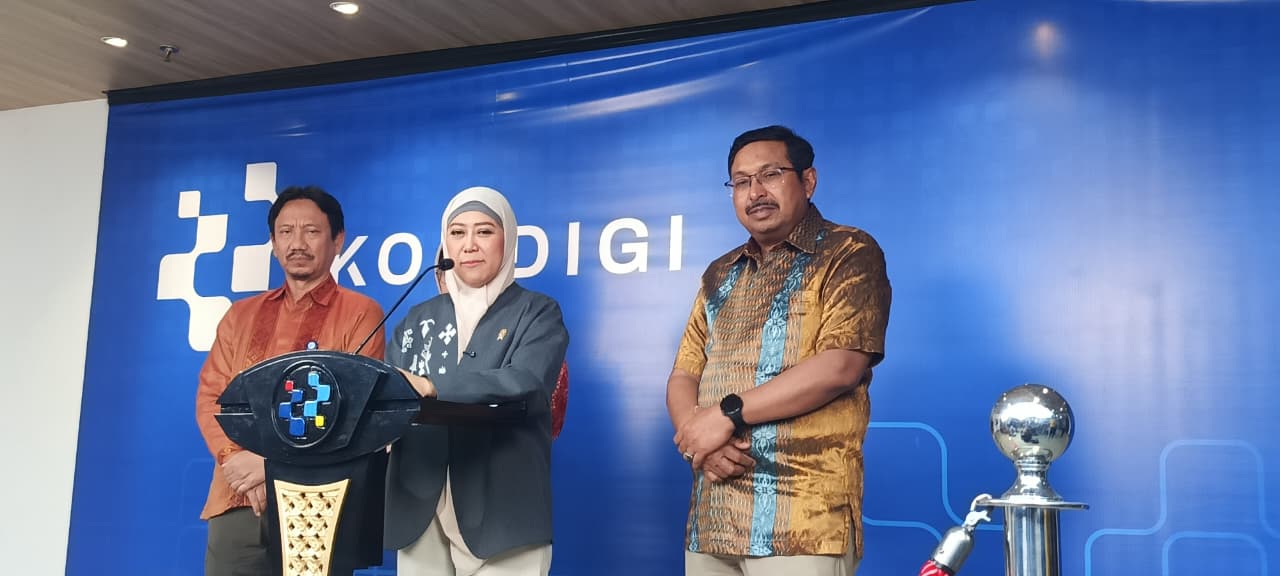
Komdigi Minister Meutya Hafid made the announcement on Tuesday, July 21, 2026, at the Komdigi Office, where she formalized the results of the recent spectrum bids. "Following the endorsement of the winners for the 700 MHz and 2.6 GHz frequency bands, Komdigi will proceed with the auction of the 900 MHz frequency band," Minister Hafid stated, underscoring the government’s continuous efforts to optimize spectrum utilization. While a definitive schedule for the 900 MHz auction has yet to be released, the Minister confirmed that the process would undoubtedly take place within the current year, 2026.
The Significance of Spectrum Allocation in Indonesia’s Digital Ambition
Radio frequency spectrum is a finite and invaluable national resource, forming the backbone of all wireless communication technologies, from mobile phones and Wi-Fi to broadcasting and satellite services. In a vast archipelago like Indonesia, with its diverse geography and rapidly growing digital economy, efficient and equitable spectrum allocation is paramount for connectivity, economic growth, and social inclusion. The ongoing auctions reflect the government’s commitment to ensuring that Indonesia’s telecommunications infrastructure can support the increasing demands of its populace and businesses, particularly in the context of emerging technologies like 5G and the Internet of Things (IoT).
The 700 MHz band, often referred to as the "digital dividend," is particularly coveted due to its excellent propagation characteristics. Frequencies in this lower band can travel greater distances and penetrate buildings more effectively than higher frequencies, making them ideal for providing wide area coverage, especially in rural and remote areas, and improving indoor penetration in urban centers. Its release for mobile broadband use was made possible by the country’s transition from analog to digital television broadcasting, freeing up this valuable asset.
Conversely, the 2.6 GHz band offers substantial capacity, making it highly suitable for densely populated urban environments and for supporting high-bandwidth applications, including advanced 4G and 5G services. Its availability allows operators to deploy networks that can handle massive data traffic, crucial for enhancing user experience and supporting innovative digital services. The combination of these two bands provides a balanced approach: 700 MHz for expansive reach and 2.6 GHz for intensive capacity.
The upcoming 900 MHz auction holds its own unique importance. Historically, this band has been a cornerstone for 2G and 3G networks. The specific block being re-auctioned was previously held by XLSmart Telecom Sejahtera Tbk. However, a regulatory condition following a merger involving XLSmart mandated the return of this specific 900 MHz block to the state. Its re-allocation presents an opportunity for operators to enhance their existing network capabilities, potentially refarm the spectrum for 4G or even 5G, and improve network efficiency, particularly in areas where 900 MHz is already deployed. The synergy between 900 MHz, 700 MHz, and 2.6 GHz can enable operators to build robust, multi-layered networks that offer both extensive coverage and high capacity.
Chronology of the Auction Process and Future Plans
The journey to re-allocate these crucial spectrum bands has been a complex, multi-stage process reflecting careful regulatory planning and execution. The timeline for these auctions can be broadly outlined as follows:
- Pre-Auction Phase (Prior to 2026): Komdigi initiated preparatory work, including feasibility studies, public consultations, and the establishment of regulatory frameworks and auction rules. This phase is critical to ensure transparency, fairness, and optimal value for the state. Discussions surrounding the "digital dividend" and the re-purposing of the 700 MHz band for mobile broadband have been ongoing for several years, building anticipation for this particular auction.
- Announcement of 700 MHz and 2.6 GHz Auctions: Official calls for bids and detailed tender documents were released, outlining the technical specifications, eligibility criteria, and financial requirements for participating operators. This would have attracted significant interest from Indonesia’s major telecommunication providers.
- Bidding Process (Leading up to July 2026): Qualified telecommunication operators submitted their proposals and participated in the competitive bidding rounds for the specified frequency blocks. This process is typically rigorous, involving multiple stages of evaluation and financial offers.
- Confirmation of Winners (July 21, 2026): Minister Meutya Hafid officially announced and endorsed the winning bids for the 700 MHz and 2.6 GHz bands. This marks the culmination of the competitive phase and the formal assignment of spectrum rights.
- Post-Confirmation Phase (Ongoing): The winning operators will now proceed with the necessary administrative and technical steps to integrate the newly acquired spectrum into their networks. This involves significant capital investment in infrastructure upgrades, new base stations, and network optimization.
- Announcement of 900 MHz Auction (July 21, 2026): Concurrently with the confirmation of the previous auction results, Komdigi formally declared its intention to hold an auction for the 900 MHz band within 2026, signaling a continuous drive for spectrum optimization.
- Future 900 MHz Auction (Later 2026): While the exact schedule remains undisclosed, the ministry is expected to release detailed information regarding the bidding process for the 900 MHz band in the coming months, initiating another round of competition among operators.
Detailed Auction Results and Strategic Implications
The recently concluded auctions saw fierce competition among Indonesia’s leading telecommunication companies, resulting in significant spectrum acquisitions for all three major players.
Winners of the 700 MHz Frequency Band:
-
PT XLSMART Telecom Sejahtera Tbk:
- Rank: 1st
- Frequency Block: 30 MHz (2×15 MHz)
- Bid Price: Rp35.34 billion per MHz
- Total Bid Value: Rp1.0602 trillion (approximately USD 72.5 million, based on an assumed exchange rate for context)
XLSmart’s substantial acquisition of 30 MHz in the 700 MHz band positions it strongly for expanding its network coverage, particularly in less densely populated regions, and enhancing indoor service quality for its subscribers nationwide. This move could significantly improve its competitive edge in offering broad, reliable connectivity.
-
PT Telekomunikasi Selular (Telkomsel):
- Rank: 2nd
- Frequency Block: 20 MHz (2×10 MHz)
- Bid Price: Rp32.125 billion per MHz
- Total Bid Value: Rp642.5 billion (approximately USD 44 million)
Telkomsel, as the largest operator in Indonesia, further strengthens its network with an additional 20 MHz in the 700 MHz band. This acquisition complements its existing spectrum holdings, allowing it to reinforce its extensive national coverage and improve service quality across its vast customer base.
-
PT Indosat Tbk:
- Rank: 3rd
- Frequency Block: 20 MHz (2×10 MHz)
- Bid Price: Rp25.374 billion per MHz
- Total Bid Value: Rp507.48 billion (approximately USD 34.7 million)
Indosat’s gain of 20 MHz in the 700 MHz band will enable it to enhance its network reach and capacity, particularly beneficial for its growing subscriber base and its efforts to expand into new geographical markets.
Winners of the 2.6 GHz Frequency Band:
-
PT Telekomunikasi Selular (Telkomsel):
- Rank: 1st
- Frequency Block: 80 MHz
- Bid Price: Rp6.823 billion per MHz
- Total Bid Value: Rp545.84 billion (approximately USD 37.3 million)
Telkomsel’s significant acquisition of 80 MHz in the 2.6 GHz band underscores its commitment to leading the charge in high-capacity services and 5G deployment. This large block provides ample bandwidth for delivering ultra-fast speeds and supporting advanced applications in urban and high-traffic areas.
-
PT Indosat Tbk:
- Rank: 2nd
- Frequency Block: 60 MHz
- Bid Price: Rp6.2 billion per MHz
- Total Bid Value: Rp372 billion (approximately USD 25.4 million)
Indosat’s 60 MHz acquisition in the 2.6 GHz band substantially boosts its capacity, allowing it to enhance its 4G and 5G offerings, especially in metropolitan areas where demand for data-intensive services is highest.
-
PT XLSMART Telecom Sejahtera Tbk:
- Rank: 3rd
- Frequency Block: 50 MHz
- Bid Price: Rp4.632 billion per MHz
- Total Bid Value: Rp231.6 billion (approximately USD 15.8 million)
XLSmart’s 50 MHz in the 2.6 GHz band rounds out its spectrum portfolio, providing it with crucial capacity to complement its 700 MHz holdings. This balanced approach enables XLSmart to deliver both widespread coverage and high-speed data services.
In summary, all three national cellular operators successfully secured additional spectrum, a critical outcome that will foster a more competitive and innovative telecommunications landscape. Notably, XLSmart emerged as the largest winner in the 700 MHz band, securing the widest coverage potential, while Telkomsel dominated the 2.6 GHz band, positioning itself for high-capacity and advanced 5G applications. These allocations are crucial for enabling operators to meet the burgeoning data demands of Indonesian consumers and businesses.
Official Responses and Broader Implications
Komdigi’s official statement reiterates that these selections are part of the government’s broader strategy to optimize radio frequency spectrum utilization. The overarching goals are clear: to significantly improve the quality of telecommunication services, expand access to high-speed internet broadband across the archipelago, and accelerate Indonesia’s digital transformation journey.
Minister Hafid emphasized that the process for these auctions was designed to be final and binding, adhering to all applicable regulations. This ensures stability and certainty for the winning operators as they embark on the substantial investments required to deploy and utilize their newly acquired spectrum. Following this official determination, the operators are expected to move swiftly to implement their spectrum utilization plans in accordance with the regulatory guidelines.
From an industry perspective, the successful conclusion of these auctions is met with cautious optimism. While the additional spectrum is unequivocally beneficial for network expansion and service improvement, some industry analysts, as previously reported by Selular, have raised concerns regarding the relatively high bidding prices for both the 700 MHz and 2.6 GHz bands. "An observer commented that the auction prices for the 700 MHz and 2.6 GHz bands set by Komdigi were too high," indicated a previous report. High acquisition costs could potentially translate into increased capital expenditure for operators, which might, in turn, influence investment priorities or even consumer pricing, though operators typically absorb these costs over the long term through enhanced service offerings.
However, the consensus remains that these spectrum allocations are vital for Indonesia’s digital future. Improved connectivity is a cornerstone for economic development, fostering innovation in various sectors such as education, healthcare, e-commerce, and logistics. It enables remote work and learning, facilitates digital financial services, and empowers small and medium-sized enterprises (SMEs) to participate more actively in the digital economy. The judicious allocation of spectrum is not just about telecommunications; it’s about building a more connected, inclusive, and prosperous digital society. The upcoming 900 MHz auction will further contribute to this vision, ensuring that operators have a diverse set of frequency bands to optimize their networks for different purposes and geographical needs, ultimately benefiting millions of Indonesian citizens.