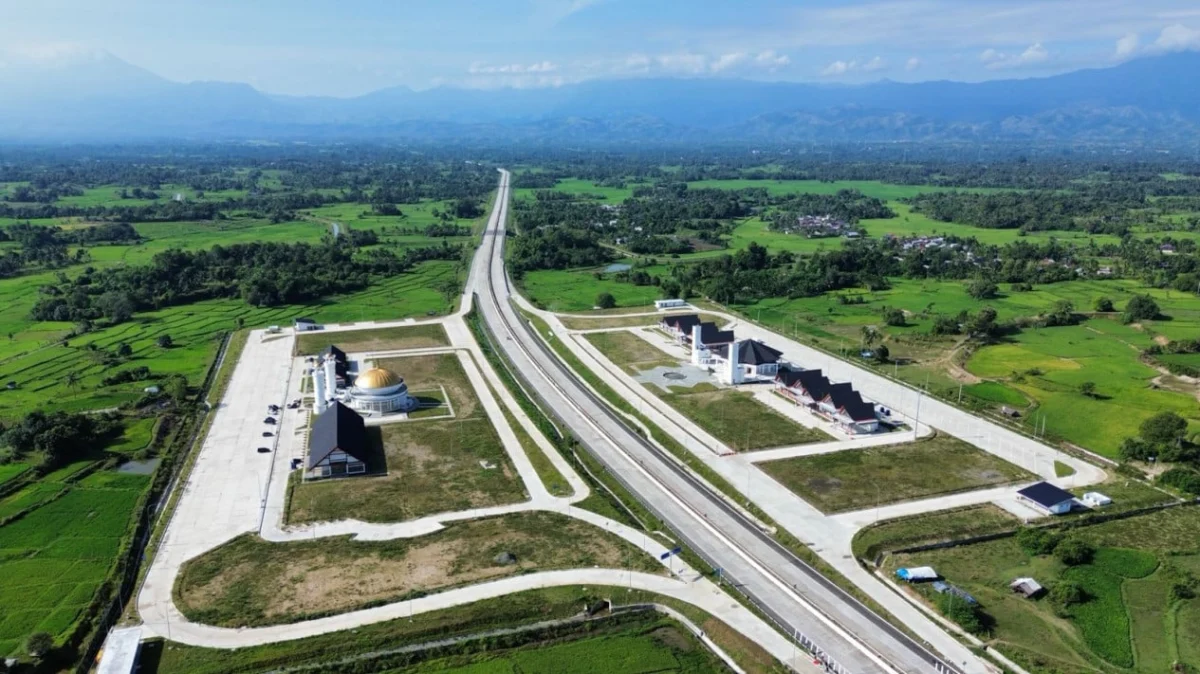
Jakarta, VIVA – In a strategic move to significantly enhance national defense capabilities, the Indonesian Ministry of Public Works and Housing (PUPR) has officially designated four major toll road sections across the archipelago to function as emergency runways for Indonesian Air Force (TNI AU) fighter jets. Minister Dody Hanggodo announced on Thursday, July 23, 2026, that this initiative is a crucial component of President Prabowo Subianto’s "Asta Cita" vision, which prioritizes a robust and resilient national defense infrastructure. These dual-use infrastructures are designed to maintain their primary function as vital transportation arteries during normal operations while being readily convertible for military aviation purposes in times of crisis or operational necessity.
Strategic Imperative for Dual-Use Infrastructure
The decision to repurpose sections of Indonesia’s burgeoning toll road network for military use underscores a broader strategic imperative to fortify the nation’s defense posture. As an archipelagic nation with vast maritime borders and numerous strategic choke points, Indonesia faces unique challenges in ensuring rapid deployment and operational flexibility for its armed forces. Conventional airfields, while essential, can be vulnerable to attack or natural disasters, limiting the Air Force’s operational reach and resilience. By integrating emergency runway capabilities into existing civilian infrastructure, the government aims to create a dispersed network of potential landing and take-off points, thereby increasing the survivability and operational readiness of its fighter fleet. This concept, known globally as "dual-use infrastructure," is not novel, with countries like Sweden, Finland, Germany, and even sections of the U.S. Interstate Highway System having long incorporated such designs into their national defense strategies.
Minister Dody Hanggodo elaborated on the rationale, stating, "Banda Aceh-Sigli is also being prepared. Under normal conditions, these sections will continue to be used as toll roads. However, in emergency situations, they can be opened and utilized for landing and take-off operations of TNI AU fighter jets." He emphasized that all designated toll sections are engineered to optimal specifications, ensuring they can seamlessly support defense operations without compromising their structural integrity or primary function. This meticulous planning involves considerations for pavement strength, width, clear zones, and the absence of overhead obstacles, all critical for safe aircraft operations.
The Four Designated Strategic Toll Sections
The four specific toll road sections identified for this critical dual-use capability are strategically distributed across Indonesia, reflecting a comprehensive approach to national defense:
-
Jalan Tol Banda Aceh-Sigli (Aceh): Located on the northern tip of Sumatra, this toll road holds immense strategic value. Aceh’s proximity to the Malacca Strait, one of the world’s busiest shipping lanes and a critical geopolitical hotspot, makes it a vital region for national security. The ability to launch and recover fighter jets from this area provides enhanced surveillance and rapid response capabilities for protecting Indonesia’s western flank and maritime interests in the Andaman Sea and beyond. The Banda Aceh-Sigli toll road is a key component of the Trans-Sumatra Toll Road network, linking major cities and contributing to economic development in the region. Its transformation into an emergency airstrip further elevates its strategic importance.

-
Jalan Tol Jakarta-Cikampek II Selatan (Japek II Selatan): Situated in the densely populated and economically vital region of West Java, near the nation’s capital, Jakarta, Japek II Selatan is a critical artery for logistics and commuter traffic. Its designation as an emergency runway highlights the need for defense preparedness even in core economic zones. In a scenario where conventional airbases around Jakarta might be compromised, this section could provide an alternative operational base, ensuring the defense of the capital and surrounding strategic assets. The choice of Japek II Selatan also indicates a focus on maintaining operational readiness close to the nerve center of the country.
-
Jalan Tol Terbanggi Besar-Pematang Panggang-Kayu Agung (Sumatra): As a significant segment of the Trans-Sumatra Toll Road, this long stretch connects central and southern Sumatra, facilitating economic growth and inter-island connectivity. Its inclusion in the emergency runway program provides extensive operational flexibility across the vast island of Sumatra. The sheer length and relatively lower population density along parts of this route make it an ideal candidate for potential military operations, allowing for greater maneuverability and reduced risk to civilian populations during such events. This section enhances the Air Force’s reach and sustainment capabilities across Sumatra.
-
Jalan Tol Probolinggo-Banyuwangi (East Java): Located in eastern Java, this toll road connects Probolinggo to Banyuwangi, serving as a gateway to Bali and the eastern Indonesian archipelago. Its strategic importance lies in its ability to support operations safeguarding the eastern maritime approaches, including the Bali Strait and beyond into the Nusa Tenggara region. In the context of regional security and the defense of Indonesia’s vast eastern territories, having an emergency runway in this area ensures that air assets can be effectively projected and sustained. The Probolinggo-Banyuwangi segment facilitates both economic activity and enhanced defense posture in a crucial geographical corridor.
Technical Specifications and Engineering Adaptations
The transformation of civilian toll roads into military-grade emergency runways is not a trivial undertaking. It requires meticulous planning and adherence to stringent engineering standards. According to PUPR, the design and construction of these toll sections have taken into account several critical factors to ensure their suitability for aircraft operations:
- Pavement Strength and Material: The road surface must be capable of withstanding the immense weight and impact forces generated by modern fighter jets during landing and take-off. This often necessitates thicker asphalt or concrete layers, reinforced sub-bases, and high-quality aggregate materials, far exceeding typical civilian road specifications.
- Width and Clear Zones: Fighter jets require significant runway width for safe operations, including wingtip clearance and maneuvering space. The designated toll sections are likely designed with broader shoulders or adjacent clear zones that can be quickly prepared for aircraft use. The absence of tall structures, power lines, or other obstructions in the immediate vicinity is also paramount.
- Runway Length: While not all toll road sections can provide the extensive length of a dedicated military airfield, the chosen segments are sufficiently long to accommodate the take-off and landing requirements of various fighter aircraft types, often necessitating specialized short take-off and landing (STOL) procedures or specific aircraft configurations.
- Drainage Systems: Effective drainage is crucial to prevent water accumulation on the runway, which can pose significant hazards to aircraft. The design incorporates robust drainage solutions to ensure rapid water runoff.
- Access and Support Infrastructure: In an emergency, rapid deployment of ground support equipment, fuel, and personnel is essential. The chosen toll sections likely have existing or planned access points that can be quickly secured and utilized for these purposes.
- Lighting and Communication: While not permanently installed, plans would be in place for the rapid deployment of portable lighting systems and communication infrastructure to facilitate night operations or adverse weather conditions.
Minister Dody affirmed, "The development of infrastructure is not only aimed at serving community mobility and logistics distribution but also must be able to provide strategic value for national interests." This statement underscores the dual-purpose philosophy embedded in the design and construction of these critical infrastructures.
Asta Cita: President Prabowo Subianto’s Vision for Defense
This initiative is directly aligned with President Prabowo Subianto’s "Asta Cita" or "Eight Goals," particularly those focused on strengthening national defense and security. President Subianto, with his extensive background as a former special forces commander and Minister of Defense, has consistently emphasized the urgent need to modernize and bolster Indonesia’s military capabilities. The Asta Cita vision seeks to transform Indonesia into a resilient and self-reliant nation with a formidable defense apparatus capable of safeguarding its sovereignty and national interests.

The integration of civilian infrastructure into defense planning reflects a holistic approach to national security, recognizing that all national assets can contribute to overall resilience. This strategy not only provides tangible operational benefits for the TNI AU but also sends a clear message about Indonesia’s commitment to self-defense and its proactive stance in regional security. It signifies a shift towards more integrated civil-military planning, where infrastructure development is viewed through a strategic lens that encompasses both economic prosperity and national security.
Coordination and Implementation Timeline
The successful implementation of this dual-use strategy requires robust coordination between multiple government entities. The Ministry of Public Works and Housing (PUPR) is responsible for the engineering, construction, and maintenance of the toll roads, ensuring they meet the required specifications. The Ministry of Defense and the Indonesian Air Force (TNI AU) are key stakeholders, defining the operational requirements, conducting drills, and ultimately utilizing these emergency runways. Other agencies, such as the Ministry of Transportation, will also play a role in coordinating air traffic control and temporary airspace restrictions during military operations.
While a precise public timeline for full operational readiness was not provided, Minister Dody’s statement on July 23, 2026, indicates that preparations are actively underway. The planning phase likely involved extensive feasibility studies, site surveys, and inter-agency consultations. The construction or modification of the designated sections would follow, potentially involving specialized paving techniques and infrastructure adjustments. Regular drills and exercises would then be conducted to ensure the seamless conversion and operation of these emergency runways by TNI AU personnel. These exercises would also serve to familiarize the public with the concept and necessary protocols during such events.
Broader Impact and Implications
The designation of toll roads as emergency runways carries significant implications across several domains:
- Enhanced National Defense and Deterrence: The most immediate impact is the substantial enhancement of Indonesia’s defense capabilities. By increasing the number of available operational bases, the TNI AU gains greater flexibility in deploying and redeploying assets, making its forces more resilient to potential attacks on conventional airfields. This dispersed operational capability also acts as a powerful deterrent, signaling Indonesia’s readiness to defend its territory across its vast expanse.
- Cost-Effectiveness and Resource Optimization: Building dedicated military airfields is an incredibly expensive and time-consuming endeavor. By leveraging existing or planned civilian infrastructure, the government can achieve critical defense objectives more cost-effectively, optimizing national resources. The initial investment in ensuring the toll roads meet military specifications is significantly less than constructing new airbases from scratch.
- Regional Stability and Geopolitical Positioning: Indonesia plays a crucial role in maintaining stability in Southeast Asia. A stronger, more resilient defense posture contributes to regional security and reinforces Indonesia’s standing as a significant regional power. This move could also influence geopolitical dynamics by demonstrating Indonesia’s commitment to protecting its strategic interests in a complex and evolving security landscape.
- Logistical Resilience: Beyond fighter jets, the concept of dual-use infrastructure can extend to broader logistical resilience. In times of natural disaster or other emergencies, well-maintained toll roads can facilitate the rapid movement of humanitarian aid, emergency services, and military support, further underscoring their multi-functional value.
- Public Awareness and Engagement: The implementation of such a program necessitates clear communication with the public. While these roads primarily serve civilian traffic, temporary closures for military drills or actual emergencies will impact daily life. Public education campaigns will be crucial to foster understanding, cooperation, and support for these vital national security initiatives. The concept of "national interest" and "shared responsibility" will be central to this public discourse.
Minister Dody Hanggodo concluded, "The utilization of toll sections as emergency runways demonstrates that the infrastructure built by the Ministry of PUPR has a dual function, not only for community and logistics mobility but also for supporting national preparedness." This statement encapsulates the forward-thinking approach of the Indonesian government in integrating its civilian development with its strategic defense needs, paving the way for a more secure and resilient future for the archipelago. This innovative approach to infrastructure planning serves as a testament to Indonesia’s commitment to adapting to modern security challenges with pragmatic and effective solutions.