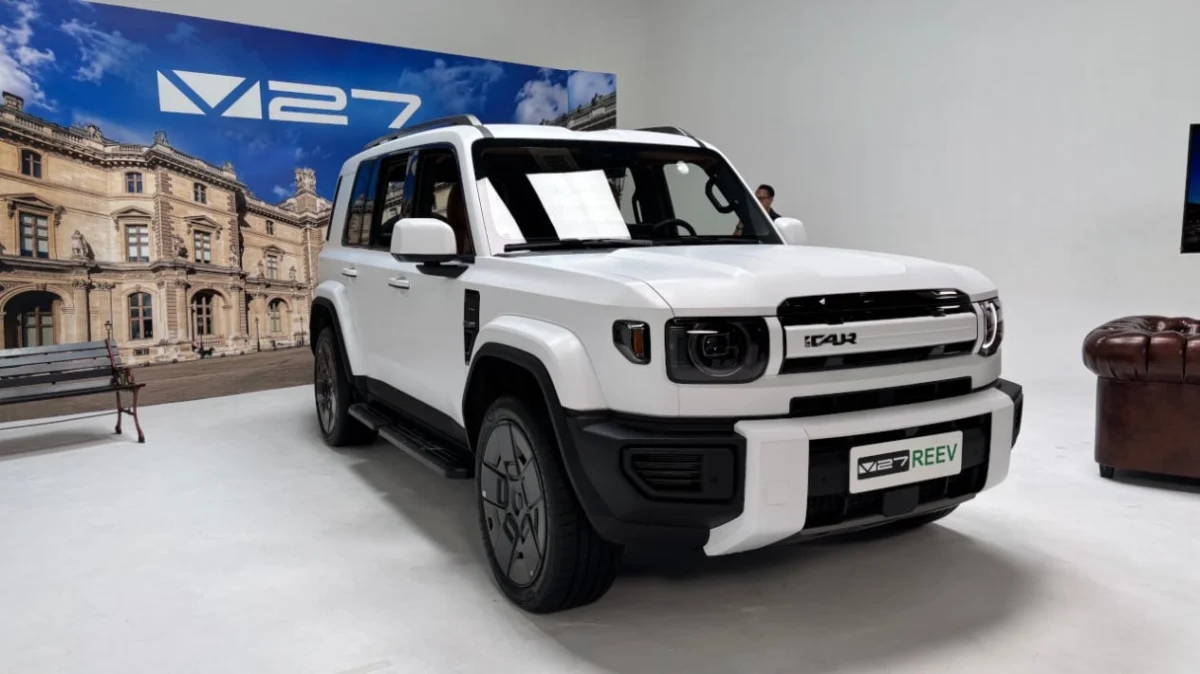
Jakarta, Indonesia – July 23, 2026, 20:54 WIB – The burgeoning landscape of electrified vehicles in Indonesia is poised for further expansion with the highly anticipated debut of the iCAR V27 at the Gaikindo Indonesia International Auto Show (GIIAS) 2026. This distinctively boxy SUV is set to make its mark by showcasing Range-Extended Electric Vehicle (REEV) technology, a system that promises to redefine long-distance electric mobility for Indonesian consumers.
Unlike traditional hybrid or Plug-in Hybrid Electric Vehicle (PHEV) systems, the iCAR V27’s REEV architecture prioritizes electric propulsion. In this configuration, an electric motor remains the primary source of power for the vehicle’s wheels. A gasoline engine is integrated, but its role is solely to function as a generator, producing electricity to replenish the battery pack as needed, thereby alleviating range anxiety.
Understanding the REEV Philosophy
Tommy Herrmansyah, Product Planning Manager at iCAR Indonesia, elaborated on the core philosophy behind this technology. "What drives the wheels is still the electric motor. The gasoline engine’s sole responsibility is to generate electricity to charge the battery, not to directly propel the vehicle," he explained during a product briefing attended by VIVA Otomotif on Thursday, July 23, 2026. This approach is designed to offer drivers the characteristic smooth and responsive driving experience of an electric vehicle, while simultaneously providing the assurance of extended range for longer journeys, a crucial consideration in a country with diverse and often extensive travel routes.
Technical Specifications and Performance Capabilities
The iCAR V27 is equipped with a 34.31 kWh battery pack, which the manufacturer claims can deliver an impressive pure electric range of approximately 200 kilometers. When this electric range is supplemented by the vehicle’s 60-liter fuel tank, the total driving range is projected to exceed an exceptional 1,200 kilometers. This dual-source power system is designed to offer flexibility, allowing users to opt for zero-emission driving for daily commutes and rely on the extended range for inter-city travel or remote exploration without the constant need for charging infrastructure.
To facilitate this extended range, the SUV incorporates a 1.5-liter turbocharged engine that acts as the ‘range extender.’ This means drivers are not entirely dependent on external charging points for longer trips, a significant advantage in regions where charging stations may be less prevalent.
In terms of performance, the iCAR V27 boasts a sophisticated "Three-Motor True Electric AWD" system. This advanced setup comprises a P1 motor generator, a P3 front-drive motor, and a P4 rear-drive motor. This intricate combination generates a substantial output of up to 335 kW, equivalent to approximately 455 PS, coupled with a peak torque of 505 Nm.
The manufacturer claims an acceleration from 0 to 100 kilometers per hour can be achieved in a brisk 5.9 seconds, with a top speed of 180 km/h. Furthermore, the all-wheel-drive system is engineered to maintain optimal traction across a variety of battery charge levels, enhancing safety and driving confidence in diverse conditions.
Design and Interior Features
Beyond its innovative powertrain, the iCAR V27 presents a commanding presence with its substantial dimensions. The SUV measures 5,045 mm in length, featuring a wheelbase of 2,900 mm. Its boxy design aesthetic is underpinned by the brand’s "Classic Never Fades" philosophy, aiming to blend timeless styling with modern functionality.
The interior is configured to accommodate five passengers comfortably, offering a generous luggage space of 715 liters. This capacity can be further expanded to an impressive 1,818 liters by folding down the rear seats, making it a versatile option for families and those requiring ample cargo room.
To enhance the overall passenger experience, the iCAR V27 is outfitted with a suite of premium features. These include a "Dual Panoramic Sky Screen," providing an expansive view of the surroundings, a high-fidelity Pioneer audio system with 15 speakers, and a rapid 50W wireless charging pad for mobile devices. The inclusion of an "Automatic Parking Assist" system further adds to the vehicle’s convenience and ease of use in urban environments.
GIIAS 2026: A Platform for Innovation
The Gaikindo Indonesia International Auto Show (GIIAS) is a cornerstone event in the Indonesian automotive calendar, typically held annually and serving as a crucial platform for manufacturers to unveil new models, showcase cutting-edge technologies, and gauge market interest. GIIAS 2026 is expected to continue this tradition, with a particular emphasis on the accelerating shift towards sustainable mobility solutions.
The Indonesian government has been actively promoting the adoption of electric vehicles through various incentives and policy frameworks, aiming to reduce reliance on fossil fuels and curb emissions. Events like GIIAS play a vital role in educating consumers about these new technologies and making them more accessible. The growing presence of electric and hybrid models at GIIAS reflects a broader trend observed across global automotive markets, with manufacturers investing heavily in electrification research and development.
Market Implications and Future Outlook
The introduction of the iCAR V27, with its REEV technology, is likely to stimulate increased competition within Indonesia’s burgeoning electrified vehicle segment. This new entrant will provide consumers with an additional choice, particularly in the SUV category, which remains highly popular in the Indonesian market. The REEV system’s ability to bridge the gap between pure electric driving and long-distance convenience could resonate strongly with consumers who are eager to embrace electric mobility but remain concerned about the practicalities of charging infrastructure and travel range.
Industry analysts suggest that the success of models like the iCAR V27 will depend not only on their technological prowess and pricing but also on the continued development of charging infrastructure across the archipelago and ongoing government support for EV adoption. The automotive market in Indonesia is dynamic, and the introduction of innovative powertrains is expected to drive further technological advancements and a more diverse range of vehicle options for consumers in the coming years. iCAR Indonesia’s strategic decision to launch at GIIAS 2026 underscores the show’s significance as a launchpad for new automotive innovations in the region. The company’s commitment to offering REEV technology suggests a targeted approach to address specific consumer needs and preferences within the Indonesian context. The formal launch of the V27 at GIIAS 2026 is anticipated to generate significant consumer interest and potentially influence purchasing decisions for those considering an electrified SUV.