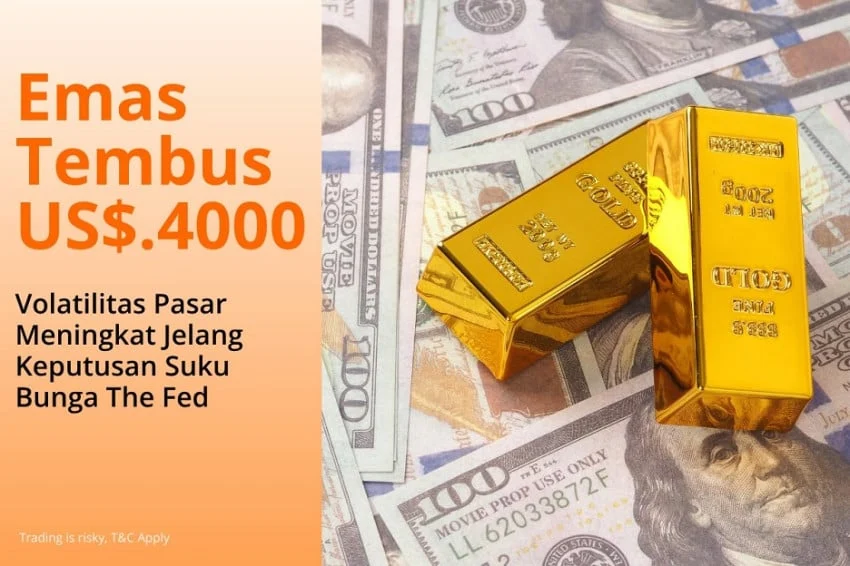
The global gold market is currently experiencing a period of heightened sensitivity as investors navigate a complex macroeconomic landscape. Prices recently retreated from record highs, dipping below the critical psychological threshold of USD 4,000 per troy ounce. This downward movement has arrived at a pivotal juncture, occurring just days before the highly anticipated Federal Open Market Committee (FOMC) meeting scheduled for October 27–28, 2026. As market participants brace for potential shifts in monetary policy, the intersection of precious metal valuations, equity market volatility, and geopolitical uncertainty has created an environment of intense scrutiny.
The Intersection of Volatility and Market Sentiment
The recent price action in the gold market does not exist in a vacuum; it is intrinsically linked to broader indicators of financial stress. On Friday, October 23, 2026, the CBOE Volatility Index (VIX)—often referred to as Wall Street’s "fear gauge"—surged beyond the level of 20. A VIX reading above 20 typically signifies that market participants are pricing in an expectation of increased turbulence in the U.S. equity markets.
When the VIX spikes, it often signals a transition in risk sentiment. Traditionally, investors flock to "safe-haven" assets like gold during periods of market stress. However, the recent concurrent decline in gold prices suggests that the metal is currently being influenced by competing forces: the desire for safety versus the liquidation of assets to cover margin calls or to capitalize on shifting yield environments. Analysts at Firewoodfunded have pointed to this specific volatility as a precursor to potential market reallocations, noting that institutional investors are currently adjusting their portfolios in anticipation of the Fed’s forthcoming policy stance.
Contextualizing the Federal Reserve’s Mandate
The Federal Reserve’s upcoming meeting is the focal point of the current fiscal week. The central bank is tasked with managing a delicate balance: controlling persistent inflation while ensuring that the U.S. labor market and economic growth remain stable.
For the gold market, the Fed’s interest rate policy is the primary driver of long-term value. Gold, a non-yielding asset, traditionally struggles in a high-interest-rate environment. When central banks maintain elevated rates, the opportunity cost of holding gold—which provides no dividends or interest—increases significantly. Investors, therefore, often shift capital toward Treasury bonds or high-yield savings vehicles.
Conversely, if the Federal Reserve signals a pivot toward monetary easing or hints at a reduction in the benchmark federal funds rate, the dollar typically weakens and bond yields decline, which usually serves as a catalyst for gold appreciation. The uncertainty regarding whether the Fed will maintain its "higher-for-longer" rhetoric or move toward a more dovish stance is exactly why the market is experiencing such sharp fluctuations in the days leading up to the announcement.
Chronology of the Recent Market Shift
The week leading up to October 27 has been characterized by a tightening of liquidity and speculative repositioning.

- October 20, 2026: Gold prices were trading near their historical peaks, driven by reports of increased central bank buying and sustained geopolitical tensions in the Middle East and Eastern Europe.
- October 22, 2026: Early signs of profit-taking emerged as bond yields began to tick upward, putting immediate pressure on non-yielding assets.
- October 23, 2026: The VIX broke above the 20 level. Gold prices saw a sharp intraday correction, dropping below the USD 4,000 mark as institutional desks rebalanced their books ahead of the weekend.
- October 26, 2026: Market sentiment remained fragile. Analysts observed a lack of conviction in either direction, with volume tapering off as the market waited for the official statement from the Fed.
Global Implications and Central Bank Behavior
The movement of gold prices is further complicated by the changing behavior of central banks globally. Recent data suggests that several nations have been aggressively repatriating gold reserves or increasing their physical holdings. This trend represents a strategic shift away from total reliance on the U.S. dollar, a move prompted by concerns over the weaponization of the global financial system and the long-term sustainability of U.S. debt levels.
The fact that gold remains near record levels despite current headwinds—such as a resilient U.S. dollar and the current interest rate environment—indicates that the long-term structural demand for the metal remains intact. While the short-term technicals suggest a potential "cooling off" period, many analysts maintain that the fundamental backdrop for gold remains bullish. The "de-dollarization" trend, combined with fiscal deficits in major economies, suggests that gold is being viewed less as a speculative trade and more as a foundational hedge against currency debasement.
Technical Analysis and Market Support
From a technical perspective, the breach of the USD 4,000 level is a significant psychological event. Market technicians emphasize that support levels will now be tested. If the price fails to reclaim the USD 4,000 handle quickly, it may trigger further automated sell orders, potentially leading to a deeper correction toward the USD 3,900 level.
However, "Firewoodfunded" and other market commentators highlight that the volatility is not necessarily indicative of a long-term bearish trend. Instead, it reflects a market that is "price discovery" mode. The rapid rise in the VIX suggests that market participants are hedging their positions, essentially buying "insurance" in the form of options against a sudden market downturn. This hedging activity often results in volatile, choppy trading patterns as investors react to every headline emanating from the Fed.
Expert Outlook: What to Watch for in the Fed Statement
As the FOMC meeting concludes on October 28, market observers will be analyzing three specific areas of the Fed’s communication:
- The "Dot Plot" Projections: Any change in the median expectation for the terminal interest rate will be the most significant market-moving factor.
- Inflationary Commentary: If the Fed acknowledges that inflation is becoming stickier than previously anticipated, this would likely bolster the U.S. dollar and weigh further on gold.
- Labor Market Assessment: If the Fed expresses concern regarding the cooling of the labor market, it could signal a readiness to cut rates sooner than the market currently anticipates, which would be a major tailwind for gold.
Conclusion: A Period of Strategic Patience
The current volatility in the gold market is a reflection of a global financial system attempting to reconcile high interest rates with high debt levels and geopolitical uncertainty. While the temporary dip below USD 4,000 has garnered significant attention, it is important to view this movement through the lens of institutional hedging and pre-FOMC positioning.
Investors are currently navigating a landscape where historical correlation patterns are being challenged. With the VIX elevated and central banks maintaining their strategic gold accumulation programs, the metal remains a central figure in global finance. The coming days will be critical in determining whether the current price action is a mere technical consolidation or the beginning of a broader reassessment of risk assets. For now, market participants are advised to exercise caution and monitor the interplay between the Federal Reserve’s policy trajectory and the evolving global economic data. The next 48 hours will likely define the price trend for the remainder of the quarter.