JAKARTA – Minister of Hajj and Umrah Mochamad Irfan Yusuf has addressed public scrutiny regarding the appointment of his son as a specialized advisor within the newly formed Hajj Organizing Agency (BP Haji). The appointment, which has sparked discourse regarding administrative transparency and governance protocols, prompted the Minister—widely known as Gus Irfan—to clarify the operational challenges that characterized the initial phase of the agency’s establishment. According to the Minister, the involvement of his family members and associates was a pragmatic, temporary measure taken during a period of institutional vacuum.
Genesis of the BP Haji and the Administrative Vacuum
The Badan Penyelenggara Haji (BP Haji) was established as a strategic move to centralize and modernize the administration of the Hajj pilgrimage, a massive undertaking that involves the movement of hundreds of thousands of Indonesian citizens annually. Upon its inception, the agency faced the daunting task of operationalizing its functions without the foundational support typically afforded to government bodies.
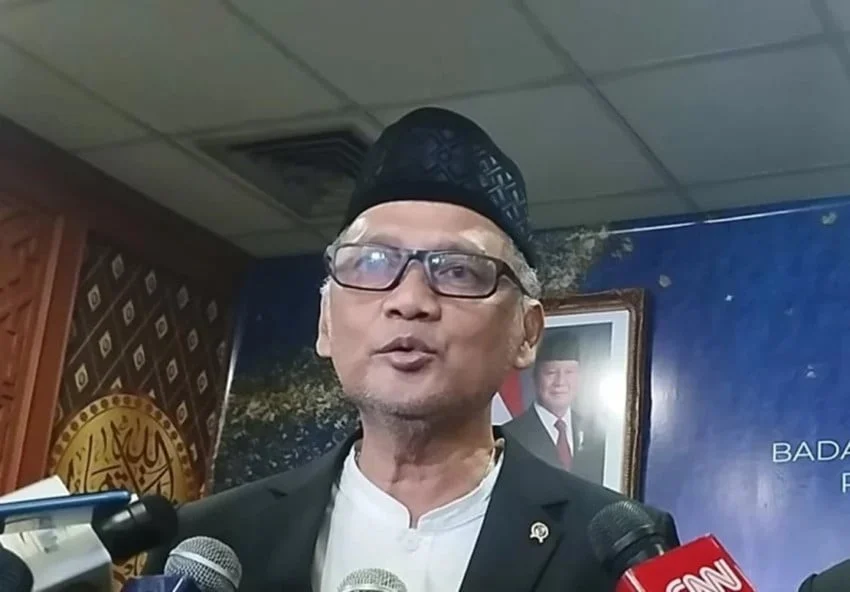
Gus Irfan noted that the transition from the executive office to the formal establishment of the agency left the leadership in a precarious position. "Upon leaving the palace to begin our duties, we possessed no staff, no physical office, and no operational support infrastructure. We essentially had to start from zero," the Minister stated in a formal press briefing on Monday, October 26, 2026.
This lack of institutional memory and physical resources forced the leadership to rely on informal networks to manage the initial documentation, policy drafting, and organizational structuring required to bring the agency into compliance with national mandates.
Chronology of Events: From Transition to Scrutiny
The timeline of the agency’s formation highlights the urgency under which the Minister and his team operated:
- Early 2026: The government announces the formation of BP Haji as a dedicated institution for Hajj management.
- Initial Formation Phase: Minister Irfan Yusuf is appointed to head the body. The agency receives its mandate but lacks a dedicated budget allocation for administrative staff.
- Mid-2026: The Minister utilizes the assistance of his son and a group of santris (religious boarding school students) to handle the administrative backlog. During this period, these individuals operated without formal contracts or government compensation.
- Late 2026: As the agency begins to formalize its structure, the presence of the Minister’s son in an advisory capacity becomes public knowledge, leading to questions regarding potential nepotism and the adherence to Civil Service (ASN) regulations.
- October 26, 2026: Minister Irfan Yusuf issues a public statement clarifying the nature of the involvement, asserting that the contribution of his family and students was strictly volunteer-based and temporary.
The Role of Pro Bono Assistance in Public Administration
In his defense, the Minister emphasized that the individuals in question provided their services on a pro bono basis for a duration of approximately three to four months. "There was no financial burden on the state budget during those initial months. These were individuals who offered their time voluntarily to ensure that the agency could fulfill its immediate obligations to the public," Gus Irfan explained.
The practice of utilizing "expert assistants" (tenaga ahli) is a standard procedure in many government ministries. However, the selection process is generally governed by strict guidelines to ensure meritocracy and prevent conflicts of interest. Legal experts suggest that while the Minister’s explanation of a "state of emergency" provides context, it does not necessarily exempt the appointment from future audits regarding public transparency.
Economic Context: The Financial Burden of Hajj Operations
The controversy surrounding the staffing of the BP Haji occurs against a backdrop of significant financial pressure regarding Hajj management. The Ministry of Hajj and Umrah has recently proposed a total Hajj cost (BPIH) of Rp107.3 million for the 2027 season, with the portion to be paid by pilgrims set at Rp42.9 million.
This proposal highlights the delicate balance between maintaining high service standards for pilgrims and managing the government’s fiscal sustainability. The operational efficiency of the BP Haji is critical to managing these costs, as any administrative mismanagement could exacerbate the financial burden on both the state and the pilgrims. The public’s scrutiny of staffing practices is, therefore, linked to a broader concern over the agency’s ability to manage funds with total integrity.
Analysis of Institutional Implications
The situation involving Minister Irfan Yusuf serves as a case study for the challenges inherent in establishing new government agencies in Indonesia. While the intent to expedite the formation of the BP Haji is clear, the methods used to fill administrative gaps have created a perception challenge.
- Governance Transparency: The primary implication is the need for formal, transparent, and competitive hiring processes for all roles within the BP Haji, even during the formative stages. Relying on close personal networks, even when done for noble or practical reasons, risks undermining public trust in the institution’s impartiality.
- Regulatory Compliance: Future audits by the State Audit Board (BPK) will likely focus on whether the transition period adhered to civil service guidelines. If it is determined that the informal assistants had access to classified or sensitive government data, the Ministry may be required to formalize their status or terminate their involvement immediately to ensure compliance with the Law on State Information.
- Public Perception and Trust: The Minister’s willingness to address the issue directly is a positive step for accountability. However, the long-term impact on the agency’s reputation will depend on its ability to demonstrate that future hiring and administrative decisions are based strictly on professional credentials rather than proximity to leadership.
Expert Opinions and Expected Reactions
Political analysts have weighed in on the matter, noting that in the current political climate, "good intentions" are often insufficient to quell public concern regarding ethical governance. Dr. Aris Wahyudi, a governance analyst, noted that "the vacuum of power is a real issue in government transitions, but the solution must always favor institutional integrity over expediency. The public is right to demand clear rules of engagement, even in the infancy of an organization."
Conversely, some observers argue that the Minister’s decision to tap into a trusted circle during a crisis reflects the reality of building a new government agency in a resource-constrained environment. They suggest that as long as the assistance was indeed volunteer-based and resulted in no financial loss to the state, the focus should remain on the long-term effectiveness of the BP Haji in serving the pilgrims.
Moving Forward: Toward Professionalization
The Ministry of Hajj and Umrah is currently moving toward a more structured administrative phase. The focus for the remainder of 2026 and into 2027 will be on finalizing the organizational chart, securing official staff positions, and ensuring that the BP Haji functions as a robust, professional entity.
For Minister Irfan Yusuf, the challenge remains to transition the agency from its "startup" phase—characterized by informal, agile decision-making—to a mature government body governed by rigid protocols. The public expectation is that as the agency grows, the informal reliance on personal networks will be entirely replaced by a transparent, merit-based, and institutionalized workforce.
As the agency continues to finalize the Hajj cost structure and prepares for the upcoming pilgrimage season, the Ministry will likely face continued oversight. Transparency in these administrative matters will be the key metric by which the success of the BP Haji is measured in the coming years. For now, the Minister’s clarification acts as a temporary resolution to the controversy, but the discourse underscores a growing demand for higher standards of bureaucratic governance in Indonesia.