The pursuit of justice for Indonesian migrant workers has once again taken center stage as national lawmakers demand definitive answers regarding the protracted investigation into the Run Zeng fishing vessel case. More than two years have elapsed since formal allegations of human trafficking and severe labor abuses were lodged with the Indonesian National Police (Bareskrim Polri). Despite the gravity of the accusations, which include systematic forced labor and the tragic death of a crew member, investigators have yet to name a single suspect. This lack of visible progress has ignited sharp criticism from the House of Representatives (DPR), with parliamentarians pressing law enforcement agencies to provide absolute legal certainty, restore public trust, and ensure full transparency for the grieving families left behind.
The controversy surrounding the Run Zeng fleet highlights systemic vulnerabilities within the management, recruitment, and protection of Indonesian seafarers operating on foreign-flagged vessels. Maritime labor rights advocates have long pointed to the high risks faced by Indonesian citizens who seek employment in distant-water fishing sectors, where regulatory oversight is frequently fragmented, opaque, and difficult to enforce. The stagnation of the Bareskrim Polri inquiry has compounded the suffering of the victims’ families, who continue to navigate a labyrinth of bureaucratic silence while awaiting accountability for crimes that allegedly crossed international maritime borders.
Parliamentary Demands for Transparency and Accountability
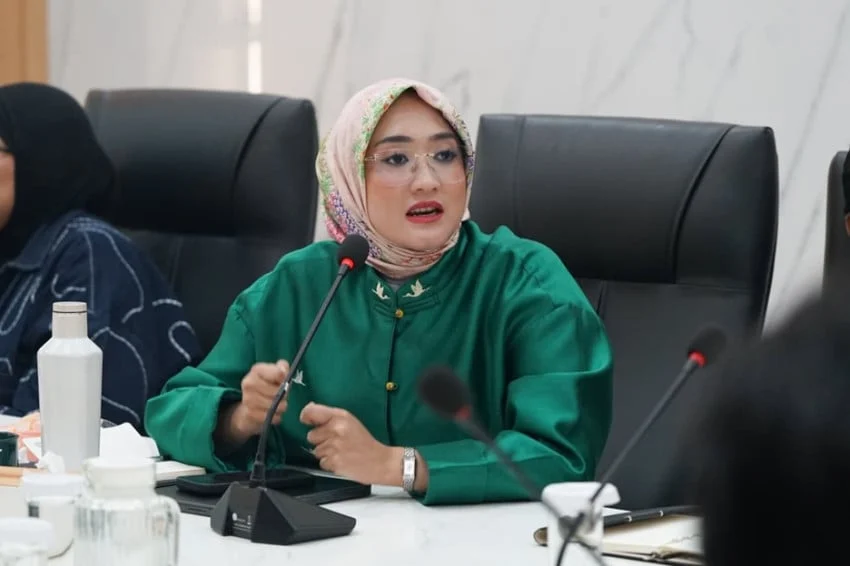
The mounting pressure on law enforcement was underscored by Rina Sa’adah, a member of Commission IV of the DPR representing the National Awakening Party (PKB). In an official statement released on Thursday, November 26, 2026, Sa’adah formally requested that the National Police Headquarters transparently disclose the current trajectory of the Run Zeng investigation. She emphasized that the families of the victims, alongside their legal counsel, possess an unalienable right to receive official updates concerning the steps taken by investigators, the hurdles encountered during the process, and projected timelines for future legal actions.
Sa’adah’s intervention builds upon earlier parliamentary oversight regarding the case. Just a day prior, on November 25, 2026, Commission III DPR member Yulius Setiarto publicly addressed the stagnation of the inquiry, confirming that Bareskrim Polri had failed to secure or announce any formal suspects despite the extensive passage of time. The convergence of concerns from multiple parliamentary commissions illustrates a broad institutional frustration with the pace of justice in high-profile transnational labor exploitation cases. Lawmakers argue that prolonged investigations not only deny justice to the victims but also embolden reckless recruitment agencies and vessel operators who exploit regulatory loopholes to subject vulnerable Indonesian nationals to modern-day slavery.
Chronology of Events and the Tragic Death of Juanna Bay
The legal battle for the Run Zeng crew members is anchored in a timeline defined by prolonged suffering, delayed reporting, and tragic loss of life. The formal legal proceedings commenced on June 24, 2024, when advocates and representatives of the affected crew members officially submitted a comprehensive police report to Bareskrim Polri. The dossier detailed harrowing accounts of systematic human trafficking, physical abuse, excessive working hours, withheld wages, and hazardous conditions aboard the Run Zeng vessels.
Central to the gravity of the ongoing investigation is the death of Juanna Bay, an Indonesian crew member assigned to the Run Zeng 03 vessel. In April 2024, Bay was discovered dead under suspicious circumstances in the remote waters of the Aru Islands, located in the eastern Indonesian province of Maluku. The sudden and unexplained fatality transformed what was already a severe labor dispute into a potential homicide and severe criminal negligence inquiry. Lawmakers have repeatedly stressed that the investigation into Bay’s death must be treated as an integral component of the broader human trafficking case, rather than handled as an isolated maritime accident.
According to statements from legal representatives and surviving crew members, the conditions aboard the Run Zeng ships deviated starkly from international maritime safety standards. Workers reported enduring physical intimidation, inadequate food and clean water, and a complete absence of medical care while operating in hazardous high-seas environments. The psychological and physical toll on the survivors remains profound, with many expressing deep apprehension about their safety as they cooperate with domestic and international legal authorities.
Systemic Vulnerabilities in the Indonesian Distant-Water Fishing Sector
The Run Zeng case is far from an isolated incident; rather, it serves as a glaring symptom of the wider structural crises plaguing the deployment of Indonesian migrant fishers. Indonesia remains one of the world’s leading suppliers of maritime labor, with tens of thousands of citizens working aboard foreign commercial fishing fleets based in Taiwan, China, and other distant-water fishing nations. However, the legal framework governing these workers has historically been characterized by overlapping jurisdictions between different government ministries, creating regulatory gaps that predatory manning agencies routinely exploit.
Despite the ratification of international conventions and domestic legal reforms designed to enhance worker protection—such as Law No. 18 of 2017 on the Protection of Indonesian Migrant Workers—enforcement mechanisms remain severely constrained when incidents occur outside territorial waters. Crew members frequently sign contracts under duress or in languages they do not fully understand, relinquishing their passports and identity documents to unscrupulous agents upon departure. This power asymmetry leaves workers virtually powerless when subjected to forced labor practices, as escaping a vessel in foreign ports or international waters is nearly impossible without institutional intervention.
Furthermore, the bureaucratic hurdles involved in conducting transnational investigations often impede law enforcement agencies. Gathering forensic evidence, interviewing international witnesses, and coordinating with foreign diplomatic missions require extensive diplomatic and legal cooperation, which can notoriously slow down criminal proceedings. Nevertheless, legal experts and human rights organizations argue that domestic law enforcement agencies must demonstrate greater proactivity and resource allocation when handling cases involving fatalities and allegations of human trafficking against Indonesian nationals.
Official Responses and Institutional Obstacles
As public scrutiny intensifies, the response from law enforcement agencies has faced mounting skepticism. While Bareskrim Polri initially accepted the formal report in June 2024, the subsequent lack of substantive updates or suspect designations has raised critical questions regarding the institutional capacity and prioritization of transnational crimes within the police force.
Legal observers note that investigations involving foreign-flagged vessels often encounter complex jurisdictional bottlenecks. Questions regarding the exact registry of the Run Zeng vessels, the corporate structures of the operating companies, and the identities of the ultimate beneficial owners complicate the process of serving warrants and holding corporate entities legally accountable. However, lawmakers maintain that these administrative complexities should not translate into perpetual impunity.
In her recent address, Rina Sa’adah underscored the necessity of witness protection for the surviving crew members who have stepped forward to provide testimonies to the authorities. She cautioned that without robust security guarantees, witnesses might be subjected to intimidation or coercion by agents linked to the operating companies, thereby compromising the integrity of the judicial process. The demand for official, scheduled progress reports aims to introduce accountability not only for the perpetrators of the alleged crimes but also for the investigative bodies tasked with bringing them to justice.
Socio-Economic and Diplomatic Implications
The ramifications of the Run Zeng case extend far beyond the immediate legal proceedings, carrying significant socio-economic and diplomatic implications for Indonesia. Domestically, the failure to secure a swift and transparent resolution damages public confidence in the state’s ability to protect its citizens working abroad. For families of victims like Juanna Bay, the absence of closure perpetuates generational trauma and financial instability, particularly if the deceased was the primary household breadwinner and their due wages remain unpaid.
On a diplomatic level, the handling of foreign labor exploitation cases influences Indonesia’s standing in international human rights assessments. Global watchdogs, including the United States Department of State’s Trafficking in Persons (TIP) report, closely monitor Indonesia’s legislative and judicial efforts to combat forced labor and human trafficking. Persistent delays in prosecuting major maritime trafficking rings risk negatively impacting the nation’s international ranking, which could, in turn, affect trade relations and labor export agreements.
Moreover, the case serves as a litmus test for the effectiveness of inter-agency coordination between the National Police, the Ministry of Foreign Affairs, the Indonesian Migrant Worker Protection Agency (BP2MI), and maritime safety bodies. Stakeholders argue that a unified national task force dedicated exclusively to maritime labor trafficking is urgently required to streamline investigations, provide immediate rescue operations, and ensure that perpetrators face the full force of the law.
Path Forward: Ensuring Justice and Systemic Reform
As the investigation into the Run Zeng case enters its third year since the initial police report, the collective demand from lawmakers, legal advocates, and civil society is unequivocal: accountability, transparency, and structural reform. The calls by representatives such as Rina Sa’adah and Yulius Setiarto reflect a growing legislative impatience with stagnation in human rights and labor exploitation cases.
For justice to be served, Bareskrim Polri must expedite its evidentiary procedures, clarify the status of the investigation, and take decisive legal action against all individuals and corporate entities implicated in the trafficking, forced labor, and death of Juanna Bay. Simultaneously, the Indonesian government must leverage this high-profile case to enact sweeping reforms in the maritime recruitment sector, closing regulatory loopholes and establishing ironclad safety nets for the hundreds of thousands of Indonesian seafarers who brave the world’s oceans in pursuit of an honest livelihood. Only through rigorous law enforcement and systemic prevention can the nation hope to end the cycle of exploitation that continues to endanger its vulnerable maritime workforce.