The political landscape in Indonesia faces a significant constitutional challenge as constitutional law expert Denny Indrayana has formally urged the House of Representatives (DPR RI) to exercise its Hak Menyatakan Pendapat (HMP)—the right to express an opinion—to initiate impeachment proceedings against Vice President Gibran Rakabuming Raka. This call to action follows a series of legal developments involving the Constitutional Court (MK) and the Supreme Court (MA), which reportedly indicate that the Vice President does not meet the necessary educational qualifications mandated by the national Election Law.
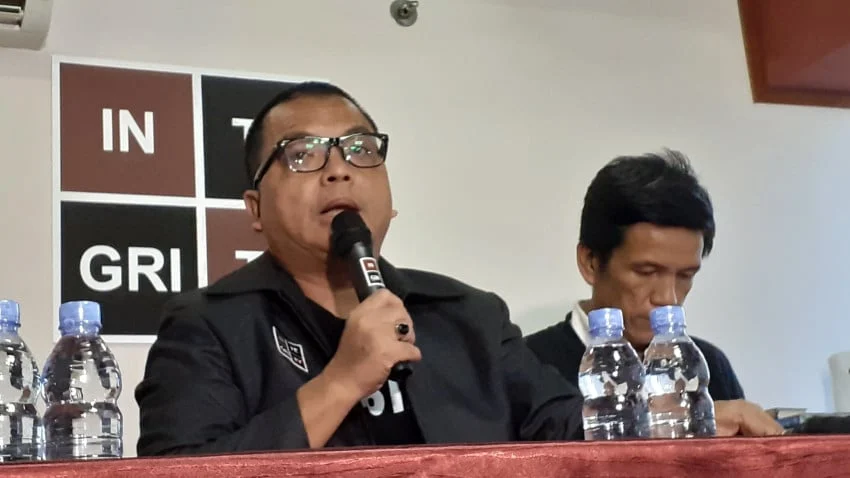
Speaking at his office in Jakarta on Monday, November 2, 2026, Indrayana emphasized that the judiciary has provided a clear, consistent, and singular narrative regarding the Vice President’s eligibility. According to Indrayana, these judicial findings eliminate the need for further investigative delays, as the legal basis for parliamentary action is already established.
The Legal Basis for Impeachment
At the heart of the current crisis is Article 7A of the 1945 Constitution of the Republic of Indonesia. This constitutional provision serves as the primary mechanism for the removal of a sitting President or Vice President. It stipulates that the President and/or Vice President may be impeached by the DPR if they are proven to have violated the law—specifically through treason, corruption, bribery, or other high crimes—or if they no longer fulfill the requirements to hold their respective offices.
Indrayana argues that the failure to meet the statutory educational requirements constitutes a breach of the fundamental criteria for holding executive office. By failing to comply with the educational standards set forth in the prevailing Election Law, the Vice President is, according to this legal interpretation, operating outside the constitutional mandate required for his position. The invocation of the Hak Menyatakan Pendapat is the preliminary step required by the DPR to formalize these findings and transition the matter toward a judicial review process in the Constitutional Court, which ultimately holds the authority to decide on impeachment.
Chronology of the Controversy
The eligibility of Gibran Rakabuming Raka has been a subject of intense public and legal scrutiny since his nomination. The discourse shifted from political criticism to formal legal challenges following a sequence of events:
- Nomination Phase: Objections were raised regarding the Vice President’s educational qualifications during the registration process for the general election. At the time, legal teams representing various civil society groups filed complaints with the General Election Commission (KPU).
- Judicial Reviews: Throughout the subsequent months, several judicial review petitions were filed with the Supreme Court and the Constitutional Court, challenging the legality of the candidacy based on administrative and educational requirements.
- Judicial Findings: Recent rulings from both the Constitutional Court and the Supreme Court have reportedly aligned in their assessment that the Vice President’s credentials do not meet the strict stipulations of the Election Law. These rulings have provided the ammunition for legal experts and political analysts to demand accountability from the legislative branch.
- Political Momentum: Following these judicial developments, prominent figures such as political analyst Ray Rangkuti have called upon the political parties that supported the current administration to take the lead in holding the executive accountable. This marks a shift from purely legal discourse to active political maneuvering within the legislature.
Parliamentary Dynamics and the HMP Mechanism
The process of exercising the Hak Menyatakan Pendapat is a rigorous constitutional procedure. Under the prevailing legislative regulations, the DPR must first hold a plenary session to decide whether to accept the proposal for the exercise of this right. This requires the support of a majority of the members present.
If the motion is passed, the DPR establishes a special committee to conduct an inquiry into the alleged violations. This phase is critical, as it requires the assembly of evidence to prove that the Vice President is indeed in violation of the constitutional or legal requirements. Should the committee find sufficient evidence, the matter is then forwarded to the Constitutional Court. The Court then holds hearings to determine the validity of the allegations. Only if the Constitutional Court rules in favor of the impeachment does the process return to the DPR for a final plenary vote on whether to remove the official from office.

The complexity of this process suggests that any attempt to impeach the Vice President will require substantial cross-party consensus. Currently, the political composition of the DPR includes a coalition of parties that supported the government during the election. For the impeachment process to move forward, either a significant shift in loyalty within the coalition must occur, or opposition parties must garner enough support from independent or disgruntled members of the ruling bloc.
Implications for Indonesian Governance
The current call for impeachment carries profound implications for the stability of Indonesia’s democratic institutions. A formal move to impeach a Vice President would be an unprecedented event in the nation’s post-Reformasi history.
Institutional Integrity: The demand highlights a growing tension between the executive branch and the judicial findings. If the legislature chooses to ignore the findings of the Supreme Court and the Constitutional Court, it risks undermining the authority of the judiciary. Conversely, if it acts upon them, it signals a strong commitment to constitutional supremacy, regardless of the political cost.
Public Trust: The ongoing debate has significantly impacted public perception of the administration. With legal experts actively participating in the discourse, the public remains divided between those who view this as a necessary correction to uphold the rule of law and those who perceive it as a politically motivated attempt to destabilize the government.
Economic and Social Stability: Any period of constitutional uncertainty inherently carries risks for the national economy. Foreign and domestic investors typically favor political stability. An impeachment process, which can take several months to conclude, may lead to market volatility and a "wait-and-see" approach from major stakeholders, potentially stalling economic development initiatives.
Official Responses and Future Outlook
While there has been no immediate formal response from the Vice President’s office regarding the latest comments from Indrayana, the administration has previously maintained that all candidates underwent the necessary verification processes by the KPU before being certified for the ballot. The KPU has historically stood by its verification procedures, arguing that all candidates met the requirements at the time of registration.
As the situation evolves, political observers are closely watching the upcoming plenary sessions of the DPR. Whether the political parties will prioritize party alliances or bow to the pressure of constitutional legality remains the pivotal question. The role of the House of Representatives is now under the spotlight, as the nation waits to see if the legislature will exercise its constitutional oversight function or seek to resolve the dispute through political negotiations.
In conclusion, the call by Denny Indrayana to initiate the Hak Menyatakan Pendapat brings the issue of the Vice President’s eligibility to a critical juncture. With the legal findings of the Constitutional Court and the Supreme Court serving as the primary evidence, the DPR is now positioned to decide the trajectory of this constitutional crisis. The decision made by the legislative body in the coming weeks will likely define the boundaries of executive power and the effectiveness of checks and balances in Indonesia for years to come. The process will be a rigorous test of the country’s democratic maturity, requiring a delicate balance between political expediency and the uncompromising dictates of the constitution.