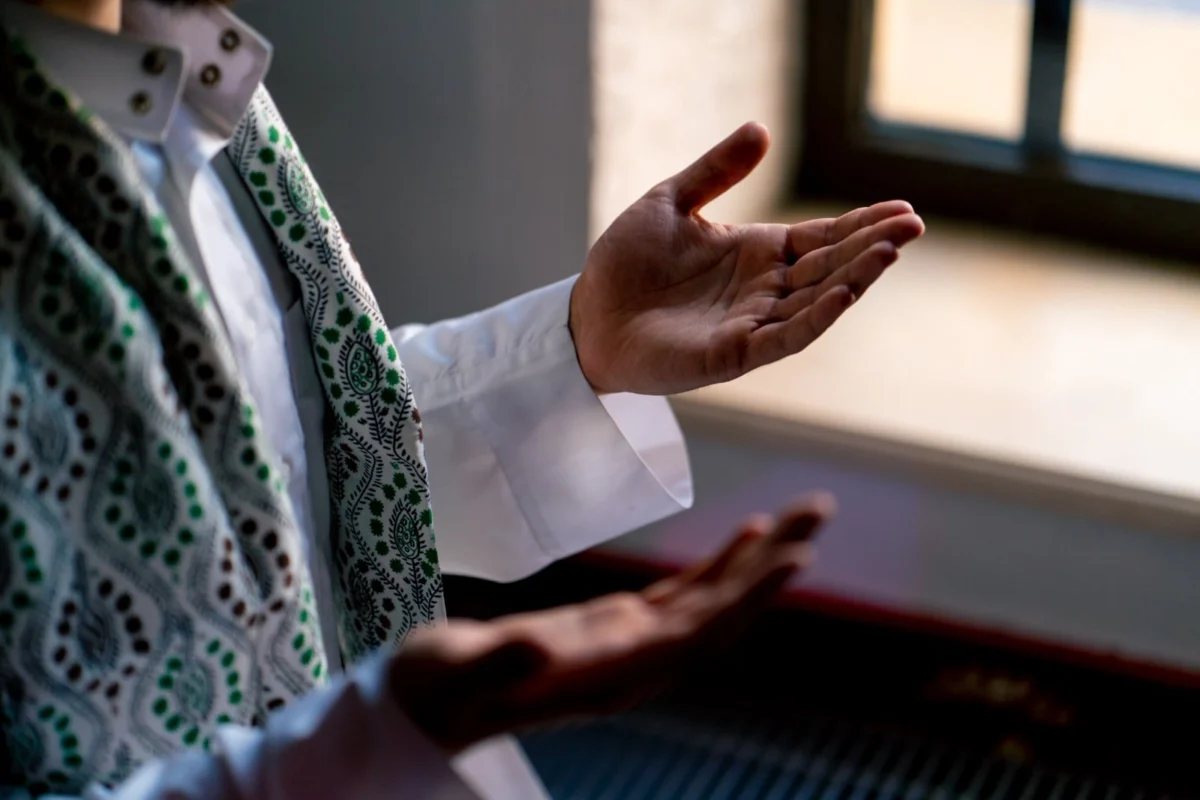
Nur Fajri Romadhon, Vice Chairman of the Tarjih and Tajdid Council of Muhammadiyah’s Jakarta Special Region Chapter, delivered a comprehensive lecture in Temanggung, Central Java, on July 19, 2020, urging Muslims to embrace a holistic understanding of Ahlusunah wal Jamaah. His address, delivered at Masjid Baitussakinah, underscored the critical importance of grounding one’s Islamic creed firmly in the Quran, the Sunnah of Prophet Muhammad, and the interpretations of his companions. This foundational approach, he argued, is essential for believers to navigate the complex landscape of diverse theological perspectives and movements prevalent in the Muslim world today, ensuring a clear and unwavering spiritual compass.
The Historical Genesis and Definitional Imperative
Romadhon commenced his discourse by tracing the historical roots of the term Ahlusunah wal Jamaah, revealing its early emergence in Islamic scholarship. He cited the venerable companion Abdullah bin Abbas, who, in his exegesis of Surah Ali Imran, verse 106, interpreted the "faces turning white" on the Day of Judgment as referring to the Ahlusunah wal Jamaah. These, according to Ibnu Abbas, are the recipients of Allah’s boundless mercy, destined for eternal abode in Paradise. This early association highlights the term’s profound significance, linking it directly to salvation and divine favor.
Further solidifying its historical context, Romadhon connected the term to prophetic traditions concerning the fragmentation of the Muslim Ummah. He referenced various narrations indicating that the Ummah would splinter into 73 sects, with only one group achieving salvation. This singular, saved group, the Prophet Muhammad (peace be upon him) reportedly clarified, would be those who adhere to his path and the path of his companions. Romadhon emphasized that the distinctions outlined in these hadiths do not pertain to organizational affiliations, schools of fiqh (jurisprudence), or da’wah (preaching) institutions. Instead, the fundamental divergence lies in matters of aqidah (creed or belief system). He supported this assertion by quoting Imam as-Safarini from his seminal work, Lawāmi’ al-Anwār al-Bahiyyah, which explicitly states that the division into 73 groups stems from core issues of belief, not peripheral or branch matters of religious practice. This distinction is crucial for understanding the depth and gravity of theological differences within Islam.
Navigating the Labyrinth of Theological Divergence
To illustrate the nature of these creedal deviations, Romadhon meticulously classified several groups historically identified by Islamic scholars as falling outside the Ahlusunah wal Jamaah umbrella. These included various factions under the broader categories of Mu’tazilah, Shia, Khawarij, Murji’ah, Najjariyah, Jabariyah, and Musyabbihah. Each group, he explained, possesses distinct theological characteristics that set them apart from the orthodox Sunni understanding.
For instance, the Khawarij, who emerged in the early Islamic period following the Battle of Siffin, are famously characterized by their severe stance on major sins, declaring perpetrators of grave sins as having exited the fold of Islam, thus becoming disbelievers. This extreme position led to significant political and social unrest in early Muslim history. In stark contrast, the Shia adhere to the belief that the rightful leadership of the Ummah after the Prophet (PBUH) should have been vested in Ali ibn Abi Talib and his descendants, a doctrine known as the Imamate, which forms a cornerstone of their theological and political identity. Their various branches, such as the Twelvers and Ismailis, diverge on the specific lineage of these Imams.
The Mu’tazilah, a rationalist school that gained prominence during the Abbasid Caliphate, particularly during the Mihna (Inquisition) in the 9th century, were renowned for their five fundamental principles (al-usul al-khamsah). These principles included:
- Tawhid (Divine Unity): While a core Islamic concept, the Mu’tazilah interpreted it to negate divine attributes like hearing or seeing as distinct entities, fearing it would imply multiplicity in God. They argued that Allah is All-Hearing and All-Seeing by His essence, not through separate attributes.
- Adl (Divine Justice): This emphasized human free will and accountability, asserting that Allah would never compel humans to do evil, nor would He punish them for actions they had no choice in. This stood in opposition to extreme predestinarian views.
- Al-Manzilah bayn al-Manzilatayn (The Intermediate Position): This doctrine posited that a Muslim who commits a major sin is neither a full believer nor a full disbeliever, but occupies an intermediate status. This contrasted sharply with the Khawarij’s view.
- Al-Wa’d wal-Wa’id (The Promise and the Threat): This stressed that Allah would invariably fulfill His promises of reward for obedience and His threats of punishment for disobedience, leaving no room for divine forgiveness for grave sinners unless they repented.
- Amr bil Ma’ruf wa Nahy anil Munkar (Enjoining Good and Forbidding Evil): While a universal Islamic duty, the Mu’tazilah, like the Khawarij, often applied this principle in ways that sanctioned rebellion against unjust rulers, sometimes leading to political instability.
Other groups mentioned by Romadhon included the Murji’ah, who emphasized faith as the sole determinant of a person’s status, holding that major sins do not remove a person from Islam. This view often contrasted with the Khawarij by stressing the deferment of judgment on grave sinners to Allah. The Jabariyah represented an extreme predestinarian perspective, arguing that humans have no free will and are entirely compelled by divine decree, much like inanimate objects. Conversely, the Qadariyah (though not explicitly listed by Romadhon in this section, they are a logical counterpoint) held that humans have absolute free will, diminishing Allah’s role in predetermination. The Musyabbihah were those who engaged in anthropomorphism, likening Allah to His creation, attributing physical characteristics or human-like qualities to Him, which is considered a deviation from Islamic monotheism.
The Foundational Principles of Ahlusunah wal Jamaah
In contrast to these divergent viewpoints, Nur Fajri Romadhon meticulously articulated the core tenets of Ahlusunah wal Jamaah. Regarding the status of a grave sinner, Ahlusunah wal Jamaah maintains that such an individual remains a Muslim, albeit a fasiq (transgressor). Their ultimate fate on the Day of Judgment rests entirely with Allah’s will; they may be forgiven or punished according to His discretion, provided they have not committed shirk (polytheism), which is the only unforgivable sin without repentance. This balanced view avoids the extremes of both the Khawarij and the Murji’ah.
A poignant aspect of Romadhon’s lecture touched upon the critical importance of safeguarding the rights of fellow human beings. He underscored that sins involving injustice or oppression against others cannot be expiated by mere repentance to Allah. Instead, such transgressions demand accountability to the wronged party. He cited the profound hadith of al-muflis (the bankrupt person), describing an individual who arrives on the Day of Judgment with a mountain of good deeds, only to find their rewards depleted as they are distributed to those they had wronged during their earthly life. "Victims of injustice may remain silent in this world," Romadhon asserted, "but in the Hereafter, they will demand their rights. The most precious currency on that day will no longer be wealth, but good deeds." This powerful reminder served as a call for ethical conduct and social justice, emphasizing the enduring spiritual weight of human interactions. He thus encouraged the congregation to multiply their good deeds and engage in constant dhikr (remembrance of Allah) as preparation for the inevitable reckoning.
The Six Articles of Faith: A Sunni Perspective
Romadhon systematically expounded on the six articles of faith (rukun iman), which form the bedrock of Ahlusunah wal Jamaah creed:
-
Belief in Allah: Ahlusunah affirms all attributes of Allah as mentioned in the Quran and Sunnah, without likening Him to creation (tashbih) or denying His attributes (ta’til). For instance, attributes like istiwa (Allah’s establishment over the Throne) or His "two hands" are affirmed as they are, without delving into their kayfiyyah (modality or how they are) – a principle often summarized as bi-la kayf. The essence is belief without anthropomorphic interpretation or rejection. Furthermore, Romadhon clarified that Allah’s names are not limited to the commonly known 99 Asmaul Husna; while these 99 possess special virtues, Allah possesses other names unknown to humanity.
-
Belief in Angels: Ahlusunah affirms the existence of angels as unseen beings created by Allah from light, who serve Him unconditionally and carry out His commands.
-
Belief in Divine Books: This encompasses belief in all revealed scriptures sent by Allah to various prophets, including the Torah, Psalms, Gospel, and ultimately, the Quran, which is the final and preserved revelation.
-
Belief in Prophets and Messengers: Ahlusunah believes in all prophets and messengers sent by Allah, acknowledging Muhammad (PBUH) as the seal of prophecy.
-
Belief in the Day of Judgment: This entails conviction in the certainty of the Hereafter, including the azab kubur (punishment in the grave) and ni’mat kubur (blessings in the grave), the resurrection, the mizan (scales of justice), and the shafa’at (intercession) of Prophet Muhammad (PBUH) and other pious individuals with Allah’s permission. Romadhon urged increased salawat (blessings upon the Prophet) as a means to attain this intercession.
-
Belief in Divine Decree (Qadar): This complex article posits that Allah possesses perfect knowledge of all events, has recorded them, wills them, and creates them. However, Romadhon clarified that this does not negate human free will and accountability. Humans retain the capacity for choice, and therefore, cannot blame divine decree for their sins. "Allah knows what we will choose, records it, and then actualizes it according to our choice. So, humans remain responsible for their choices," he elucidated, striking a balance between divine omnipotence and human agency, a point of theological contention for groups like the Jabariyah and Qadariyah.
Beyond these articles, Romadhon firmly stated that all forms of worship (ibadah) are to be directed exclusively to Allah alone. Any act of worship offered to other entities – be it graves, trees, stones, unseen beings, or even revered pious figures – constitutes shirk, an unforgivable act of polytheism in Islam.
A Legacy of Scholarship and Contemporary Relevance
Nur Fajri Romadhon underscored the enduring legacy of Ahlusunah wal Jamaah, tracing its continuous intellectual and spiritual struggle from the era of the Prophet’s companions through successive generations of Islamic scholars. He cited a pantheon of influential figures who championed and shaped the Ahlusunah tradition, including Imam Ahmad ibn Hanbal, a foundational figure of Sunni jurisprudence; Abu al-Hasan al-Ash’ari and Abu Mansur al-Maturidi, the architects of the two dominant theological schools within Sunni Islam; Imam al-Ghazali, whose works synthesized Sufism with mainstream Islamic thought; Ibn Taymiyyah, a prolific scholar whose reformist ideas influenced later movements; Muhammad ibn Abd al-Wahhab, founder of the Wahhabi movement; and modernist reformers like Muhammad Abduh and Rashid Rida. In Indonesia, he recognized the pivotal roles of KH Ahmad Dahlan, founder of Muhammadiyah, and KH Hasyim Asy’ari, founder of Nahdlatul Ulama, both instrumental in propagating Ahlusunah principles in the archipelago. This lineage highlights the rich, diverse, yet unified intellectual tradition of Ahlusunah wal Jamaah.
Addressing a common contemporary misconception that Mu’tazilah thought might be more aligned with modern sensibilities due to its emphasis on rationality, Romadhon deemed this view inaccurate. He clarified that Ahlusunah consistently upholds the duty of amar ma’ruf nahi munkar (enjoining good and forbidding evil) even towards tyrannical rulers. However, the Ahlusunah methodology differs significantly; it prioritizes advice, counsel, and correction without resorting to rebellion or actions that could trigger greater societal chaos and bloodshed. "The wrongdoing of rulers must not be ignored," he affirmed. "What differs is the method. Ahlusunah teaches admonition and correction without inciting disorder." This pragmatic approach reflects a deep concern for societal stability while upholding moral accountability.
Clarifying Terminology and Inter-Sunni Nuances
In a crucial question-and-answer segment, Romadhon further clarified distinctions between related Islamic terms. He explained that Ahlul Kiblat is a broad term encompassing all Muslims who face the Ka’bah during prayer, essentially denoting anyone who professes Islam. The term Sunni, in later historical development, became primarily used to differentiate from Shia Islam. However, Ahlusunah wal Jamaah represents a more precise theological identity, referring specifically to those who adhere to the Quran, the Sunnah, and the understanding of the Prophet’s companions in matters of aqidah.
He also addressed the relationship between Salafi, Ash’ariyah, and Maturidiyah movements. Romadhon affirmed that all three theological orientations fall within the expansive framework of Ahlusunah wal Jamaah, despite their nuanced differences in specific doctrinal interpretations. The Salafi approach generally emphasizes a literal understanding of the Quran and Sunnah, advocating for direct emulation of the early generations (Salaf us-Salih) in creed and practice. The Ash’ariyah and Maturidiyah schools, while upholding the core tenets of Ahlusunah, often employ a more systematic theological methodology, integrating rational arguments and dialectics to defend orthodox positions, particularly concerning divine attributes, free will, and the nature of revelation. These schools emerged as intellectual responses to the rationalist challenges posed by the Mu’tazilah and other philosophical currents. While these distinctions exist, they are generally considered internal variations within the broader Sunni consensus on fundamental creedal matters.
Nur Fajri Romadhon concluded his insightful lecture by humbly advising Muslims against making premature claims of being among the "saved group." Instead, he urged continuous prayer for steadfastness upon the aqidah of Ahlusunah wal Jamaah and an unwavering commitment to seeking knowledge. This pursuit of learning, he emphasized, is vital for cultivating the discernment necessary to distinguish the righteous path from the myriad of creedal deviations that continue to emerge, thereby ensuring intellectual clarity and spiritual purity in an increasingly complex world.