In a significant diplomatic and economic move aimed at de-escalating long-standing trade tensions, the Chinese government has officially announced an extension of its temporary tariff suspension on selected American imports. According to an official statement from the Customs Tariff Commission of the State Council, China will continue to hold off on imposing an additional 24% tariff on a range of United States goods. This reprieve is set to last until January 2027. However, the announcement serves as a nuanced reminder of the ongoing complexities in the world’s most significant bilateral economic relationship, as a baseline additional tariff of 10% remains firmly in place for these same products.
The policy, which took effect on November 10, 2026, at 1:01 p.m. Beijing time, is being framed by Beijing as a strategic effort to maintain stability within the global supply chain. This move comes as a direct follow-up to high-level diplomatic engagements between the leadership of China and the United States in Washington, underscoring a mutual desire to avoid a sudden, destabilizing trade war that could have dire consequences for both domestic economies and global markets.
The Context of the Tariff Dispute
To understand the gravity of this decision, one must look back at the origins of the trade friction. The current tariff landscape is the result of years of tit-for-tat trade barriers that have shifted the geopolitical and economic map. The original policy, outlined in Announcement No. 4 of 2025, represented a hardening stance from Beijing in response to various U.S.-led economic restrictions.
The dispute is fundamentally rooted in the interpretation of international trade law. The Chinese commission noted that the United States has repeatedly signaled an intention to transition from tariffs imposed under the International Emergency Economic Powers Act (IEEPA)—which China has consistently argued lacks a sound legal basis—to a framework governed by Section 301 of the Trade Act of 1974. China’s decision to extend the partial suspension is, in effect, a "wait-and-see" maneuver. By keeping the 10% tariff active while holding the 24% levy in suspension, Beijing maintains leverage while signaling that it is prepared to adjust its trade posture based on how Washington navigates its own legislative and regulatory shifts.
A Multi-Pronged Approach to Economic De-escalation
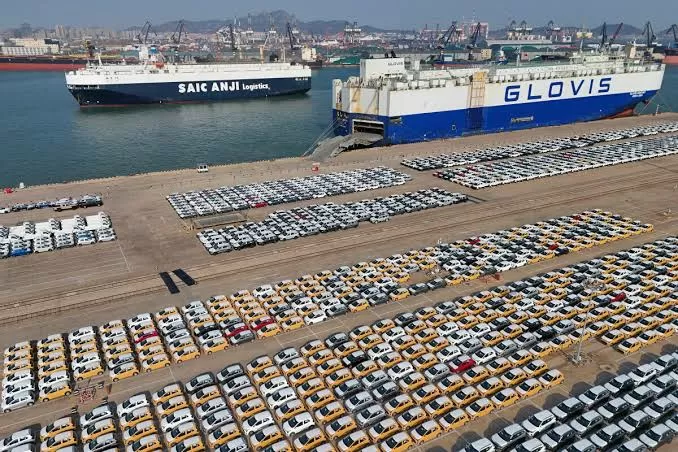
The extension of the tariff suspension is not an isolated incident; it is part of a broader synchronized effort by various Chinese ministries to soothe trade relations. The Ministry of Transport has concurrently announced that the imposition of special levies on U.S.-flagged vessels will be postponed until January 10, 2027. This decision is particularly vital for the maritime logistics sector, which has been grappling with uncertainty regarding port access and docking fees for American carriers.
Furthermore, the Ministry of Commerce has extended a two-month grace period for sanctions and trade restrictions that were previously slated to target 27 American companies. In a move that highlights the interconnected nature of modern industrial conglomerates, China has also suspended punitive actions against the U.S.-based subsidiaries of Hanwha Ocean, the South Korean shipbuilding giant. These multifaceted gestures are intended to create a "predictable environment" for multinational corporations operating within the Chinese market, effectively insulating them from the volatile swings of geopolitical posturing.
Economic Implications for Global Markets
The global economy remains highly sensitive to the economic policy decisions of Beijing and Washington. Together, these two nations account for approximately 40% of the world’s GDP. Prolonged uncertainty regarding trade tariffs tends to stifle capital expenditure, as corporations are hesitant to commit to long-term projects when the cost of importing components or exporting finished goods is subject to sudden, drastic change.

Market analysts observe that the decision to keep a 10% tariff in place indicates that neither side is ready for a full return to the status quo of pre-trade-war years. Instead, the current reality is a "managed competition" model. For the United States, this provides a breathing room for manufacturers who rely on Chinese raw materials and intermediate goods. For China, it provides a degree of breathing space to restructure domestic industries and pivot toward high-tech self-sufficiency without the immediate shock of full-scale tariff barriers.
Chronology of Recent Tensions
- Early 2025: Initial implementation of Announcement No. 4, introducing a complex tiered structure of tariffs on U.S. goods, including the 24% additional surcharge.
- Mid-2026: Increased pressure from domestic industrial groups in both nations regarding the inflationary impact of trade barriers, leading to renewed diplomatic back-channel talks.
- October 2026: High-level bilateral meetings in Washington, D.C., where trade negotiators focused on creating a "predictable framework" to avoid further escalation.
- November 10, 2026: Official declaration of the extension of tariff suspensions and the postponement of maritime levies, setting the current deadline for January 2027.
Official Responses and the Road Ahead
While the official language from Beijing remains diplomatic, the subtext is clear: China is closely monitoring the U.S. administrative response. The mention of Section 301 is a critical indicator of the legal battleground. Should the U.S. finalize the transition of its tariff regime to this section in a way that China deems punitive, Beijing has explicitly stated it will reserve the right to recalibrate its retaliatory measures.
Industry experts suggest that the next two months will be crucial. With the January 2027 deadline looming, both administrations are likely to use this period to conduct impact assessments of the current tariff structures. The goal, according to official statements, is to support the "development of economic and trade relations." However, skeptics point out that domestic political pressures in both countries—ranging from labor market concerns in the U.S. to the push for industrial sovereignty in China—could easily derail these efforts.
The Role of Corporate Diplomacy
The involvement of companies like the ones under the jurisdiction of the Ministry of Commerce highlights the role of the private sector in diplomatic mediation. When firms face the threat of sanctions, their lobbying efforts often bridge the gap between nationalistic rhetoric and practical economic necessity. The inclusion of Hanwha Ocean’s U.S. subsidiaries in the current suspension suggests that China is willing to look beyond purely American firms and consider the broader ecosystem of companies that operate within the U.S. market, signaling a more sophisticated approach to trade management.
As the world looks toward 2027, the primary question remains whether this is merely a temporary ceasefire or the beginning of a more stable, rules-based trade relationship. The extension until January 2027 provides a window for policy adjustment, but it does not resolve the fundamental structural disagreements over intellectual property, subsidies, and the IEEPA-versus-Section 301 legal debates.
For now, international shipping companies, logistics providers, and manufacturers who rely on trans-Pacific trade can expect a period of relative stability. The 10% tariff acts as a floor for the cost of business, preventing a full collapse of trade flow while maintaining a clear cost barrier that keeps trade-related inflation in check. Whether this policy is extended further in early 2027 will depend entirely on the success of the upcoming negotiations and the ability of both nations to find common ground on the contentious issues that sparked the trade dispute in the first place.
In conclusion, the decision by the Chinese government to extend the suspension of the 24% additional tariff is a calculated move that prioritizes economic continuity. While it offers a reprieve, it remains a cautious policy that keeps a 10% tariff active as a placeholder. The international community, including investors and supply chain managers, will be watching the developments in early 2027 with intense interest, as the next steps taken by both Beijing and Washington will set the tone for the global trade environment for the remainder of the decade.