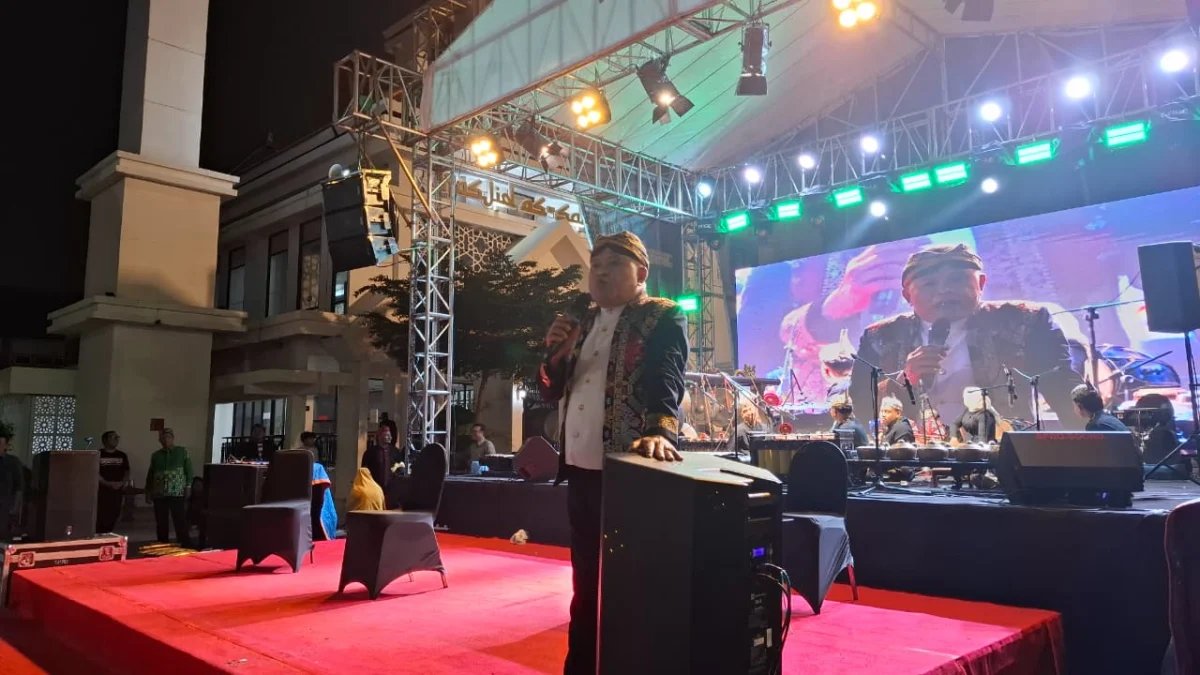
The intersection of Islamic values, national identity, and traditional Indonesian arts took center stage in Surabaya as renowned national artist and comedian Muhammad Syakirun, popularly known as Cak Kirun, delivered a passionate defense of Muhammadiyah’s cultural footprint. Speaking before a vibrant audience at the Semarak Milad celebration marking the 114th anniversary of Muhammadiyah—hosted by the Surabaya City Regional Leadership—Cak Kirun dismantled the long-standing public misconception that the modernist Islamic organization restricts its vast scope of work solely to health and education.
Addressing attendees during the Wednesday evening gala on November 25, the Madiun-born cultural icon emphasized that Muhammadiyah’s historical and contemporary contributions extend deeply into the realms of artistic expression, heritage preservation, and societal harmony. His remarks arrive at a critical juncture in the organization’s second century of existence, as leadership nationwide seeks to project a more holistic, culturally inclusive image to younger generations of Indonesians.
Challenging the Narrow Narrative of Amal Usaha Muhammadiyah
For decades, the public perception of Muhammadiyah has been overwhelmingly anchored in its formidable network of Amal Usaha Muhammadiyah (AUM)—specifically its thousands of schools, universities, hospitals, and clinics operating across the archipelago. While these institutions undeniably form the backbone of the organization’s social infrastructure and nation-building efforts, Cak Kirun argued that this institutional focus has inadvertently overshadowed the movement’s rich cultural and artistic dimensions.
"Jujur saja hari ini saya itu terenyuh, ternyata sudah sering mengadakan," remarked Cak Kirun during his address, reflecting on the surprising depth of cultural programming organized by the local chapter. Referencing previous cultural collaborations, including events featuring veteran East Javanese comedian Cak Kartolo, he praised the Surabaya chapter for breaking the mold. "This Muhammadiyah Surabaya is extraordinary. There are those who say that Muhammadiyah only takes care of health and education—that is entirely wrong."
Cak Kirun elaborated that throughout Indonesia’s modern history, numerous prominent Muhammadiyah figures have maintained deep personal and professional ties to the arts. Far from viewing modernity and Islamic orthodoxy as antithetical to traditional culture, these figures actively utilized regional arts, theater, and literature as vehicles for moral education and nationalist sentiment. By weaving together the tenets of religious devotion, state loyalty, and artistic appreciation, Muhammadiyah has historically fostered a comprehensive approach to citizenship that rejects cultural isolationism.
The Historical Intersection of Islamic Modernism and Javanese Culture
To fully appreciate Cak Kirun’s commentary, it is necessary to examine the broader historical context of Muhammadiyah’s engagement with local traditions. Founded in Yogyakarta in 1912 by Kiai Haji Ahmad Dahlan, the movement emerged as a reformist Islamic organization aimed at purifying religious practices from syncretic accretions while simultaneously embracing Western-style institutional education and social welfare.
However, Ahmad Dahlan’s vision was never purely clinical or academic. Operating within the cultural heartland of the Sultanate of Yogyakarta, early Muhammadiyah members frequently engaged with the prevailing Javanese social milieu. Over the decades, the organization fostered various cultural wings, youth groups like Hizbul Wathan, and artistic collectives that utilized traditional media—such as wayang kulit, traditional music, and localized theater—to convey ethical messages aligned with Islamic teachings.
Cak Kirun paid direct homage to the arduous struggles of Kiai Ahmad Dahlan during the formative years of the movement. He noted that the organization’s founder faced intense skepticism, social ostracization, and even accusations of apostasy (kafir) while attempting to modernize religious education and social structures. The stark contrast between those early trials of hardship and the present-day reality—where Muhammadiyah operates as one of the most respected socio-religious entities in the Islamic world—served as a poignant reminder of the perseverance required to effect lasting societal change.
Mentorship, Professionalism, and Cultural Morality
Beyond historical appreciation, Cak Kirun offered a deeply personal testimony regarding his own artistic trajectory in the Indonesian entertainment industry. He credited several towering intellectual and organizational figures from within the Muhammadiyah ecosystem—specifically mentioning the late Prof. Dr. K.H. Malik Fadjar and Prof. Dr. H. A. Syafii Maarif—as vital mentors who shaped his professional ethos and worldview.
Malik Fadjar, a former Minister of National Education and a prominent Muhammadiyah leader, along with Syafii Maarif, a revered scholar, former Muhammadiyah chairman, and recipient of the Ramon Magsaysay Award, represented a generation of intellectuals who championed pluralism, moral governance, and cultural depth. According to Cak Kirun, his interactions with these leaders instilled in him a commitment to professional integrity and a profound respect for Indonesia’s diverse cultural fabric.
This mentorship highlights a lesser-discussed dimension of Muhammadiyah’s leadership: its ability to cultivate ethical leadership not only within theological and academic spheres but also across the broader landscape of Indonesian public life, media, and the arts.
Promoting Social Cohesion and the Spirit of Gotong Royong
As the event’s focal point transitioned toward contemporary socio-cultural challenges, Cak Kirun issued a heartfelt appeal to the Muhammadiyah leadership and its millions of members. He urged the organization to remain a steadfast guardian of national unity, social harmony, and gotong royong (mutual cooperation)—values he identified as the bedrock of Indonesian national identity.
"The most important thing is to live in harmony and practice mutual cooperation. No matter how heavy a burden is, we can always lift it because we share a single intention: to honor the founder of Muhammadiyah and our teachers," Cak Kirun emphasized to the receptive audience.
In an era marked by rising socio-political polarization, digital misinformation, and cultural fragmentation across Indonesia, community-based organizations are increasingly looked upon to stabilize civic discourse. Observers note that by intentionally integrating cultural arts into its milestone celebrations, the Surabaya branch of Muhammadiyah is actively modeling a bridge between religious piety and inclusive civic nationalism.
Implications for Muhammadiyah’s Second Century of Cultural Engagement
The statements delivered by Cak Kirun at the 114th Milad celebration reflect a broader strategic evolution currently underway within Muhammadiyah. As the organization navigates its second century, leadership at both the central and regional levels has recognized the necessity of expanding public engagement beyond traditional institutional outputs.
While the vast network of hospitals and universities remains crucial for physical and intellectual development, cultural diplomacy and artistic expression are increasingly viewed as indispensable tools for addressing moral decay, strengthening national character, and communicating progressive Islamic values to younger demographics. By embracing cultural icons like Cak Kirun and celebrating the historical synergy between Islam and Indonesian arts, Muhammadiyah is signaling a more expansive, culturally resonant identity.
Ultimately, the commemoration in Surabaya served as both a celebration of past achievements and a forward-looking manifesto. It reinforced the notion that an organization committed to enlightening the nation must necessarily engage with the soul of that nation—its arts, its traditions, and its collective cultural memory. Through such initiatives, Muhammadiyah continues to redefine its role not merely as a provider of social services, but as an enduring custodian of Indonesia’s multifaceted civilizational heritage.