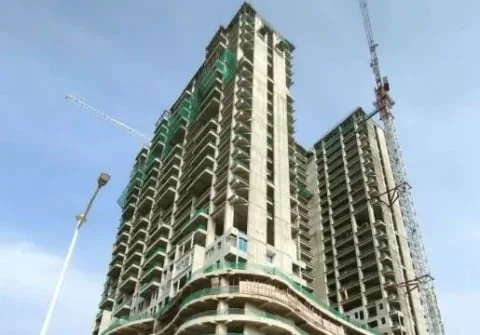
The Badan Pengaturan BUMN (BP BUMN) has officially set a firm deadline of October 15, 2026, to fully resolve and finalize the long-standing disputes surrounding the stalled LRT City apartment project. Developed by PT Adhi Commuter Properti Tbk (ADCP), a subsidiary of state-owned construction giant PT Adhi Karya (Persero) Tbk, the high-profile transit-oriented development has faced significant construction delays and financial distress, leaving thousands of property buyers in limbo.
The announcement follows a series of high-level government interventions aimed at restoring consumer trust and establishing a concrete rescue plan. According to government officials, the definitive resolution framework will be determined only after a comprehensive inventory of grievances, demands, and proposals is formally compiled from the affected buyers. This targeted approach marks a critical turning point in a crisis that has strained relations between state-owned enterprises and retail property investors in Indonesia’s urban housing sector.
Comprehensive Consumer Grievance Inventory Underway
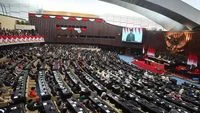
To ensure that every impacted buyer has a voice in the resolution process, the government has established a structured data-gathering phase. Wakil Kepala I BP BUMN, Aminuddin Ma’ruf, stated that the administration has mobilized a specialized task force under the coordination of representative figures like Rian to collect data from approximately 2,000 affected consumers.
"Our team, operating under the coordination of Mr. Rian, will spend the upcoming weeks leading up to October 1 inventorying all aspirations, grievances, and inquiries from approximately 2,000 affected consumers so that we can properly accommodate and review them," Aminuddin said during a media briefing at the BP BUMN Office in Jakarta.
This exhaustive inventory process serves as the foundational data set for the government, developer, and consumer representatives to design a mutually acceptable exit strategy or construction resumption plan. Once the formal report is submitted by consumer representatives on October 1, state officials will analyze the data, host multi-stakeholder deliberations, and formulate a binding policy framework. The definitive solution is scheduled to be announced to the public no later than October 15, 2026.
Background and Chronology of the LRT City Crisis
The LRT City project was initially conceptualized as a flagship transit-oriented development (TOD) designed to integrate residential living with Jakarta’s modern light rail transit (LRT) infrastructure. Promoted heavily as an ideal solution for urban commuters seeking seamless mobility, the ambitious master plan encompassed multiple strategic locations distributed across 12 distinct sites within the Greater Jakarta area. PT Adhi Commuter Properti Tbk (ADCP) was tasked with executing the rollout, leveraging the proximity of LRT stations to drive property sales.
However, the grandiose vision encountered severe financial turbulence. As macroeconomic conditions tightened, supply chain disruptions rippled through the construction industry, and liquidity pressures mounted within the parent company and its subsidiaries, project momentum steadily slowed. By late 2024 and 2025, construction activities at several LRT City sites ground to a complete halt.
Frustrated buyers—many of whom had fulfilled their payment obligations or maintained steady mortgage installments—found themselves facing prolonged delivery delays, lack of communication from the developer, and incomplete concrete skeletons standing as monuments to corporate distress. Public outcry intensified as consumers organized advocacy groups, demanding either immediate construction resumption or full financial restitution. The mounting pressure eventually compelled regulatory bodies and oversight agencies, including BP BUMN, to intervene directly to protect consumer rights and safeguard the reputation of state-owned enterprises involved in the housing sector.
Financial Rescue Package and the Role of Danantara
A critical turning point in the salvation of the LRT City project is the introduction of a substantial financial bailout and restructuring scheme. Government authorities have prepared a strategic funding injection totaling IDR 456 billion through Danantara to rescue ADCP and its parent company, PT Adhi Karya (Persero) Tbk.
This capital infusion is specifically earmarked to inject liquidity into the stalled projects, enabling contractors to resume construction, fulfill outstanding contractual obligations, and complete residential towers across the 12 designated locations. The funding will target both partially finished units requiring finishing works and foundational sites where construction has yet to commence.
Financial analysts note that the intervention of Danantara represents a broader paradigm shift in how the Indonesian government manages distressed projects managed by state-owned enterprises (BUMN). Rather than allowing corporate insolvencies to trigger endless litigation and total loss for retail stakeholders, the state is actively deploying strategic sovereign-adjacent funding vehicles to restore operational viability and instill market confidence.
Official Responses and Stakeholder Perspectives
The intervention by BP BUMN has drawn cautious optimism from consumer advocacy groups and legal observers alike. Representatives of the affected buyers have welcomed the government’s willingness to establish a structured dialogue channel, viewing the October 1 inventory deadline as a tangible step toward accountability.
Consumer representatives have emphasized that any final resolution must offer clear, enforceable guarantees regarding project completion timelines, compensation for rental losses incurred during the delay, or transparent buyback options for buyers who no longer wish to proceed with their investments.
Meanwhile, management at PT Adhi Commuter Properti Tbk (ADCP) and PT Adhi Karya (Persero) Tbk have expressed full cooperation with BP BUMN and Danantara. Corporate representatives have acknowledged the severe impact that the project delays have inflicted upon consumer trust and have pledged to align their operational recovery strategies with the government-mandated timeline. Company spokespersons have reiterated that the incoming capital from Danantara will be strictly monitored to ensure efficient allocation toward construction milestones rather than legacy debt servicing.
Broader Industry Impact and Market Implications
The unfolding saga of the LRT City project highlights broader systemic challenges facing Indonesia’s property development sector, particularly transit-oriented developments spearheaded by state-backed entities. While the TOD concept remains theoretically sound—promoting sustainable urban mobility and reducing vehicular congestion—its execution heavily relies on robust capital forecasting, realistic sales absorption rates, and disciplined cash flow management.
The systemic stall of a major project like LRT City sends cautionary ripples across the broader real estate market. Institutional investors and retail purchasers are increasingly scrutinizing the financial health of developers, even those backed by state credentials. The reliance on government bailouts underscores the reality that failure in state-linked infrastructure and housing projects carries profound political and economic ramifications.
Furthermore, the resolution framework established for the LRT City crisis may serve as a critical precedent for handling future corporate distress within Indonesia’s state-owned enterprise ecosystem. If BP BUMN and Danantara successfully navigate the delicate balance between consumer protection, corporate restructuring, and fiscal prudence by the October 15, 2026 deadline, the model could be replicated for other stalled infrastructure and housing initiatives nationwide.
As the October 1 inventory submission approaches, all eyes remain fixed on BP BUMN, ADCP, and the thousands of affected homeowners. The coming weeks will determine whether collaborative governance and targeted financial intervention can successfully resurrect a flagship urban development and restore faith in Indonesia’s property sector.