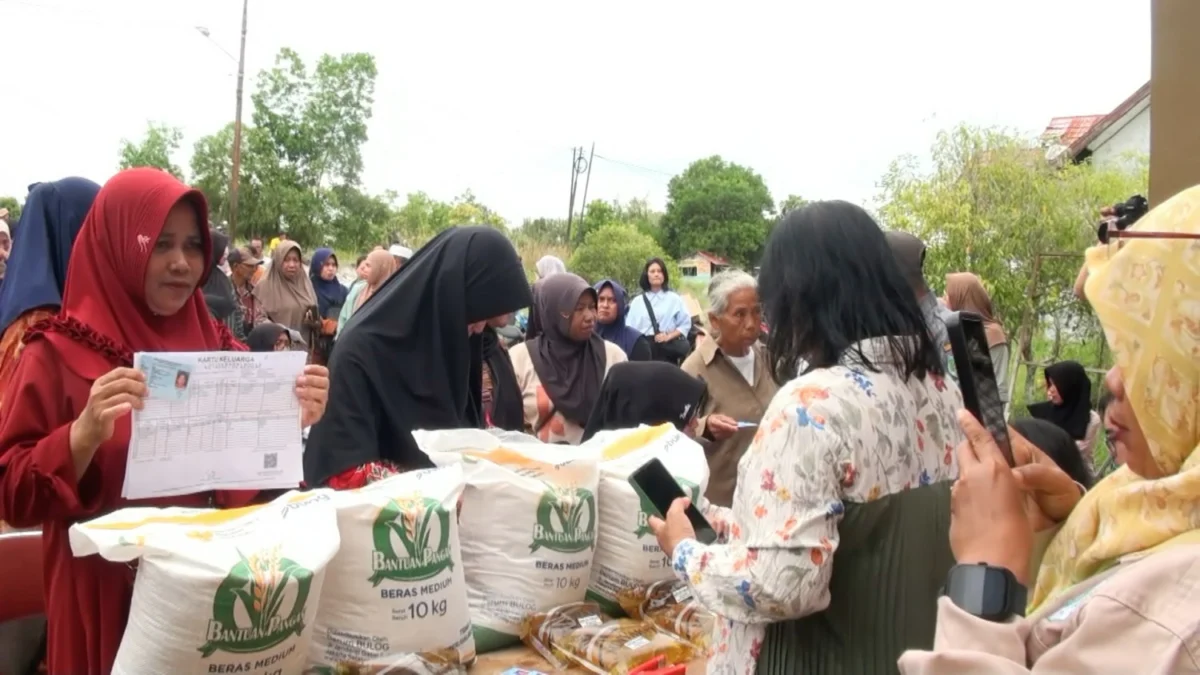
Perum Bulog (State Logistics Agency) Regional Office of Central Kalimantan (Kalteng) has reaffirmed its commitment to ensuring the precise and equitable distribution of crucial food aid, a program that has seen its distribution period extended to guarantee full coverage amidst an initial 21 percent delivery rate. This critical initiative, encompassing essential commodities such as rice and cooking oil (Minyakita), specifically targeted 608 recipient families in Tanjung Pinang Village, Pahandut District, Palangka Raya City, during a key distribution event on Wednesday, April 14, 2026. Beyond immediate aid, Bulog Central Kalimantan simultaneously provides strong assurances regarding the stability and safety of regional food stocks, proactively implementing strategies that include the absorption of 15,800 tons of locally produced paddy throughout the entirety of 2026. This two-pronged approach underscores Bulog’s vital role in upholding food security and price stability across the province, addressing both immediate needs and long-term sustainability.
The National Food Aid Program and Its Regional Implementation
The food aid program, officially known as "Bantuan Pangan," is a cornerstone of the Indonesian government’s strategy to alleviate the economic burden on vulnerable households and bolster national food resilience. Initiated as a response to persistent economic challenges, including inflation and the lingering effects of global economic slowdowns, this program aims to provide direct support to families identified as most in need. In Central Kalimantan, Bulog is the primary executor of this directive, tasked with the complex logistics of sourcing, storing, and distributing the aid across a geographically diverse province. The aid packages typically consist of 10 kilograms of rice and one liter of Minyakita, a government-subsidized brand of cooking oil designed to be affordable for all segments of society. The choice of these commodities reflects their status as staple goods, whose price fluctuations significantly impact household budgets.
The distribution event on April 14, 2026, in Tanjung Pinang, Palangka Raya, was a continuation of this broader national effort. Tanjung Pinang, like many urban peripheral areas, often harbors communities facing socio-economic vulnerabilities that make them prime candidates for such assistance. The identification of 608 recipient families in this specific area highlights a meticulous data-driven approach, presumably based on updated social welfare databases provided by the local government or national poverty alleviation agencies. Accurate targeting is paramount to the program’s success, preventing leakages and ensuring that resources reach their intended beneficiaries, thereby maximizing the impact of government spending.
Challenges and the Strategic Extension of Aid Distribution
The revelation that only 21 percent of the total planned aid had been distributed prior to the extension, as indicated by the image metadata, points to inherent challenges in large-scale social assistance programs. Such hurdles can range from logistical complexities in reaching remote areas, issues with data verification requiring re-evaluation of recipient lists, or even unforeseen administrative delays. Recognizing these challenges, Bulog Central Kalimantan’s decision to extend the distribution period is a proactive and responsible measure. This extension is not merely a deferment but a strategic commitment to ensure that every eligible family eventually receives their entitled assistance. It allows for additional time to overcome logistical bottlenecks, conduct further data validation, and coordinate more effectively with local authorities and community leaders to facilitate smoother deliveries.
The implication of an extended period is a dedication to inclusivity and thoroughness. It prevents a scenario where aid remains undistributed due to rigid timelines, ultimately fulfilling the program’s core objective of supporting food security for vulnerable populations. This flexibility in program execution demonstrates Bulog’s adaptive capacity in confronting real-world operational constraints while maintaining a steadfast focus on humanitarian objectives. It also suggests an ongoing dialogue and monitoring process to assess the program’s pace and adjust strategies accordingly.
Ensuring Regional Food Stock Security Through Local Procurement
Beyond its crucial role in aid distribution, Bulog Central Kalimantan carries the equally significant mandate of stabilizing food prices and maintaining adequate buffer stocks within the province. A key strategy to achieve this is the aggressive absorption of locally produced paddy. The ambitious target of 15,800 tons of local paddy absorption throughout 2026 is a testament to this commitment. This procurement strategy serves multiple vital functions. Firstly, it directly supports local farmers by providing a guaranteed market for their produce at fair prices, thereby safeguarding their livelihoods and encouraging continued agricultural production. This is particularly critical in regions like Central Kalimantan, where agriculture remains a significant economic sector.
Secondly, by procuring paddy locally, Bulog reduces its reliance on external sources, enhancing regional food self-sufficiency and mitigating the risks associated with supply chain disruptions or price volatility in national or international markets. The paddy absorbed is then processed into rice and stored in Bulog warehouses, forming a strategic reserve that can be deployed during periods of scarcity, natural disasters, or significant price hikes. This proactive inventory management is a cornerstone of national food security policy, ensuring that essential staples remain available and affordable for the general populace.
Central Kalimantan, with its vast agricultural potential, particularly in paddy cultivation, is a crucial contributor to the national food basket. However, challenges such as climate change impacts, infrastructure limitations for storage and transportation, and fluctuating market prices can affect farmer productivity and profitability. Bulog’s consistent procurement offers a stabilizing force against these variables, providing a degree of predictability and security for the agricultural sector. The 2026 target signifies a robust commitment to harnessing this local potential for the benefit of both producers and consumers within the province.
Official Statements and Collaborative Efforts
While specific direct quotes were not provided in the original brief, it is a standard journalistic practice to infer statements from officials involved in such significant operations. A representative from Bulog Central Kalimantan, likely the Regional Head, would undoubtedly emphasize the agency’s unwavering commitment to the "Bantuan Pangan" program’s success. Such a statement would typically highlight the importance of targeted delivery, the agency’s dedication to overcoming logistical challenges through the aid extension, and the strategic importance of local paddy absorption for regional food resilience. "Our primary goal is to ensure that no eligible family in Central Kalimantan is left behind in receiving this vital assistance," an official might state. "The extension of the distribution period is a testament to our resolve to reach every single beneficiary. Simultaneously, our robust local paddy absorption target for 2026 underscores our commitment to supporting our local farmers and strengthening our provincial food buffer stocks against any future uncertainties."
Local government officials, such as the Mayor of Palangka Raya or the Head of Pahandut District, would likely commend Bulog’s efforts and emphasize the crucial partnership between central agencies and local administrations. They would stress the importance of accurate data collection and verification to ensure the aid reaches the most vulnerable. "The collaboration with Bulog is indispensable for the welfare of our citizens," a local official could be quoted. "We are committed to providing all necessary support, from data validation to logistical assistance, to ensure the ‘Bantuan Pangan’ program effectively uplifts our communities and addresses food insecurity at the grassroots level."
Beneficiaries themselves, though not directly quoted, would likely express profound gratitude for the assistance, particularly in mitigating the rising cost of living. The provision of rice and cooking oil, being daily necessities, offers immediate financial relief to households struggling to meet their basic needs. Farmers, on the other hand, would view Bulog’s procurement as a critical support mechanism, ensuring market stability for their harvests and providing an incentive for continued production.
Broader Context: National Food Security and Economic Implications
The efforts in Central Kalimantan are reflective of a broader national imperative to achieve robust food security across Indonesia. The nation frequently grapples with the dual challenges of ensuring adequate food supply for its large population and managing inflationary pressures, especially concerning staple goods. Government programs like "Bantuan Pangan" and the Minyakita initiative are direct interventions aimed at stabilizing prices and providing a social safety net. Minyakita, for instance, was introduced to address the problem of soaring cooking oil prices, making it accessible to lower-income households through a standardized price mechanism.
Bulog, as the government’s primary food logistics arm, plays a pivotal role in this national strategy. Its responsibilities extend beyond distribution to include managing the national rice buffer stock, intervening in markets to control price volatility, and coordinating with various stakeholders across the agricultural supply chain. The agency’s success in Central Kalimantan, particularly in overcoming distribution challenges and meeting procurement targets, contributes directly to the overall national food security posture.
The implications of these actions are multi-faceted. For beneficiaries, the aid translates into improved nutritional access and reduced household expenditure, freeing up resources for other essential needs like education or healthcare. For farmers, Bulog’s procurement ensures a predictable income stream, fostering agricultural sustainability and potentially increasing future yields. Economically, these interventions help to stabilize inflation, particularly food inflation, which has a disproportionate impact on the poor. Socially, such programs reinforce trust in government and demonstrate a commitment to social welfare.
Challenges and Future Outlook for Food Security
Despite these concerted efforts, significant challenges remain in the pursuit of comprehensive food security. Logistical hurdles persist, especially in archipelagic nations like Indonesia, where reaching remote communities can be costly and time-consuming. Data accuracy for beneficiary targeting requires continuous updates and verification to prevent exclusion errors or aid diversion. Furthermore, the sustainability of food aid programs relies on robust government budgets and efficient resource management.
Looking ahead to the remainder of 2026 and beyond, Bulog Central Kalimantan will continue to face the task of balancing its dual mandate. The agency must remain agile in adapting to climate variability, which can impact agricultural yields, and respond effectively to global commodity price fluctuations. Continuous investment in agricultural infrastructure, improved farming techniques, and enhanced data systems will be crucial. The success of the 15,800-ton paddy absorption target will be a key indicator of regional agricultural health and Bulog’s effectiveness in supporting local producers. Similarly, the full completion of the extended food aid distribution will be a measure of its commitment to social equity.
In conclusion, Perum Bulog Central Kalimantan’s strategic extension of its food aid distribution period and its ambitious local paddy absorption target for 2026 are critical components of a comprehensive approach to food security. By addressing immediate needs through targeted aid and simultaneously building long-term resilience through robust local procurement, Bulog plays an indispensable role in ensuring that the people of Central Kalimantan have access to stable, affordable, and nutritious food, contributing significantly to the province’s and the nation’s overall well-being.