The journey of higher education is often framed as a transformative phase of intellectual awakening and personal development, but its true test begins the moment a student receives their diploma. This foundational philosophy took center stage on Tuesday, September 15, during the landmark 15th Graduation Ceremony of Universitas Muhammadiyah Kalimantan Timur (UMKT) held in Samarinda, East Kalimantan. Amidst an atmosphere of celebration, academic pride, and cautious optimism for the future, the leadership of Muhammadiyah—one of Indonesia’s largest and most influential Islamic socio-educational organizations—delivered a profound message to the newly minted alumni.
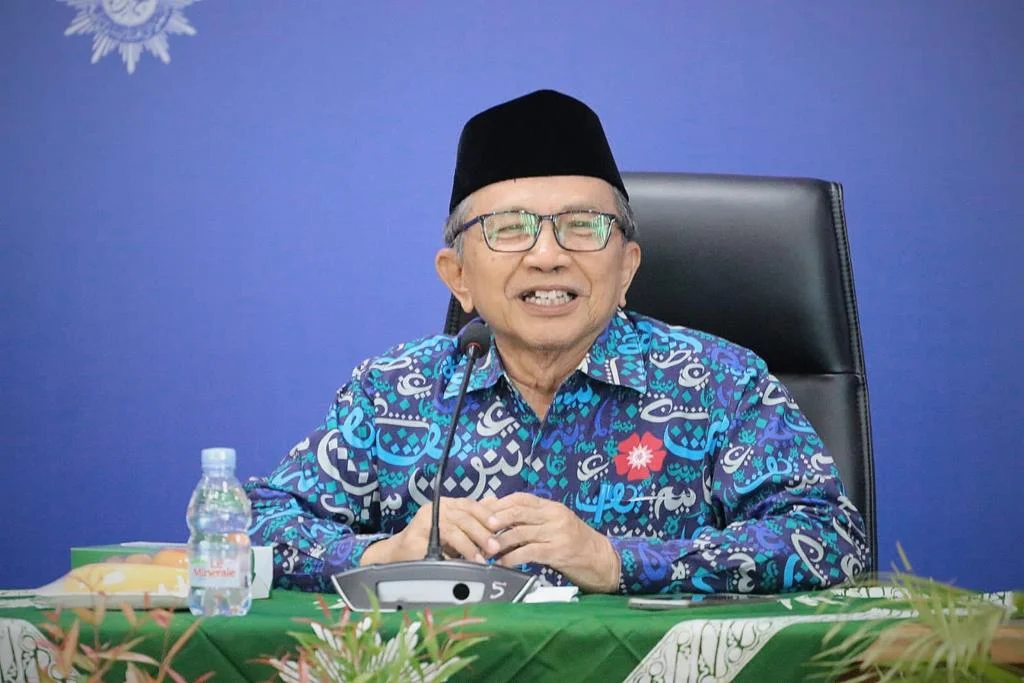
Ahmad Dahlan Rais, Chairman of the Central Leadership (PP) Muhammadiyah, addressed the graduating cohort with a compelling metaphor. He likened the transition from campus life to societal integration to the rigorous expedition of mountain climbing. In an address that resonated deeply with the graduates, their families, and the academic faculty in attendance, Dahlan emphasized that the theoretical and practical knowledge acquired throughout years of undergraduate study serves merely as the preparation phase. True success, much like reaching a mountain summit, depends heavily on the tools chosen, the mastery of their application, and the resilience displayed when facing unforeseen environmental hazards.
As thousands of graduates from Perguruan Tinggi Muhammadiyah-’Aisyiyah (PTMA) institutions step into a dynamic, highly competitive, and frequently unpredictable global workforce, the insights shared at the UMKT ceremony offer a valuable framework for navigating modern professional and civic life. This comprehensive report examines the core messages delivered during the event, the broader context of higher education within the Muhammadiyah network, the pathways available to contemporary graduates, and the enduring implications of lifelong learning in the twenty-first century.
The Mountain Climbing Metaphor: Preparing for Real-World Expeditions
The primary theme of Ahmad Dahlan Rais’s address centered on the realities of post-graduation life. Higher education institutions, particularly those under the expansive umbrella of Muhammadiyah and ’Aisyiyah—which comprise over 160 universities, colleges, and academies across Indonesia—strive to equip students with comprehensive academic competencies, moral grounding, and vocational readiness. However, earning a degree is only the threshold of a much larger journey.
During his speech at the UMKT 15th graduation ceremony, Dahlan elaborated on the mountain climbing analogy to illustrate the challenges awaiting young professionals. "For that reason, I urge you to genuinely prepare your future just like someone preparing to climb a mountain," Dahlan stated to the assembly of graduates. "You must know what specific equipment is required, and you must master how to use it."
In the context of modern socio-economic landscapes, the "equipment" referenced by the Muhammadiyah leader encompasses hard technical skills acquired in classrooms and laboratories, soft skills developed through student organizations and community service, and ethical values rooted in Islamic teachings. The "mountain," conversely, represents the multifaceted challenges of the professional world, economic volatility, societal complexities, and personal milestones.
Dahlan reminded the graduates that just as a mountain climber inevitably encounters severe weather—such as torrential rain, blinding fog, and gale-force winds—they too will face adversity, professional setbacks, and societal pressures. The difference between failure and a successful ascent lies entirely in the depth of preparation and the adaptability of the individual. By viewing challenges not as insurmountable barriers but as natural elements of the climb, PTMA graduates are encouraged to cultivate psychological resilience and professional endurance.
Chronology and Background of the UMKT 15th Graduation Ceremony
The 15th graduation ceremony of Universitas Muhammadiyah Kalimantan Timur stands as a significant milestone not only for the institution itself but also for the broader educational landscape of East Kalimantan. UMKT, which was established through the merger of several Muhammadiyah colleges in the region, has grown rapidly to become one of the premier private higher education institutions in the province. Located strategically in Samarinda—close to the burgeoning development zone of Indonesia’s new capital city, Nusantara (IKN)—UMKT plays a pivotal role in supplying skilled human capital to meet regional and national development demands.
Leading up to the September 15 event, the university administration, led by the rector and academic senate, undertook months of rigorous academic processing, thesis evaluations, and administrative verifications. The ceremony itself brought together hundreds of graduates from various faculties, including engineering, economics, health sciences, social sciences, and computer science.
The event adhered to formal academic protocols, featuring speeches from university officials, institutional reports on academic achievements, and keynote addresses from central Muhammadiyah figures. The presence of Ahmad Dahlan Rais underscored the central leadership’s ongoing commitment to monitoring, mentoring, and guiding the strategic direction of its regional campuses. Against the backdrop of East Kalimantan’s economic transformation, driven largely by infrastructure projects and the relocation of the national capital, the graduation carried heightened symbolic weight. Graduates of UMKT are increasingly viewed as frontline contributors to the sustainable development of Borneo and the nation at large.
Navigating Post-Graduation Pathways: Three Distinct Routes
Transitioning from academia to the professional sphere requires strategic decision-making. During his address, Ahmad Dahlan Rais mapped out three primary pathways typically chosen by graduates of Muhammadiyah campuses. Analyzing these trajectories provides valuable insight into the evolving trends of Indonesian higher education and employment.
1. The Direct Workforce Entry
The first and most traditional path is entering the workforce immediately following graduation. Whether securing employment in corporate entities, government agencies, non-governmental organizations, or entrepreneurial ventures, this route appeals to those eager to apply their practical skills directly to economic production. Dahlan acknowledged that choosing to work immediately is a legitimate and honorable path. Every graduate holds the autonomy to chart their own professional course and contribute directly to financial independence and organizational growth. In an economic environment where practical experience is heavily valued, early market entry allows graduates to build professional networks, understand industry demands, and gain foundational career stability.
2. Pursuing Master’s Education (Strata 2)
The second pathway involves continuing formal education to attain a master’s degree (S2). Dahlan observed a significant societal shift regarding postgraduate education in Indonesia. Previously considered an elite academic achievement reserved for a select few, earning a master’s degree has become increasingly commonplace. Today, it is quite common to find individuals who balance full-time employment with part-time or executive graduate studies. As the job market becomes more saturated with bachelor’s degree holders, obtaining an S2 has evolved from an optional luxury into a strategic differentiator for career advancement, leadership positioning, and specialized technical expertise.
3. The Path of Advanced Academia and Doctoral Studies (Strata 3)
The third and most rigorous route involves committing to advanced research and doctoral studies (S3). Dahlan referred to this as a "quiet path" ("jalur sunyi"), highlighting the solitary dedication, extensive research, and intellectual endurance required to complete a doctorate. Crucially, he noted that the demands of the professional and academic ecosystems have evolved rapidly. "Development has changed," Dahlan remarked. "An S2 is now considered ordinary, and even those working as professional lecturers are increasingly required to hold an S3." This observation reflects broader national and international regulatory trends, particularly within the Indonesian Ministry of Education, Culture, Research, and Technology, which continuously raises accreditation standards and professional competency requirements for tertiary educators.
Theological and Philosophical Foundations of Lifelong Learning
Beyond practical career advice, Ahmad Dahlan Rais anchored his address in profound spiritual and philosophical principles. Citing Surah Al-Insyirah, verse 7 from the Holy Quran—which translates roughly to, "So when you have finished [your duties], then stand up [for worship/effort]"—he urged graduates to reject complacency.
In Islamic exegetical tradition, this verse emphasizes continuous productivity and relentless dedication to purposeful endeavors. Dahlan applied this theological mandate directly to the modern concept of lifelong learning. He cautioned graduates against treating the attainment of a university diploma as the final chapter of their intellectual and personal growth. Instead, graduation marks the conclusion of one specific phase of labor, immediately preceding the commencement of the next.
"We must not waste our time," Dahlan asserted. "Instead, we must fill our lives with righteous deeds (amal salih) and engage in productive activities of any kind." This perspective elevates professional work, community service, scientific research, and ethical entrepreneurship into forms of continuous spiritual and social contribution. For PTMA graduates, integrating professional competence with moral accountability is a core institutional identity, ensuring that career success is measured not merely by financial accumulation, but by positive societal impact.
Broader Implications and Institutional Impact of PTMA Graduates
The guidance provided at the UMKT graduation ceremony carries wider implications for the role of private Islamic higher education in Indonesia. Institutions under the Muhammadiyah and ’Aisyiyah network educate hundreds of thousands of students nationwide, positioning them as critical stakeholders in national human resource development.
Aligning Education with National Development
As Indonesia strives toward its demographic dividend and the ambitious vision of Golden Indonesia 2045, the quality of its university graduates remains paramount. PTMA institutions are uniquely positioned to bridge modern scientific rigor with ethical integrity. By emphasizing comprehensive preparation—the metaphorical mountain climbing gear—universities like UMKT ensure that their alumni possess not only high-grade point averages but also critical thinking capabilities, cross-cultural adaptability, and emotional intelligence.
Addressing Structural Employment Challenges
The labor market in developing economies often presents structural mismatches between educational outputs and industry demands. By outlining distinct pathways—workforce integration, master’s education, and doctoral research— Muhammadiyah leadership helps demystify post-graduation anxiety. Graduates are encouraged to view career development as an organic, multi-staged evolution rather than a rigid, linear sprint. Furthermore, the emphasis on continuous upskilling aligns with the global shift toward continuous professional development in the face of rapid technological disruption, automation, and artificial intelligence integration.
Fostering Social Responsibility
A recurring ethos within Muhammadiyah higher education is the principle of al-ma’un theology, which emphasizes practical social action, poverty alleviation, and community empowerment. When Dahlan Rais spoke of filling life with amal salih and productive endeavors, he reinforced the expectation that PTMA alumni must act as agents of positive change within their respective communities. Whether practicing medicine, engineering infrastructure, teaching in remote regions, or managing business enterprises, graduates are expected to maintain a civic-minded orientation that prioritizes public welfare alongside personal achievement.
Conclusion: Setting Sights on the Summit
The 15th graduation ceremony of Universitas Muhammadiyah Kalimantan Timur served as a poignant reminder that formal education is merely the training ground for life’s true expeditions. Through the compelling metaphor of the mountain climber, Ahmad Dahlan Rais encapsulated the blend of anticipation, preparedness, and resilience required to succeed in a complex world.
As the newly minted alumni of UMKT step forward into their respective paths—whether entering the workforce, pursuing master’s degrees, or embarking on the rigorous journey of doctoral research—they do so armed with both academic credentials and timeless ethical principles. Guided by the philosophy of continuous learning, spiritual accountability, and social contribution, these graduates are well-equipped to weather the storms of professional life and reach the summits of their respective aspirations.