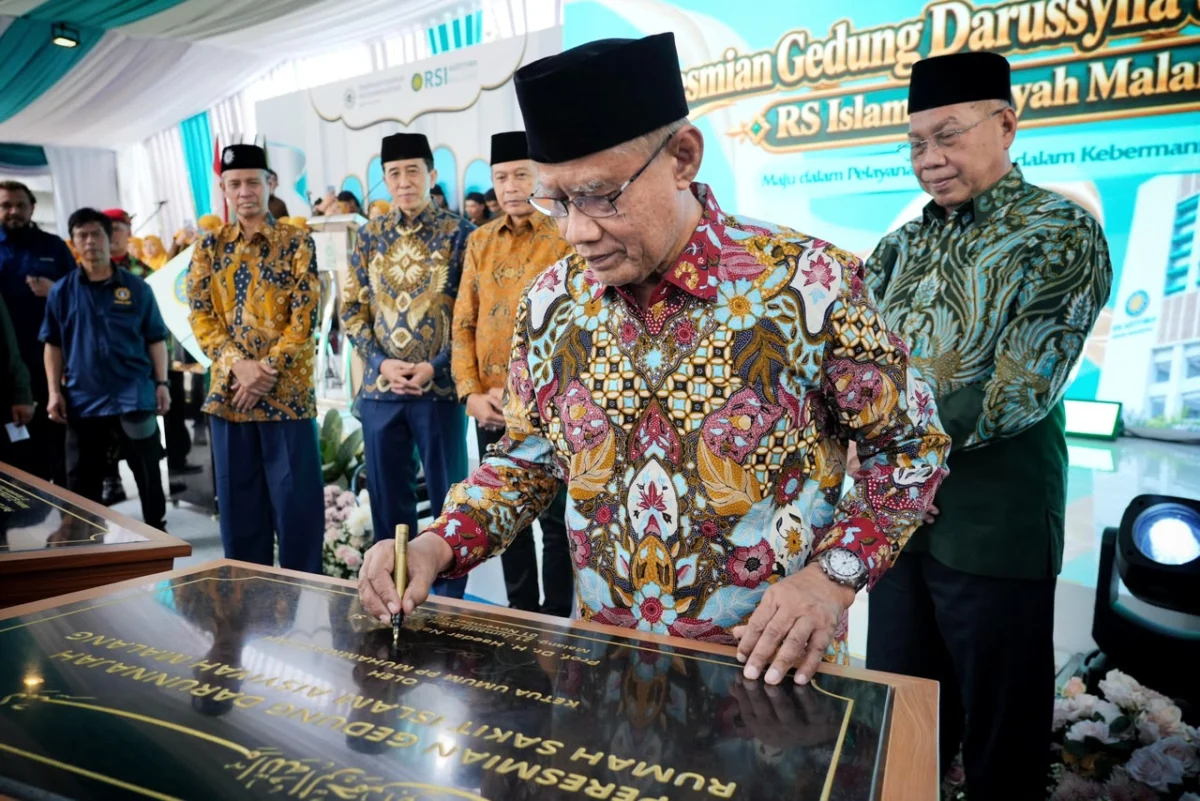
The ongoing expansion of healthcare infrastructure in East Java reached another significant milestone as Prof. Dr. Haedar Nashir, General Chairperson of the Central Board (PP) of Muhammadiyah, officially inaugurated the new Gedung Darussyifa and Darunnajah buildings at the Aisyiyah Islamic Hospital (RS Islam Aisyiyah) in Malang. The inauguration ceremony, held on a Sunday in the historic city of Malang, represents a major leap forward for the medical facility as it seeks to elevate the standard of healthcare services available to the local population and the broader regional community.
The event drew prominent figures from both Islamic organizational leadership and municipal government, highlighting the deeply collaborative relationship between faith-based social institutions and public administration. With the addition of these two new buildings, RS Islam Aisyiyah Malang significantly expands its physical footprint, clinical capacities, and administrative infrastructure, positioning itself as an increasingly vital pillar of community health in Malang City and its surrounding areas.
Expansion of Medical Infrastructure and Facilities
The introduction of Gedung Darussyifa and Darunnajah is part of a master plan aimed at modernizing RS Islam Aisyiyah Malang to meet rising healthcare demands. Over recent years, urban centers in East Java have experienced notable demographic shifts and population growth, which in turn have placed heavier burdens on existing medical facilities. By investing in modern infrastructure, the hospital management aims to alleviate bottlenecks in patient admissions, upgrade diagnostic capabilities, and provide more specialized care options under one roof.
During his keynote address, Haedar Nashir expressed profound appreciation and pride regarding the continuous evolution of RS Islam Aisyiyah Malang. He emphasized that the primary motivation behind the expansion is not merely commercial growth, but a deep-seated spiritual and institutional commitment to public service.
“That this hospital continues to grow and develop well is rooted in a spirit of serving the community, operating alongside government hospitals and other healthcare providers,” Haedar stated during the inauguration ceremony.
He further underscored that Muhammadiyah’s approach to public health is comprehensive rather than superficial. The organization refuses to offer substandard or token services, striving instead for continuous quality improvement to enhance the overall health and well-being of the population. According to Haedar, robust public health is a foundational prerequisite for societal advancement, creating a positive feedback loop that ultimately elevates educational attainment and human resource quality.
“Good public health subsequently influences good education and contributes to the development of superior human resources,” he added, linking health investments directly to long-term national development goals.
Strategic Partnership with Local Government
The successful realization of the Gedung Darussyifa and Darunnajah construction projects was made possible through close coordination between hospital administrators, the Muhammadiyah regional network, and municipal authorities. Haedar took the opportunity to publicly thank the Malang City Government and all stakeholders involved in bringing the expansion project to fruition.
He noted that the seamless collaboration between the local administration and Muhammadiyah reflects a shared vision for community development and public welfare.
“Therefore, alongside our gratitude, this also demonstrates that the Malang City Government possesses a high level of commitment, working alongside Muhammadiyah to build the community,” Haedar remarked.
This sentiment was strongly echoed by the Mayor of Malang, Wahyu Hidayat, who attended the inauguration alongside other municipal officials. In his official remarks, Mayor Wahyu expressed deep appreciation to the Muhammadiyah organization for its steadfast role as a strategic partner to the government in delivering high-quality, accessible healthcare to residents.
Mayor Wahyu explicitly linked the hospital’s expansion to the city’s flagship public health initiative, known locally as "Ngalam Tahes." This municipal program serves as the cornerstone of Malang’s public health strategy, encouraging all residents—affectionately referred to as Nawak Ngalam—to adopt healthier, more active, and higher-quality lifestyles.
“In connection with the Ngalam Tahes initiative, both the Deputy Mayor and I have consistently provided ongoing support for the development of the Aisyiyah Islamic Hospital,” Wahyu explained. He emphasized that private and faith-based healthcare providers play an indispensable role in closing service gaps that government facilities alone cannot always cover, making synergistic partnerships essential for urban health management.
Visionary Leadership and Innovation in Amal Usaha
Adding to the chorus of institutional support, Sukadiono, Chairperson of the East Java Muhammadiyah Regional Leadership (PWM), delivered an inspiring perspective on the future of Islamic philanthropic enterprises (Amal Usaha). He stressed that navigating the complexities of the modern era requires moving beyond passive reflection or reliance on past achievements.
“Looking toward the future cannot be done simply through daydreaming while constantly looking backward,” Sukadiono asserted. “Therefore, grand visions and dreams become crucial—dreaming about how to expand these charitable business ventures while simultaneously driving various forms of innovation.”
Under Sukadiono’s regional leadership, Muhammadiyah institutions across East Java have been encouraged to adopt modern management practices, digital health records, and patient-centric care models. The newly inaugurated buildings at RS Islam Aisyiyah Malang embody this philosophy, incorporating modern architectural standards, efficient spatial planning, and advanced medical equipment designed to streamline patient workflows and reduce waiting times.
Historical Context and Evolution of Muhammadiyah Healthcare
To understand the significance of the expansion of RS Islam Aisyiyah Malang, it is essential to examine the broader historical context of Muhammadiyah’s healthcare endeavors. Founded in 1912 by K.H. Ahmad Dahlan in Yogyakarta, Muhammadiyah emerged as a reformist Islamic movement dedicated to social welfare, education, and healthcare (known collectively as Penolong Kesengsaraan Oemoem or PKO).
Over more than a century, Muhammadiyah has grown into one of the largest Islamic non-governmental organizations in the world, operating a vast network of hundreds of hospitals, clinics, universities, and schools across the Indonesian archipelago. The organization’s healthcare network specifically targets underserved populations, bridging geographical and economic divides to ensure that quality medical care remains accessible to the marginalized.
RS Islam Aisyiyah Malang operates under the auspices of Aisyiyah, the influential women’s wing of Muhammadiyah. Established with a profound focus on maternal, child, and general community health, Aisyiyah-run hospitals have historically pioneered compassionate, ethics-driven medical care. Over the decades, RS Islam Aisyiyah Malang has transitioned from a modest maternity and community clinic into a comprehensive general hospital equipped to handle complex medical cases. The addition of Gedung Darussyifa and Darunnajah represents the latest chapter in this continuous institutional scaling process.
Chronology of the Expansion Project
The journey toward the inauguration of Gedung Darussyifa and Darunnajah involved meticulous planning, regulatory approvals, and construction phases spanning several years:
- Initial Proposal and Master Planning: Hospital management, in consultation with the Central Board of Muhammadiyah and local engineering consultants, identified the urgent need for expanded inpatient and outpatient facilities to cope with increasing patient volumes.
- Permitting and Government Coordination: Dialogue was established with the Malang City Government to align the hospital’s expansion plans with urban zoning laws and municipal health objectives, particularly the "Ngalam Tahes" framework.
- Groundbreaking and Construction Phase: Civil works commenced, focusing on structural integrity, sustainable building practices, and the integration of modern medical gas pipelines, electrical grids, and sanitation systems required for clinical environments.
- Interior Fit-Out and Equipment Procurement: Once structural work was completed, specialized medical equipment, diagnostic tools, and ergonomic patient furniture were installed across both buildings.
- Final Commissioning and Official Inauguration: Following rigorous safety inspections and operational trials, the buildings were officially opened by Haedar Nashir on the designated Sunday, marking the transition from construction to active public service.
Economic and Social Implications for Malang City
The expansion of RS Islam Aisyiyah Malang carries profound socioeconomic implications for the local community. From an employment perspective, the operation of Gedung Darussyifa and Darunnajah creates numerous jobs for healthcare professionals, including physicians, nurses, laboratory technicians, pharmacists, and administrative personnel. This helps absorb local medical graduates and reduces regional brain drain by providing high-quality employment opportunities within East Java.
From a public health perspective, the hospital’s increased capacity directly supports Malang City’s health indicators. By reducing overcrowding in public healthcare facilities, RS Islam Aisyiyah Malang ensures that patients receive more timely diagnoses, shorter hospital stays, and lower infection risks associated with overcrowded wards. Furthermore, the hospital’s ongoing outreach programs, conducted in collaboration with municipal health agencies, facilitate preventive health screenings, vaccination drives, and health education workshops for low-income neighborhoods.
Economically, robust healthcare infrastructure enhances the overall investment climate of Malang. Investors and prospective residents frequently evaluate the quality of local healthcare systems before relocating or establishing businesses in a region. The active participation of reputable organizations like Muhammadiyah in upgrading regional health facilities reassures families and businesses regarding the long-term liveability and resilience of the city.
Conclusion and Future Outlook
The inauguration of Gedung Darussyifa and Darunnajah at RS Islam Aisyiyah Malang stands as a testament to the enduring viability of faith-based social enterprise in modern Indonesia. By combining visionary leadership, strict institutional standards, and active municipal cooperation, Muhammadiyah continues to demonstrate how civil society organizations can effectively partner with the state to address complex societal challenges.
As RS Islam Aisyiyah Malang begins utilizing its newly expanded facilities, the hospital administration faces the future with renewed confidence. With a firm commitment to continuous improvement, ethical service delivery, and community integration, the institution is well-prepared to meet the evolving healthcare needs of Malang City and the wider East Java region for generations to come.