In a high-stakes address from Washington, President Donald Trump declared that United States military operations have successfully crippled the core of Iran’s conventional and nuclear defense infrastructure. The President’s remarks arrive at a volatile juncture in Middle Eastern geopolitics, following an unprecedented escalation that saw 115 strikes launched against 26 U.S. military installations across the region. Despite the administration’s claim of tactical superiority, the President maintained a posture of calculated vigilance, suggesting that additional, highly specific targets remain on the table should diplomatic negotiations fail to yield the desired outcomes.
The President’s assertions regarding the state of the Iranian military apparatus focus heavily on the neutralization of Tehran’s nuclear aspirations and the degradation of its primary launch capabilities. According to the White House, the strategic objective of recent military engagements was to systematically dismantle the logistical and operational framework that supports Iran’s regional projection of power. "We have effectively neutralized their nuclear ambitions," Trump stated, emphasizing that the mission remains ongoing as his administration monitors remaining high-value targets.
The Chronology of Escalation
The current standoff is the culmination of a months-long deterioration in relations between Washington and Tehran. The intensity of the conflict reached a critical threshold in September 2026, when a wave of coordinated strikes targeted U.S. personnel and assets in the Middle East. Intelligence reports confirmed that 26 distinct military installations were hit by a combination of ballistic missiles and drone swarms.
The scope of these attacks forced the Pentagon to reassess its defense posture. Initial assessments from the Department of Defense indicated that the volume of the Iranian offensive severely depleted U.S. missile interceptor stockpiles. Reports suggest that the Pentagon is now seeking an emergency appropriation of approximately $109 trillion—a staggering figure reflecting the replacement costs of advanced aircraft, drone fleets, and air defense interceptors consumed during the initial phases of the conflict.

Strategic Targets and the ‘Pickaxe’ Facility
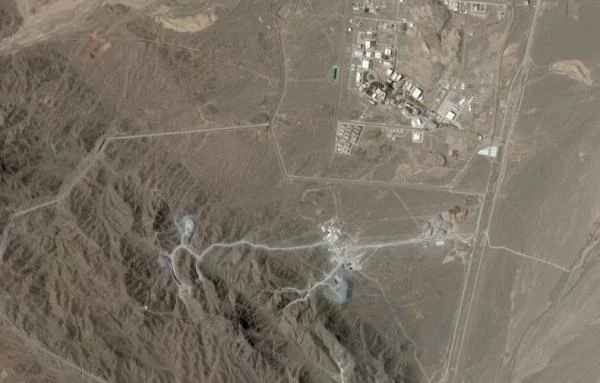
Central to the administration’s rhetoric is the mention of "Mount Pickaxe," a heavily fortified, deep-underground facility that the United States has long identified as a primary hub for Iran’s nuclear enrichment and research activities. President Trump’s explicit reference to this site indicates that the U.S. military has moved beyond conventional tactical strikes and is now postured to neutralize Iran’s most guarded strategic assets.
"We have one or two locations left," the President remarked, signaling that the U.S. possesses the operational intelligence and capability to conduct precision strikes on these hardened targets within minutes. By publicizing the vulnerability of sites like the Pickaxe complex, the administration is likely engaging in a dual-track strategy: applying maximum psychological pressure on the Iranian leadership while demonstrating the efficacy of U.S. bunker-busting capabilities to a domestic and international audience.
Economic and Military Implications
The financial burden of this conflict is becoming a focal point of debate in Washington. The $109 trillion figure cited by defense analysts represents not only the physical loss of hardware but also the immense cost of sustaining a high-readiness posture in a theater of war where the threat of asymmetric warfare remains persistent. For the Pentagon, the challenge lies in replenishing the Advanced Surface-to-Air Missile (SAM) systems that were essential in mitigating the damage from the September strikes.
Economically, the conflict has sent tremors through global energy markets. Given that a significant portion of the world’s oil supply transits through the Strait of Hormuz—a body of water frequently contested by the Iranian Revolutionary Guard Corps (IRGC)—the ongoing hostilities have contributed to heightened volatility in crude oil pricing. Analysts suggest that if the conflict continues to escalate, the disruption to global supply chains could necessitate a more robust international maritime coalition to secure energy corridors.
Diplomatic Stagnation and Skepticism
While President Trump noted that negotiations are ongoing, he expressed deep-seated skepticism regarding Tehran’s willingness to adhere to any long-term commitments. This lack of confidence in diplomatic channels reflects a broader trend in U.S. foreign policy toward Iran, characterized by a preference for "peace through strength" over traditional multilateral diplomacy.

The Iranian leadership, for its part, has historically framed these attacks as a legitimate defense against what they perceive as U.S. imperialist aggression. Tehran has not yet formally responded to the President’s latest claims of military degradation, though observers expect a defiant stance, likely focusing on the resilience of their decentralized command structure and their ability to continue localized operations despite heavy losses.
Broader Geopolitical Context
The current confrontation must be viewed through the lens of a shifting global order. Russia and China, both of which maintain varying degrees of strategic partnership with Iran, are closely monitoring the conflict. The United States’ ability to systematically degrade an adversary’s military without committing to a full-scale ground invasion sets a precedent for how future regional conflicts may be managed.
However, the risk of "mission creep" remains significant. Military historians note that the destruction of specific facilities does not always equate to the destruction of a regime’s ideology or its proxy network. The regional landscape is currently saturated with militias and non-state actors who owe allegiance to Tehran, many of whom possess capabilities that remain outside the scope of current U.S. strike targets.
Expert Analysis: The Path Forward
Defense analysts suggest that the U.S. is currently in a "wait-and-see" phase. By maintaining the threat of immediate strikes on the remaining high-value targets, the White House is attempting to force a capitulation without the need for further kinetic action.
"The administration is signaling that the window for a negotiated exit is closing," says one senior security fellow at a Washington-based think tank. "The mention of specific sites like Mount Pickaxe is a deliberate signal to the Iranian military command that their most protected assets are no longer safe from U.S. precision-guided munitions."
The implications for the regional balance of power are profound. Should the U.S. succeed in permanently disabling Iran’s nuclear research capabilities, it would significantly alter the security architecture of the Middle East, potentially prompting neighboring nations to reassess their own defense alliances. Conversely, should the strategy fail to deter future attacks, the United States could find itself locked into a protracted conflict that tests the limits of its current defense budget and global military reach.
Future Outlook
As of early November 2026, the situation remains fluid. The Pentagon has maintained a high level of operational security, and while the President speaks of an imminent conclusion to the military aspect of the conflict, the logistical requirements to replace lost assets suggest a long-term commitment to maintaining an increased military presence in the Middle East.
The international community awaits further developments, with many nations urging a return to de-escalation. The United Nations and other multilateral organizations have expressed concern over the potential for miscalculation, which could trigger a wider regional war. For the United States, the coming weeks will be defined by the delicate balance between maintaining the pressure on Tehran to ensure long-term stability and avoiding the pitfalls of an open-ended military engagement.
In summary, the administration’s stance is one of total military victory, contingent on the successful neutralization of the final few strategic sites. Whether this approach leads to a new era of regional security or further destabilization remains the central question of the current crisis. The world watches as the U.S. prepares to potentially strike the final blows in a campaign that has already permanently altered the military landscape of the Middle East.