The landscape of the global electric vehicle (EV) market is set for a significant transformation as BYD, the world’s leading manufacturer of new energy vehicles, prepares to launch the second generation of its highly successful Seagull hatchback. Official design sketches unveiled in China by Zhang Zhuo, General Manager of the Ocean Series sales division, confirm that the upcoming model—tentatively referred to as the "Great Seagull"—will move beyond the compact dimensions of its predecessor to offer a more substantial footprint. This strategic pivot suggests that BYD is looking to capture a broader demographic of consumers who demand the affordability of a city car coupled with the interior spaciousness typically reserved for larger segments.
A Departure from Compact Origins
The original BYD Seagull, known internationally as the Dolphin Mini or Atto 1 in specific markets, revolutionized the entry-level EV sector by offering a high-tech, aesthetically pleasing, and remarkably affordable package. Its success was predicated on its efficiency and ease of maneuverability in dense urban environments. However, the second-generation sketches indicate a departure from this "micro-car" identity.
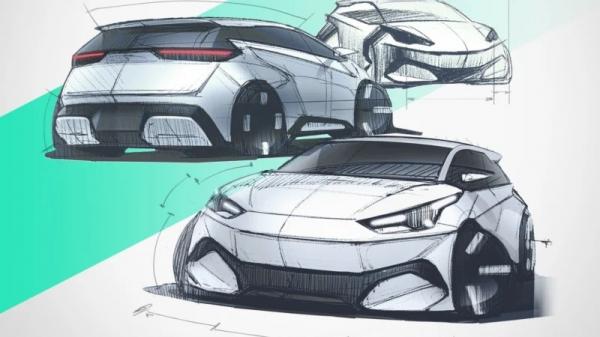
The design language of the new model is noticeably more aggressive and mature. Key visual elements revealed in the official documentation include a striking trident-shaped headlight configuration that dominates the front fascia, creating a bolder road presence. The vehicle’s silhouette features sharper body surfacing and widened wheel arches, providing a more muscular stance that hints at improved stability and performance. The decision to lower the beltline—the line where the side windows meet the door panels—is a calculated design choice meant to provide a more dynamic profile while likely increasing the perception of internal cabin airiness.
Structural Innovations and Interior Space
Perhaps the most significant development in the second generation is the promise of a completely overhauled interior layout. By moving to a new platform architecture, BYD aims to maximize the "wheelbase-to-length" ratio. This engineering approach is designed to carve out more legroom and cargo capacity, addressing the primary consumer critique of the first-generation Seagull, which was occasionally perceived as cramped for longer journeys.
The integration of 16-inch alloy wheels featuring an eight-spoke design not only enhances the visual aesthetic but also suggests a shift toward more robust handling dynamics. At the rear, the design incorporates a sleek, thin horizontal light bar, a hallmark of modern EV design that emphasizes width and sophistication. These aesthetic refinements position the new Seagull not merely as a budget option, but as a premium-entry vehicle capable of competing in the mid-size hatchback market.
The Strategic Importance of the Ocean Series
The Ocean Series, under which the Seagull falls, is a critical pillar of BYD’s global expansion strategy. By utilizing nautical-themed naming conventions, BYD has successfully differentiated its products from its more traditional "Dynasty" series. The transition from the first-generation model to the "Great Seagull" represents the company’s maturation in the global market.
Analysts note that BYD’s move to increase the size of the Seagull is a proactive response to evolving market demands in China, Europe, and Southeast Asia. As consumers become more comfortable with electric mobility, the demand for vehicles that serve as "primary" rather than "secondary" household cars is rising. By stretching the dimensions of its most popular entry-level model, BYD is effectively hedging its bets against both domestic rivals like Wuling and international legacy automakers struggling to produce cost-effective EVs.

Market Context and Competitive Landscape
The EV market has seen a flurry of activity in the compact hatchback segment. Tesla’s long-rumored "Model 2" or "Redwood" project remains a specter over the industry, yet BYD is already executing on a multi-generational strategy. The original Seagull maintained a competitive edge by utilizing BYD’s proprietary Blade Battery technology, which significantly reduced costs while maintaining high energy density and safety standards.
It is highly probable that the second-generation Seagull will continue to utilize the latest iteration of the Blade Battery. This technology has been the cornerstone of BYD’s dominance, allowing the company to sustain thin margins while achieving high sales volumes. Data from the first half of 2026 suggests that the Seagull remains a best-seller in its class, often outperforming internal combustion engine (ICE) competitors in terms of total cost of ownership. By scaling the car up, BYD is positioning the model to capture the "sweet spot" of the market—families who want an electric vehicle but are sensitive to the price jumps associated with larger SUVs like the Atto 3 or the Seal.
Implications for Global Markets
While the initial reveal is focused on the Chinese market, the global implications are profound. In Indonesia and other parts of Southeast Asia, where the Atto 1/Seagull has been well-received as an accessible entry point to EV ownership, a larger, more powerful version could disrupt the current hierarchy of the local automotive market.
Industry experts suggest that the expansion of the Seagull platform is a direct challenge to the dominance of Japanese automakers in the compact car segment. By offering a vehicle that is more spacious, technologically advanced, and environmentally conscious at a price point that remains competitive, BYD is systematically dismantling the traditional barriers to entry for electric vehicle adoption.

Chronology of the Seagull Lineage
- Early 2023: BYD officially launches the Seagull in China, targeting the budget-conscious urban commuter. It instantly becomes a sales phenomenon.
- Late 2023 – Early 2024: The model is exported to international markets under various names (Dolphin Mini, Atto 1), garnering awards for its value proposition.
- Mid-2025: Market data indicates a shift in consumer preference toward slightly larger hatchbacks, prompting BYD’s research and development team to finalize the "Great Seagull" architecture.
- September 2026: Zhang Zhuo officially reveals the design sketches for the second-generation Seagull, confirming the departure from the previous sub-compact constraints.
- Late 2026/Early 2027 (Projected): Official production and domestic launch in China, with export timelines to follow shortly thereafter.
Analysis: The Path to Mass Adoption
The trajectory of the Seagull series serves as a case study in how to scale EV production. BYD’s vertical integration—producing its own batteries, semiconductors, and software—gives it a massive advantage in supply chain management. While many competitors are forced to rely on external suppliers, causing bottlenecks, BYD’s control over the entire production cycle allows it to iterate quickly.
The decision to increase the size of the Seagull is not merely a design update; it is a fundamental shift in the vehicle’s utility. A larger cabin and more aggressive styling move the car out of the "city runabout" category and into the "all-purpose vehicle" category. For many households, this change alone could be the tipping point that convinces them to trade in their gasoline-powered vehicles for an electric alternative.
Furthermore, the design language shift toward the "trident" look aligns the Seagull more closely with the premium aesthetic of the BYD Seal. This "trickle-down" design approach reinforces the brand identity, ensuring that even entry-level buyers feel they are purchasing a modern, cutting-edge product.
Future Outlook and Official Responses
While specific technical specifications, such as battery range and motor output, remain under wraps, the industry expects significant upgrades. The new platform will likely support faster charging architectures and advanced driver-assistance systems (ADAS) that were previously absent or optional in the first generation.

BYD has not yet provided an official date for the global release, but industry analysts anticipate a tiered rollout. China will remain the primary testing ground, followed by key export markets where the original Seagull has already established a robust service and charging infrastructure. As BYD continues to refine its global strategy, the second-generation Seagull will undoubtedly serve as the spearhead for the company’s efforts to capture a larger share of the mass-market automotive sector.
In conclusion, the revelation of the BYD Seagull’s second-generation design sketches marks a pivotal moment for the manufacturer. By balancing the proven success of the original model with the necessary evolutions in size and aesthetic maturity, BYD is positioning itself to remain at the forefront of the global transition to electric mobility. The "Great Seagull" is not just a new car; it is a statement of intent that the era of affordable, high-quality, and spacious electric vehicles has truly arrived.