The legal team representing plaintiff Mercy Sihombing is actively evaluating a series of alternative legal and political strategies following the formal withdrawal of a lawsuit concerning the high school education equivalency certificate of Vice President Gibran Rakabuming Raka. The initial legal challenge, which was being litigated at the Jakarta State Administrative
Court (PTUN), centered on the validity of the administrative documents recognizing Gibran’s secondary education credentials obtained abroad. However, rather than concluding their efforts to contest the documentation, the legal representatives have signaled an expansion of their campaign, looking toward multi-tiered channels that include constitutional, administrative, and ethical tribunals.
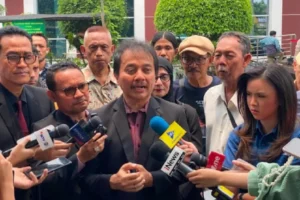
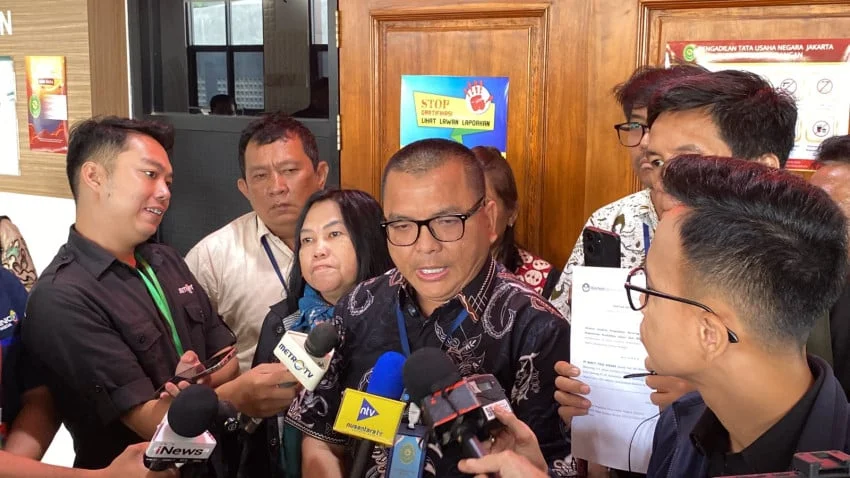
Speaking outside the Jakarta State Administrative Court premises in East Jakarta, lead counsel Denny Indrayana confirmed to members of the press that his team is carefully weighing their next moves. The decision to withdraw the specific PTUN petition does not signify an end to the ongoing public and legal scrutiny surrounding the educational background of the nation’s second-highest-ranking executive. Instead, the legal team maintains that several distinct pathways remain viable to address what they characterize as administrative and legal discrepancies regarding the qualifications submitted during the election cycle.
Context and Background of the Educational Equivalency Dispute
The controversy surrounding Gibran Rakabuming Raka’s educational background first surfaced prominently during the intense political maneuvering of the national election season. Critics and political opponents repeatedly raised questions concerning the exact nature of his secondary and tertiary studies completed overseas, specifically in Australia and Singapore. In Indonesia, citizens who complete portions of their primary or secondary education in foreign institutions are required to secure an official equivalency certificate—commonly known as a surat keterangan penyetaraan—issued by the Ministry of Education, Culture, Research, and Technology. This bureaucratic step ensures that foreign academic credentials meet national standards before they can be officially recognized for professional or administrative purposes, including running for public office.
Mercy Sihombing, acting as the primary plaintiff, initiated the legal challenge at the PTUN to test the procedural legitimacy and substantive validity of the equivalency certificate granted to Gibran. The lawsuit argued that the issuance process may have bypassed essential administrative requirements or lacked the necessary verification of academic transcripts from the foreign institutions attended. Throughout the preliminary hearings, the defense and related state administrative bodies defended the issuance, maintaining that all statutory guidelines were properly followed and that the documents accurately reflect Gibran’s academic history.
Chronology of the PTUN Proceedings and Document Disclosure
The legal battle at the Jakarta State Administrative Court saw notable developments in the weeks leading up to the withdrawal of the petition. During the evidentiary sessions, legal representatives and state attorneys presented a comprehensive file containing academic records spanning multiple years of Gibran’s education. These disclosures were intended to put to rest persistent public skepticism regarding his foundational schooling.
Among the documents brought forward and examined within the courtroom were complete academic transcripts and certificates detailing Gibran’s elementary and junior high school education completed within Indonesia. Furthermore, the defense introduced foreign academic records, specifically detailing coursework and examination documents from Insearch at the University of Technology Sydney (UTS Insearch) in Australia and the Management Development Institute of Singapore (MDIS).
Despite the presentation of these extensive educational archives in open court, tensions remained high regarding the precise administrative trail required for foreign credential conversion. The decision by Mercy Sihombing’s legal team to withdraw the PTUN suit caught observers by surprise, leading to immediate speculation regarding the strategic shift. Rather than pursuing a narrow administrative review focused solely on the Ministry of Education’s certification process, the legal architects behind the challenge chose to pivot toward a broader strategy that transcends the jurisdiction of the administrative court system.
Exploring Alternative Frontiers: Political, Administrative, and Ethical Tribunals
Addressing reporters after the court session on Thursday, October 29, 2026, Denny Indrayana outlined a three-pronged approach that his team and supporting coalitions are currently reviewing. He emphasized that challenging the legitimacy of a high-ranking state official’s credentials cannot be contained by a single judicial venue, especially when questions of national leadership and public trust are involved.
The first alternative pathway highlighted by Indrayana involves what he termed "political justice," commonly understood as legislative mechanisms for impeachment or formal parliamentary dismissal. While recognizing the high political hurdles required to initiate and successfully prosecute an impeachment proceeding within the People’s Consultative Assembly (MPR) or the House of Representatives (DPR), the legal team maintains that parliament remains a legitimate forum for addressing accountability issues concerning executive officials. Such a path would rely heavily on political coalitions, parliamentary inquiries (Right of Inquiry or Hak Angket), and debates concerning executive ethics and transparency.
The second pathway remains within the judicial sphere, albeit potentially returning to the State Administrative Court or exploring appellate and constitutional dimensions if new evidence or different legal standing can be established. Administrative law experts note that withdrawing a lawsuit without prejudice sometimes allows a plaintiff to refile under revised legal theories or with updated documentation, keeping the administrative pressure alive.
The third avenue involves the pursuit of "ethical justice." This entails bringing formal complaints before bodies charged with overseeing the ethical conduct of public officials and state administrators, such as the Election Organizer Ethics Council (DKPP) if related to electoral administrative conduct, or internal government oversight bodies. By targeting the ethical dimensions of how public documents were processed and utilized during the campaign, the plaintiffs hope to establish accountability even if traditional criminal or civil thresholds are difficult to prove.
Implications for National Governance and Political Stability
The strategic pivot by Mercy Sihombing and Denny Indrayana carries significant implications for the broader political landscape of Indonesia. The ongoing debate over leadership credentials, while often framed in technical administrative terms, serves as a proxy for broader political rivalries and persistent polarization originating from the previous general elections.
From a legal standpoint, the withdrawal of the PTUN lawsuit temporarily relieves immediate judicial pressure on the administration regarding this specific administrative product. However, by signaling an intent to pursue political and ethical forums, the plaintiffs ensure that the issue will remain in the public eye, serving as a persistent point of contention for opposition groups.
Political analysts suggest that while invoking mechanisms such as parliamentary impeachment faces severe structural constraints—given the current ruling coalition’s strong majority in the legislature—the mere mobilization of these concepts serves a potent rhetorical purpose. It keeps the administration on the defensive regarding transparency and governance standards. Conversely, defenders of the administration argue that these repeated legal and political challenges are politically motivated distractions designed to undermine the legitimacy of a democratically elected government and disrupt national development agendas.
As the legal team deliberates on its next official filings and coalition meetings, the broader public awaits concrete moves from either side. Whether the pursuit of political and ethical tribunals will gain traction or quietly dissipate will depend heavily on the willingness of opposition lawmakers to take up the cause and the judiciary’s approach to handling interconnected administrative disputes. For now, the legal battle over Gibran Rakabuming Raka’s educational documentation has shifted from the quiet rooms of the State Administrative Court into the much larger, and often unpredictable, arena of national politics and public accountability.