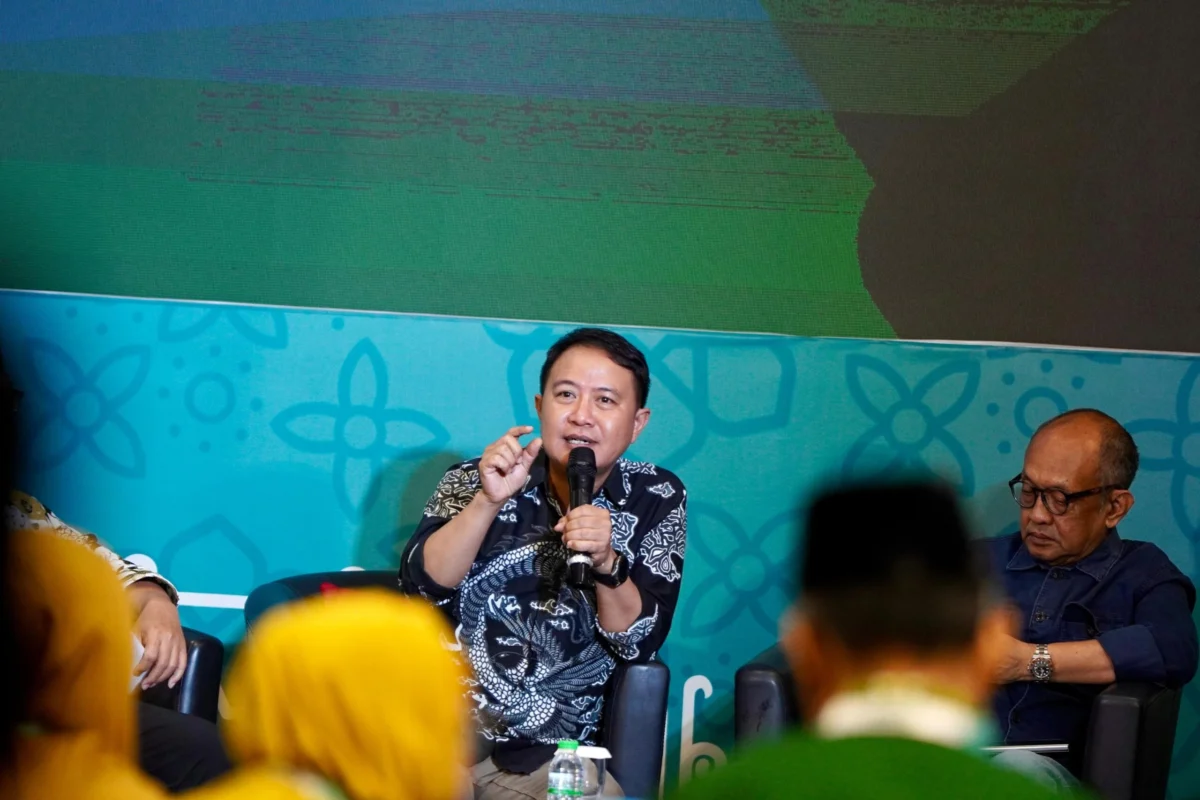
YOGYAKARTA — In a decisive move to bolster the financial resilience and entrepreneurial landscape of one of Indonesia’s largest Islamic organizations, the Central Leadership (PP) of Muhammadiyah has called for a fundamental shift in how the organization manages its business and creative economy sectors. Speaking at the National Friendship Forum of Muhammadiyah Tourism and Creative Economy Practitioners (Silatnas LPEK), Treasurer of PP Muhammadiyah, Hilman Latief, outlined a forward-thinking roadmap aimed at moving away from rigid ownership models toward dynamic, collaborative partnerships.
The high-profile gathering, themed "Weaving Collaboration, Mobilizing Potential, Towards Progressive Tourism and Creative Economy," was organized by the Tourism and Creative Economy Board of the Central Leadership of Muhammadiyah (LPEK PP Muhammadiyah). Held at the Prime UMY Hotel Convention & Dormitory, the event brought together business owners, academics, institutional leaders, and policymakers from across the Indonesian archipelago to deliberate on the future of community-driven economic development within the Islamic framework.
The initiative marks a significant milestone in Muhammadiyah’s broader economic modernization agenda. For decades, the organization has focused heavily on education, health, and social welfare, building thousands of schools, universities, and hospitals. However, in an increasingly interconnected and volatile global economy, leadership figures have recognized the urgent need to strengthen the organization’s commercial foundation to ensure long-term self-sufficiency and greater societal impact.
Background and Context of the Silatnas LPEK Forum
The establishment of the LPEK PP Muhammadiyah and the convening of the Silatnas forum come at a critical juncture for Indonesia’s post-pandemic economic recovery. As the national tourism sector rebounds following years of disruption caused by global health crises, policymakers and business leaders have intensified efforts to promote sustainable, localized, and value-added tourism.
Muhammadiyah, with its massive grassroots network spanning millions of members, possesses an extensive, albeit historically fragmented, commercial footprint. Individual members operate thousands of enterprises ranging from small-scale culinary micro-enterprises to medium-sized manufacturing and service companies. However, analysts note that these businesses have often operated in silos, lacking formal integration with the broader institutional frameworks of the Muhammadiyah organization.
Recognizing this untapped potential, the leadership has sought to harness collective assets through structured synergy. The Silatnas LPEK forum served as a premier platform to bridge the gap between individual Muhammadiyah entrepreneurs and the organization’s institutional infrastructure, fostering an environment where shared resources can yield exponential economic returns.
Rethinking the Business Model: Moving Beyond Full Ownership
During his keynote address, Hilman Latief underscored the traditional limitations that have historically hindered the rapid scaling of organizational enterprises. He pointed out that a dogmatic adherence to full ownership models—where the organization attempts to solely own and operate every single business line—often leads to sluggish growth and capital inefficiencies.
"The core objective of these economic activities is to bring prosperity to our members and welfare to our institutions," Hilman stated during the plenary session. "Historically, our business paradigm has leaned heavily toward full ownership, which invariably slows down development due to capital constraints and operational bottlenecks."
To circumvent these structural limitations, Hilman introduced a paradigm shift favoring strategic alliances, joint ventures, and public-private style synergies within the internal ecosystem. By sharing risks, pooling capital, and leveraging external expertise through partnerships, Muhammadiyah-affiliated businesses can scale much faster while retaining core values.
"Not everything requires full ownership; what we need is synergy. This is a prime example of how we can build a robust and resilient creative industry," he emphasized. This pragmatic approach signals a modernization of Muhammadiyah’s economic thought, blending traditional cooperative values with contemporary corporate governance strategies.
Diverse Economic Sectors and the Rise of Halal Tourism
The breadth of economic potential highlighted during the forum reflects the remarkable diversity of Muhammadiyah’s membership base. Hilman pointed to several high-growth sectors where the organization is uniquely positioned to capture significant market share.
Among the primary sectors discussed was the lucrative travel, pilgrimage, and hospitality industry, specifically Hajj and Umrah services. Given the massive demand among Indonesian Muslims for spiritual travel, integrating travel agencies, lodging facilities, and transport services under a unified Muhammadiyah cooperative framework presents a massive commercial opportunity.
Beyond tourism, Hilman highlighted export-oriented ventures, such as the international distribution of authentic Indonesian food spices, as well as fisheries and agricultural production. Indonesia’s abundant natural resources provide a fertile ground for these industries. Hilman stressed that Muhammadiyah members must actively participate in managing these sectors with high professional standards, creativity, and an uncompromising commitment to Islamic progressive values.
Echoing sentiments shared by PP Muhammadiyah Chairman Muhadjir Effendy during related institutional discussions, Hilman noted that virtually every region in Indonesia harbors unique historical sites, cultural assets, and localized values. When packaged professionally, these local treasures can be transformed into compelling tourist destinations that attract both domestic and international travelers.
Furthermore, Hilman stressed that the tourism sector—spanning localized heritage tourism as well as international religious travel—cannot function in isolation. It requires a dynamic creative economy to serve as its primary supplier of goods, services, arts, and culinary innovations. Together, these interconnected sectors form a comprehensive economic ecosystem capable of generating widespread employment and community prosperity.
Strategic Roadmap and Institutional Legal Clarity
To turn these ambitious visions into operational reality, Hilman issued a direct directive to the leadership of LPEK PP Muhammadiyah. He called for the immediate formulation of clear organizational guidelines and a comprehensive, actionable strategic roadmap.
"Establish clear legal entities and ensure that synergy is properly balanced," Hilman instructed the board. "It is our sincere hope that we will see the emergence of flagship limited liability companies (PT) owned by the Muhammadiyah organization that can seamlessly collaborate with existing, thriving businesses owned by individual Muhammadiyah members."
This call for structured corporate entities addresses a historical challenge faced by many faith-based economic initiatives: the lack of formal legal clarity and standardized governance. By establishing robust corporate vehicles (PT), Muhammadiyah can attract professional management, secure institutional financing, and build trustworthy supply chains that connect grassroots entrepreneurs with larger corporate markets.
Implications for the Broader Indonesian Economy
The strategic initiatives unveiled at the Silatnas LPEK forum carry profound implications not only for Muhammadiyah as an institution but also for the broader Indonesian economy. As one of the nation’s premier socio-religious pillars, Muhammadiyah’s pivot toward structured economic empowerment serves as a model for community-based development.
By formalizing the integration between micro-entrepreneurs and institutional capital, the organization is effectively creating an internal supply chain that can weather external macroeconomic shocks. This localized resilience is particularly vital in an era marked by global supply chain disruptions and inflationary pressures.
Moreover, the emphasis on the creative economy and sustainable tourism aligns closely with national development goals set by the Indonesian government. Programs aimed at boosting domestic tourism, empowering creative hubs, and promoting halal-friendly services stand to benefit immensely from organized institutional backing. When millions of organization members actively participate in a synchronized economic network, the cumulative effect is a measurable reduction in poverty, enhanced job creation, and a more equitable distribution of wealth across regional economies.
Conclusion and Future Outlook
The conclusion of the Silatnas Pelaku Pariwisata dan Ekonomi Kreatif Muhammadiyah marks the beginning of an intensive implementation phase for LPEK PP Muhammadiyah. With a clear mandate from the central treasury and executive leadership, the board is now tasked with drafting the institutional roadmaps and establishing the legal frameworks necessary to operationalize these partnerships.
As Muhammadiyah navigates its second century of service to the nation, its evolving approach to economic development demonstrates a remarkable capacity for adaptation. By bridging grassroots entrepreneurial energy with modern corporate strategy and strategic alliances, the organization is laying a solid foundation for sustainable financial independence and enduring societal prosperity.