Singapore is rapidly cementing its status as the premier global destination for ultra-high-net-worth individuals seeking a secure harbor for their physical gold assets. Amid a relentless backdrop of geopolitical conflicts, escalating political instability, and persistent global economic uncertainty, wealthy investors from the United States, Europe, and the Middle East are aggressively pivoting toward the Southeast Asian city-state. This massive influx of capital and precious metals is not only redefining the geography of wealth preservation but is also mounting a serious, structural challenge to Switzerland’s historic hegemony as the undisputed global capital of gold storage.
The tectonic shift in where the world’s elite choose to safeguard their wealth is driven by a deep-seated anxiety regarding systemic risks in traditional financial systems. As trade wars morph into hot wars, supply chains fracture, and sovereign debt concerns mount globally, physical gold has reasserted its timeless role as the ultimate crisis-era asset. Singapore, with its reputation for bulletproof political stability, rigorous rule of law, pristine regulatory framework, and exceptional personal security, has emerged as the definitive jurisdiction of choice for institutional-grade wealth protection.
The Evolution of Wealth Migration to Southeast Asia
The movement of physical gold into Singapore is not a marginal trend, but a fundamental realignment of global asset allocation strategies. According to industry insiders, the profile of investors shifting their bullion to the island nation spans several continents and multiple generations of wealth. Traditional dynastic families and newly minted ultra-high-net-worth individuals are fundamentally altering their custody arrangements.
Manish Tibrewal, co-founder of Farro Capital, highlighted the dual nature of this capital movement in a recent market observation. "Old-money families who have traditionally stored their physical gold reserves in legacy jurisdictions are actively reallocating a significant portion of those assets to Singapore," Tibrewal explained. "Simultaneously, a new wave of affluent families who previously held little to no physical gold are aggressively building positions through private banking channels and elite precious metals dealers, designating Singapore as their primary vaulting destination."
This cross-border migration is being fueled by a perception that traditional Western storage hubs, while historically reliable, are increasingly exposed to geopolitical crosscurrents, regulatory overreach, and asset seizure risks. Singapore’s strategic geopolitical neutrality, coupled with its warm diplomatic relations with both Eastern and Western powers, provides a unique geopolitical buffer that few other nations can replicate.
Exponential Growth: A Decade of Staggering Accumulation
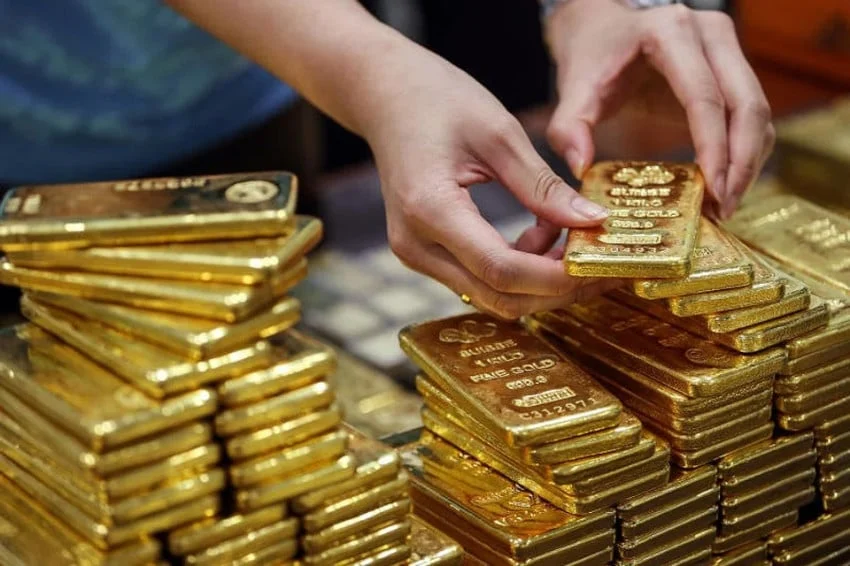
The empirical evidence supporting Singapore’s meteoric rise as a gold vaulting superpower is striking. Market data from specialized precious metals dealer J. Rotbart & Co. reveals an astronomical expansion in private bullion storage within the city-state. Over the past decade, the volume of privately owned gold stored in Singapore has surged by an estimated 16 times, comfortably clearing the monumental milestone of 800 metric tons by 2025.
This unprecedented accumulation has placed immense pressure on the nation’s specialized physical infrastructure. Le Freeport, an ultra-secure, high-security storage facility often dubbed the "Fort Knox of Asia," has experienced such a relentless wave of demand that a substantial portion of its deeply fortified subterranean vaults are now operating at or near maximum capacity. Designed to institutional standards with military-grade security features, Le Freeport has become the physical embodiment of Singapore’s trust-based financial ecosystem.
Similarly, other premier vaulting operations are experiencing unprecedented growth trajectories. The Reserve, another state-of-the-art bullion storage facility in Singapore, reported that client-held gold reserves within its custody programs have multiplied threefold compared to levels recorded at the beginning of 2020. By September 2026, the facility managed an impressive 8.6 metric tons of gold, with international clients accounting for an overwhelming 90 percent of the total holdings. Furthermore, industry metrics indicate that approximately 40 percent of European clients utilizing these facilities have actively transferred portions of their existing gold inventories out of traditional Swiss vaults, choosing instead to re-anchor them in Singapore or direct their newly executed bullion purchases exclusively to the island nation.
A Chronological Timeline of Singapore’s Rise as a Bullion Hub
To understand how Singapore achieved this monumental status, it is essential to examine the deliberate policy shifts and market catalysts that shaped its trajectory over the past two decades:
- 2012: The Singaporean government implements a landmark tax reform, removing the Goods and Services Tax (GST) on investment-grade precious metals (IGPM). This decisive legislative move instantly removes a major cost barrier, positioning Singapore to compete directly with international tax-efficient trading hubs like London and Zurich.
- 2010–2014: Construction and opening of Le Freeport. Envisioned as a high-security sanctuary for art, precious stones, and gold, the facility establishes a new benchmark for ultra-secure asset housing in Asia, laying the physical groundwork for future bullion inflows.
- 2020: The outbreak of the global COVID-19 pandemic triggers unprecedented macroeconomic volatility. Central banks flood global markets with liquidity, sparking fears of inflation and currency devaluation. This crisis serves as an initial stress test that validates Singapore’s operational resilience and prompts wealthy investors to begin diversifying their storage jurisdictions.
- 2022–2024: The onset of the Russia-Ukraine war and subsequent Western sanctions, including the freezing of Russian central bank reserves, fundamentally transform global risk perceptions. Wealthy private investors outside of Russia realize that traditional Western jurisdictions are increasingly susceptible to geopolitical weaponization of the financial system. Inflows into Singapore accelerate exponentially.
- 2025–2026: Privately held gold in Singapore surpasses 800 tons—a 16-fold increase from 2014 levels. Vaults across the island report near-capacity utilization, while traditional European strongholds like Switzerland experience a noticeable outflow of private wealth seeking geographic diversification in Southeast Asia.
Challenging the Swiss Hegemony
For centuries, Switzerland has stood as the undisputed global epicentre for gold refining, trading, and safekeeping. Cities like Zurich and Geneva have long represented the gold standard of institutional trust, backed by a deeply entrenched banking secrecy tradition and centuries of accumulated financial expertise. However, recent geopolitical realignments have introduced cracks in this historical monopoly.
While Switzerland remains a titan in the global precious metals landscape, its mandatory alignment with European Union sanctions regimes in recent geopolitical conflicts has inadvertently compromised its image of absolute neutrality in the eyes of certain non-Western ultra-high-net-worth individuals. Investors from the Middle East, Asia, and even parts of the Americas have grown increasingly sensitive to the weaponization of financial infrastructure.
Singapore’s deliberate, long-standing foreign policy of strict neutrality, coupled with its refusal to implement unilateral sanctions outside of United Nations Security Council mandates, offers a compelling alternative. By positioning itself as a reliable, jurisdictionally independent sanctuary, Singapore has successfully peeled away market share from Swiss institutions, transforming a European-centric market into a truly multipolar vaulting landscape.
Economic and Geopolitical Implications
The rapid transformation of Singapore into a mega-hub for physical gold storage carries profound structural implications for global finance, regional economics, and international diplomacy.
From an economic perspective, the influx of billions of dollars worth of precious metals reinforces Singapore’s position as a premier wealth management center. It generates high-value employment across legal, compliance, logistics, and security sectors while deepening the liquidity and sophistication of the local financial ecosystem. Private banks, family offices, and specialized logistics providers benefit immensely from the cross-selling of auxiliary wealth structuring, insurance, and estate planning services tied to these physical assets.
Geopolitically, Singapore’s rise signals a broader decentralization of global financial power. As the international order fractures into competing economic blocs, neutral middle-power jurisdictions that can guarantee property rights and operational security are becoming indispensable anchors for global capital. Singapore’s success demonstrates that trust, regulatory transparency, and strict adherence to the rule of law remain the most valuable commodities in modern international finance.
Looking ahead, industry analysts project that the structural demand for secure physical gold storage in Singapore will remain robust. As long as structural macroeconomic deficits, geopolitical flashpoints, and currency volatility dominate the global landscape, the "Fort Knox of Asia" will continue to serve as an indispensable fortress for the world’s most discerning capital, permanently redrawing the map of global wealth preservation.