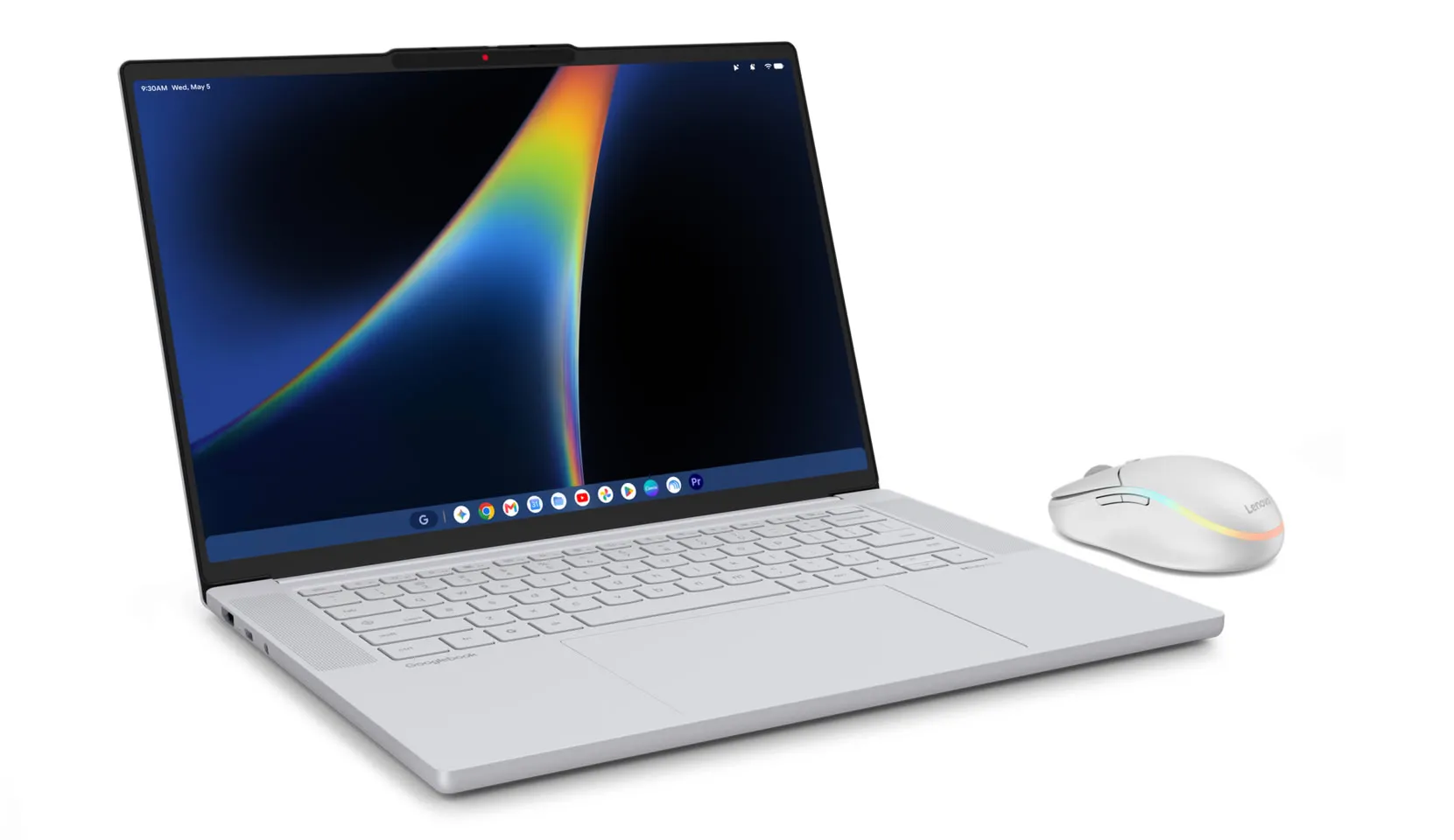
Lenovo has officially taken the wraps off the Googlebook 15, marking a significant milestone as one of the very first devices to enter the market powered by the newly minted Googlebook OS. Designed to offer a premium, AI-driven user experience within a sleek and lightweight chassis, the new laptop aims to bridge the gap between high-performance productivity workstations and ultra-portable personal devices. Featuring a sprawling 15.3-inch OLED display, cutting-edge Intel Core Ultra processors from the Panther Lake family, and a robust suite of modern connectivity features, the Googlebook 15 positions Lenovo at the forefront of a shifting ecosystem landscape.
The announcement comes at a pivotal time for the personal computing industry, as manufacturers aggressively pursue convergence between lightweight mobile operating systems and heavy-duty productivity hardware. By adopting the Googlebook OS platform, Lenovo is signaling a deeper commitment to diversified software experiences that prioritize seamless cloud integration, advanced artificial intelligence execution, and optimized battery efficiency. With a scheduled market rollout and a competitive introductory price point, the device is poised to capture the attention of professionals, students, and multimedia enthusiasts alike.
Main Facts and Core Specifications
At the heart of the Lenovo Googlebook 15 is a commitment to visual excellence and processing power. The laptop is built around a stunning 15.3-inch OLED panel featuring a high-resolution 2.8K canvas and full touchscreen capabilities. OLED technology ensures deep blacks, vibrant color reproduction, and high contrast ratios, making the device exceptionally well-suited for both professional graphic tasks and immersive media consumption. Despite housing such a large display, Lenovo has engineered the chassis to maintain an extraordinarily portable profile. Weighing in at just 1.29 kg (approximately 2.84 lbs), the manufacturer claims this model stands as the lightest 15-inch laptop within its current portfolio.
Underneath the hood, the Googlebook 15 relies on Intel’s latest architecture, specifically the Intel Core Ultra 5 325 processor based on the advanced Panther Lake microarchitecture. This silicon is tailored to handle demanding multi-threaded workloads while optimizing power consumption, bolstered by integrated neural processing units (NPUs) dedicated to local artificial intelligence tasks. To complement the processor, Lenovo offers configurable memory options featuring 16GB or 32GB of LPDDR5X RAM, paired with solid-state storage capacities of 256GB or 512GB. Sustaining this hardware configuration is a 70Wh battery pack, engineered to deliver all-day endurance under standard usage conditions.
Security and user interaction have also received careful attention. The laptop incorporates a sharp 5-megapixel webcam equipped with a physical privacy shutter for user peace of mind. Biometric authentication is handled via a built-in fingerprint sensor alongside advanced facial recognition (face unlock) capabilities. Adding a unique aesthetic and functional flair, the device features the distinctive "Glowbar," a signature design element unique to the Googlebook lineup. Audio performance is driven by a quad-speaker array enhanced with Dolby Atmos certification, providing a rich soundscape for video conferencing and entertainment.
Chronology and Market Context
The debut of the Googlebook 15 is the culmination of years of collaborative development between hardware manufacturers and software giants to redefine the boundaries of lightweight computing. The conceptualization of Googlebook OS began gaining serious momentum as artificial intelligence workloads migrated increasingly from cloud servers to edge devices. As software ecosystems evolved to demand tighter integration between mobile-first responsiveness and desktop-grade capability, original equipment manufacturers (OEMs) began preparing hardware tailored specifically to these requirements.
Throughout the preceding months, industry watchers anticipated the arrival of Panther Lake-based hardware, viewing Intel’s new generation of processors as a crucial turning point for energy efficiency and thermal management in thin-and-light form factors. Lenovo’s announcement directly follows a series of parallel industry moves, including concurrent hardware reveals from competitors like ASUS—which recently introduced its own Googlebook 14 variant featuring similar OLED and Panther Lake configurations.

The formal introduction of the Googlebook 15 by Lenovo occurred via official press events and global press releases in late September. Following its initial unveiling, the device is slated to enter commercial channels in October, with an initial global starting price of USD 1,099 (roughly equivalent to Rp 18 million). However, regional availability schedules remain staggered, and official distribution timelines for Southeast Asian markets, including Indonesia, have yet to be finalized by regional corporate offices.
Comprehensive Hardware and Connectivity Analysis
Beyond its core processing unit and display, the Googlebook 15 boasts an impressive array of input/output (I/O) options that defy the constraints typically associated with ultra-slim laptops. In an era where many manufacturers are aggressively stripping away ports in pursuit of thinner profiles, Lenovo has retained a versatile selection of physical interfaces.
Connectivity is anchored by cutting-edge wireless standards, including Wi-Fi 7 and Bluetooth 6.0, ensuring ultra-fast data transfer speeds, minimal latency, and robust network stability in congested environments. For wired peripherals and external displays, the Googlebook 15 is equipped with two high-bandwidth Thunderbolt 4 ports, a full-sized USB 3.2 port, an HDMI 2.0 output, and a standard 3.5mm headphone/microphone combination jack. This comprehensive port selection ensures that users can easily dock the laptop into multi-monitor workstation setups without relying heavily on external dongles or adapters.
The thermal architecture of the device has also been optimized to handle the demands of the Panther Lake processor. By utilizing advanced vapor chamber cooling and intelligent fan profiles managed by the operating system’s AI algorithms, the laptop maintains optimal operating temperatures even during sustained computational loads, all while preserving a near-silent acoustic profile during basic office tasks.
Official Responses and Industry Perspectives
While direct public statements from independent consumer advocacy groups are still pending, executive commentary from Lenovo’s product development divisions highlights a clear strategic vision. Company representatives emphasized that the Googlebook 15 was engineered to dismantle the traditional compromise between screen real estate and physical mobility. By pushing the boundaries of material science to achieve a 1.29 kg weight on a 15-inch chassis, Lenovo aims to redefine consumer expectations for productivity hardware.
Industry analysts have responded favorably to the technical specifications, noting that the inclusion of Panther Lake processors and Wi-Fi 7 future-proofs the device against rapid technological obsolescence. Analysts point out that the integration of localized AI features—facilitated by dedicated hardware accelerators within the Intel silicon—will be a decisive selling point for enterprise customers and creative professionals who require data privacy alongside smart automation tools. Furthermore, the aggressive pricing strategy starting at USD 1,099 positions Lenovo competitively against established premium notebook lines currently dominating the market.
Broader Impact and Market Implications
The launch of the Lenovo Googlebook 15 carries significant implications for the broader personal computer ecosystem. As Googlebook OS gains traction as a viable, fully featured alternative to traditional operating systems, the hardware landscape is undergoing a structural evolution. Consumers are no longer forced to choose between lightweight, web-centric devices and heavy, high-performance powerhouses.
The success of devices like the Googlebook 15 could accelerate the adoption of OLED displays as an industry standard even outside the luxury tier, while putting pressure on component suppliers to scale production of energy-efficient processors. If Lenovo successfully executes its global rollout and addresses regional supply chain demands, the Googlebook 15 could serve as a blueprint for the next decade of mobile computing. For the end user, this translates to greater versatility, enhanced security features, and unprecedented performance capabilities packaged within an exceptionally portable form factor. As the October market release approaches, industry observers will monitor consumer reception closely to gauge whether the market is fully prepared to embrace this new generation of intelligent, cloud-integrated hardware.