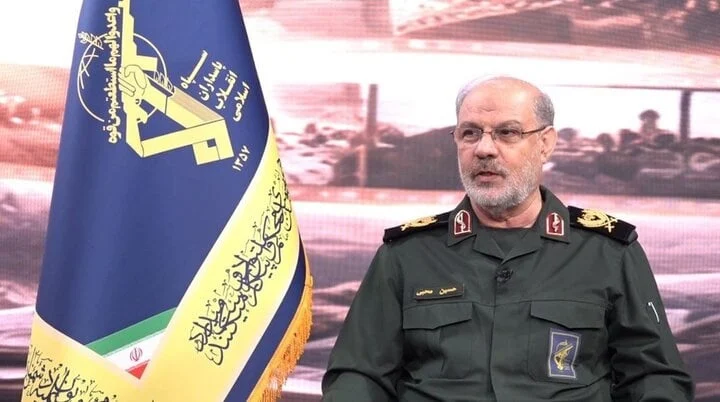
The geopolitical landscape of the Middle East remains fraught with instability as high-ranking officials from the Islamic Revolutionary Guard Corps (IRGC) have launched a scathing critique of United States foreign policy. Hossein Mohebbi, a primary spokesperson for the IRGC, publicly denounced former U.S. President Donald Trump as a "great liar," asserting that the American military and political campaign against the Islamic Republic has fundamentally failed. This rhetoric arrives at a time when the Iranian leadership is attempting to reshape the narrative surrounding its nuclear program and regional influence, framing the ongoing conflict not as a matter of international security protocols, but as a struggle against perceived American imperialism.
Contextualizing the Rhetoric of the IRGC
The remarks made by Mohebbi are part of a broader, long-standing information campaign by the Iranian state aimed at both domestic and international audiences. By positioning the United States as an existential threat seeking to "plunder" Iranian resources and "dismember" its territorial integrity, the IRGC seeks to consolidate internal support while simultaneously challenging the legitimacy of Western sanctions.
According to Mohebbi, the persistent narrative propagated by the United States regarding Iran’s nuclear ambitions is merely a pretext. The IRGC official maintains that Washington’s true objective is to restore the influence it held in Iran prior to the 1979 Revolution—an era often referred to in Tehran as the period of colonial subservience. This assertion challenges the prevailing Western consensus that the primary friction between the two nations is centered on Iran’s uranium enrichment activities and its regional proxy network.
A Chronology of Escalating Tensions
The current diplomatic freeze and military posturing are the culmination of years of deteriorating relations. To understand the gravity of Mohebbi’s recent statements, one must look at the timeline of events that have defined U.S.-Iran relations over the past decade:
- 2015: The Joint Comprehensive Plan of Action (JCPOA) is signed, providing a framework for curbing Iran’s nuclear program in exchange for sanctions relief.
- 2018: The Trump administration unilaterally withdraws the United States from the JCPOA, arguing the agreement was deeply flawed. This decision triggers the "maximum pressure" campaign, resulting in the re-imposition of heavy economic sanctions.
- 2019–2020: Tensions spike with a series of maritime incidents in the Persian Gulf, the downing of a U.S. surveillance drone, and the eventual U.S. airstrike that killed IRGC Quds Force commander Qasem Soleimani in Baghdad.
- 2021–2023: Attempts to revive the nuclear deal under the Biden administration stall as Iran accelerates its uranium enrichment, moving closer to weapons-grade levels.
- 2024–Present: The regional proxy conflict intensifies, with the IRGC emphasizing its commitment to indigenous military development in response to what it terms "Western military failures."
The Strategic Shift in Iranian Military Doctrine
Central to Mohebbi’s message was a defiant stance on Iran’s military capabilities. He stated that the Iranian military continues to innovate, utilizing "all technologies available in the world" to upgrade existing hardware and mass-produce advanced defense systems. This is a direct response to the technological blockade imposed by international sanctions.
Iran’s military strategy has undergone a significant transformation, moving from a reliance on conventional heavy weaponry to a sophisticated network of asymmetric warfare assets. This includes the development of long-range ballistic missiles, advanced drone technology, and localized cyber-warfare capabilities. By claiming that Iran will "deploy new weapons to the battlefield if the war changes form," Mohebbi is signaling a transition toward a more proactive defensive posture, potentially involving non-traditional military assets.
Fact-Based Analysis of the Nuclear Narrative
The core of the dispute rests on the ambiguity of Iran’s nuclear program. While the U.S. and its allies, including the International Atomic Energy Agency (IAEA), have expressed deep concerns regarding Iran’s stockpiles of highly enriched uranium, Tehran maintains that its program is strictly for civilian and peaceful purposes.
Data from the IAEA suggests that Iran has increased its stockpile of 60% enriched uranium significantly since the collapse of the formal monitoring protocols established in 2015. However, the IRGC’s insistence that the nuclear issue is a distraction from the "plundering of wealth" reflects a political strategy to decouple the nuclear debate from economic reality. The economic impact of sanctions has been profound; the Iranian rial has faced significant devaluation, and inflation has surged, affecting the cost of living for millions of Iranians. By shifting the blame for this economic hardship to American "colonialism," the IRGC attempts to deflect domestic criticism of its own economic management.
Responses and International Implications
The international community remains divided on how to interpret the rhetoric emanating from the IRGC. Western analysts often categorize these statements as "regime survival tactics," designed to project strength during periods of internal economic volatility. Conversely, regional observers note that the consistency of this messaging suggests a deep-seated ideological conviction among the IRGC leadership that the U.S. remains an existential threat.
Official reactions from Washington have generally been muted, with the U.S. State Department consistently emphasizing that its policy toward Iran is focused on preventing nuclear proliferation and curbing regional destabilization. The Biden administration has maintained that it remains open to diplomacy, provided that Iran returns to full compliance with international non-proliferation standards.
However, the hardening of positions—demonstrated by Mohebbi’s comments—suggests that the window for diplomatic reconciliation is narrowing. As Iran deepens its military ties with other nations outside the Western sphere, the influence of U.S.-led sanctions may be reaching a point of diminishing returns.
The Broader Impact: A Region in Transition
The broader implications of this rhetoric are significant. As the IRGC continues to emphasize the development of new military hardware, the risk of miscalculation in the Persian Gulf increases. The Strait of Hormuz, a critical global energy chokepoint, remains a potential flashpoint where a minor military incident could rapidly escalate into a regional conflict.
Furthermore, Mohebbi’s assertion that his message is intended for the "American people" rather than as an attempt to influence U.S. elections highlights the IRGC’s interest in the U.S. domestic political landscape. By framing the conflict as a moral struggle, the IRGC hopes to sway international public opinion against the prevailing Western policy of containment.
Conclusion: The Future of the Standoff
The discourse provided by Hossein Mohebbi reflects a persistent and uncompromising reality in modern geopolitics. The Islamic Revolutionary Guard Corps views its survival and the sovereignty of Iran as inherently tied to its ability to resist American hegemony through both rhetoric and military modernization.
As the world watches the standoff continue, the core question remains whether these inflammatory exchanges are merely strategic posturing or the precursor to a more dangerous shift in the military balance of power in the Middle East. With the advancement of Iran’s defense systems and the continued economic pressure from the West, the situation remains a high-stakes game of attrition where the primary victims continue to be regional stability and the economic well-being of the Iranian populace. The narrative of "great lies" and "plundering" will likely continue to dominate the discourse until a fundamental shift in diplomatic strategy occurs on either side of the divide.