The government of the Netherlands has officially enacted a comprehensive ban on the import and commercial trading of goods originating from Israeli settlements located in occupied Palestinian and Syrian territories. Taking effect on September 22, the policy represents a significant escalation in European national measures targeting commercial activity in contested regions. The regulatory shift is designed to ensure that Dutch economic mechanisms and corporate entities do not inadvertently contribute to the sustenance or expansion of settlements, which are deemed illegal under international humanitarian law, specifically violating the Fourth Geneva Convention regarding the duties of an occupying power.
The newly enforced directive encompasses a wide array of merchandise originating from Israeli settlements in the West Bank, including East Jerusalem, as well as the Golan Heights. Beyond prohibiting direct commercial imports, the legislative framework extends to intermediary trading operations and mandates strict compliance from Dutch multinational corporations and enterprises operating abroad. By closing potential loopholes involving third-party handlers, the Dutch administration aims to establish an airtight barrier against settlement-derived goods entering its domestic market.
Enforcement mechanisms have been granted to national customs authorities, who possess the legal mandate to inspect shipments at borders and ports of entry. Furthermore, the restrictions apply to individual travelers entering the Netherlands, meaning personal items, gifts, or souvenirs acquired in the designated settlement areas are subject to confiscation. Border control agents are authorized to seize non-compliant goods, while state prosecutors retain the authority to pursue legal actions against individuals or entities intentionally flunking the sanctions. Deliberate violations of these trade regulations carry severe criminal penalties, signaling a zero-tolerance approach by Amsterdam toward unauthorized trade flows from occupied territories.
Background and Context of the Policy Shift
The decision by Amsterdam to unilaterally restrict trade with Israeli settlements follows years of diplomatic stagnation at the broader European Union level. Historically, the international community has maintained a unified stance regarding the legal status of Israeli settlements built beyond the Green Line following the 1967 Six-Day War. Numerous United Nations Security Council resolutions, including Resolution 2334 passed in 2016, have explicitly stated that these settlements constitute a flagrant violation of international law and present a primary obstacle to achieving a viable two-state solution to the Israeli-Palestinian conflict.
Despite these consensus declarations, achieving a unified EU-wide commercial boycott or import ban on settlement products has faced persistent diplomatic hurdles. Member states hold divergent foreign policy priorities and bilateral relations with Israel, preventing the consensus required for pan-European legislative action. Frustrated by the lack of collective progress within the bloc, the Dutch government previously championed efforts for an EU-wide consensus before pivoting toward independent national legislation.
This localized approach mirrors growing legal and political shifts across several other European nations. Belgium, Spain, and Ireland have similarly introduced or endorsed national frameworks aimed at curtailing commercial ties with entities operating within occupied territories. These legislative maneuvers reflect an increasing alignment between domestic European trade policies and advisory opinions issued by international judicial bodies, such as the International Court of Justice, which have underscored the legal obligations of third-party states not to recognize or render assistance to unlawful situations arising from prolonged occupations.
Chronology of Regulatory Development
The implementation of the Dutch ban is the culmination of a multi-year legislative and administrative process driven by human rights advocacy, parliamentary debates, and shifting geopolitical realities in the Middle East.
- November 2019: The European Union Court of Justice issues a landmark ruling clarifying that foodstuffs originating from territories occupied by Israel must bear labels indicating their specific settlement origin rather than a generalized "Made in Israel" designation, setting a precedent for consumer transparency.
- 2021–2022: Dutch parliamentary factions pressure the Ministry of Foreign Affairs to evaluate the economic footprint of Dutch companies operating in or trading with West Bank settlements, citing potential complicity in human rights violations.
- 2023: Proposals for a unified European restriction stall amid geopolitical divisions among EU member states. The Dutch government signals its intent to explore national regulatory options if multilateral consensus remains unachievable.
- Early 2025: Ministries of Foreign Affairs and Economic Affairs in the Netherlands draft preliminary guidelines for a comprehensive import ban on settlement goods, incorporating feedback from customs agencies and legal scholars.
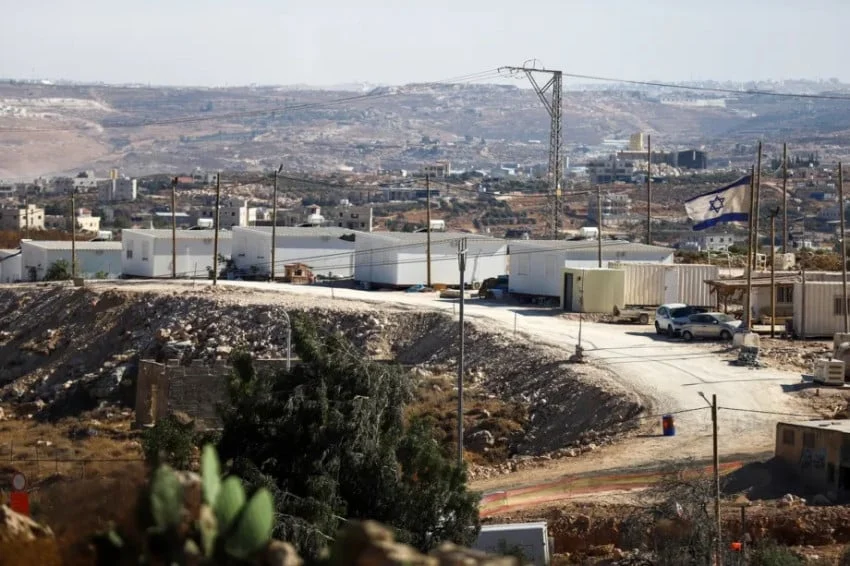
- September 3, 2026: Amid ongoing infrastructural expansion in areas such as Maale Arugot in the West Bank, the Dutch government finalizes its implementation timeline for the trade restrictions.
- September 22, 2026: The ban officially enters into force, establishing rigorous border controls, individual baggage checks, and criminal penalties for intentional regulatory evasion.
Economic Data and Trade Implications
While the direct volume of trade between the Netherlands and Israeli settlements represents a minute fraction of overall Dutch import statistics, the symbolic and legal weight of the policy carries substantial economic and political ramifications. Bilateral trade between the Netherlands and Israel traditionally centers on high-tech machinery, chemical products, pharmaceuticals, agricultural goods, and technological innovations.
Agricultural produce—including wine, dates, herbs, and cosmetics—cultivated within agricultural settlements in the Jordan Valley, parts of the West Bank, and the Golan Heights have historically entered European markets under various labeling practices. With the new Dutch restrictions in place, importers dealing in these specific product categories face heightened compliance costs, mandatory supply chain tracing, and the risk of severe financial and penal liabilities.
Economic analysts note that while major Dutch conglomerates have largely disengaged from direct investments in disputed territories over the past decade due to reputational risks and guidance from financial institutions, supply chains involving complex multi-tier distribution networks remain vulnerable. The requirement for Dutch firms operating abroad to respect these guidelines introduces extraterritorial compliance obligations, forcing corporate legal teams to audit their international subsidiaries meticulously.
Official Responses and Diplomatic Reactions
The enforcement of the Dutch ban has elicited varied responses from international stakeholders, reflecting deep divisions over sovereignty, trade policy, and the Israeli-Palestinian conflict.
Proponents of the policy, including numerous international law organizations, human rights NGOs, and Palestinian civil society groups, have lauded the move as a long-overdue step toward enforcing international accountability. Advocates argue that commercial activities sustaining settlements actively entrench territorial fragmentation, displace indigenous populations, and undermine the prospects of self-determination for Palestinians. By cutting off lucrative European consumer markets, proponents believe governments can effectively disincentivize continued settlement expansion.
Conversely, the policy has drawn sharp criticism from Israeli governmental officials and pro-Israel advocacy organizations. Critics argue that unilateral economic measures unfairly target Israel while ignoring numerous other territorial disputes globally. Opponents contend that such boycotts harm local Palestinian laborers who are employed within settlement-based industrial zones and agricultural enterprises, potentially worsening economic conditions for workers on the ground. Furthermore, critics suggest that trade restrictions complicate ongoing diplomatic engagements and introduce protectionist barriers under the guise of human rights compliance.
Broader Impact and Geopolitical Outlook
The enactment of the Dutch import ban is expected to serve as a bellwether for European trade policy regarding occupied territories. As individual nations like the Netherlands, Belgium, Ireland, and Spain forge ahead with localized regulatory frameworks, the pressure on the European Commission to harmonize these disparate national measures will likely intensify.
For international businesses, the proliferation of country-specific sanctions and import bans underscores the growing importance of rigorous environmental, social, and governance (ESG) due diligence, particularly regarding supply chain provenance. As geopolitical tensions continue to intersect with commercial law, companies trading in goods from politically sensitive regions face an increasingly complex regulatory landscape where adherence to international humanitarian law is no longer merely a diplomatic aspiration, but a strict legal prerequisite for market access.