TOKYO — The automotive world is bracing for the triumphant return of one of Japan’s most storied nameplates, as Nissan Motor Co. officially confirmed that the fourteenth-generation Skyline will make its long-awaited global debut in December 2026. This announcement marks a monumental turning point for the brand, serving as a cornerstone in Nissan’s aggressive revitalization strategy aimed at resurrecting its most iconic legacy vehicles for the modern era. The confirmation of the launch timeline delivers a wave of anticipation among enthusiasts and industry analysts alike, signaling a bold new chapter for a sedan that has transcended generations of automotive evolution.
The definitive timeline was announced by Nissan President and Chief Executive Officer Ivan Espinosa, who underscored the profound importance of the new model within the company’s broader corporate roadmap. The official revelation follows an initial disclosure made by the Japanese automaker in April 2026, which first hinted at the active development of a completely redesigned Skyline. For loyal followers of the brand, the impending arrival of the fourteenth-generation model remedies a significant drought in the lineage, given that the outgoing V37 generation has soldiered on without a full model change since its initial market introduction back in November 2013.
Revolutionizing Automotive Development Through Artificial Intelligence and Digital Engineering
Perhaps as compelling as the vehicle itself is the revolutionary methodology Nissan utilized to bring the fourteenth-generation Skyline to life. In a departure from traditional automotive development cycles that typically span nearly half a decade, Nissan engineered the new Skyline in a remarkably condensed timeframe of approximately 26 months. This represents a staggering reduction of more than 50 percent compared to its predecessor, which required roughly 55 months from conception to production readiness.
This unprecedented acceleration in manufacturing readiness was achieved through the heavy integration of advanced digital technologies and generative artificial intelligence. Nissan deployed these cutting-edge tools across multiple phases of the development pipeline, including initial exterior and interior design, structural engineering, virtual rigorous prototype testing, and manufacturing process simulation. By leveraging sophisticated digital twins and predictive AI algorithms, engineers were able to bypass countless physical iterations, drastically shortening the feedback loop and resolving potential engineering bottlenecks long before physical prototypes ever touched the test track. Industry experts view this milestone as a watershed moment for Nissan, potentially establishing a new internal benchmark for how future performance and passenger vehicles will be designed and brought to market in an increasingly fast-paced global economy.
Design Heritage Meets Modern Aggression

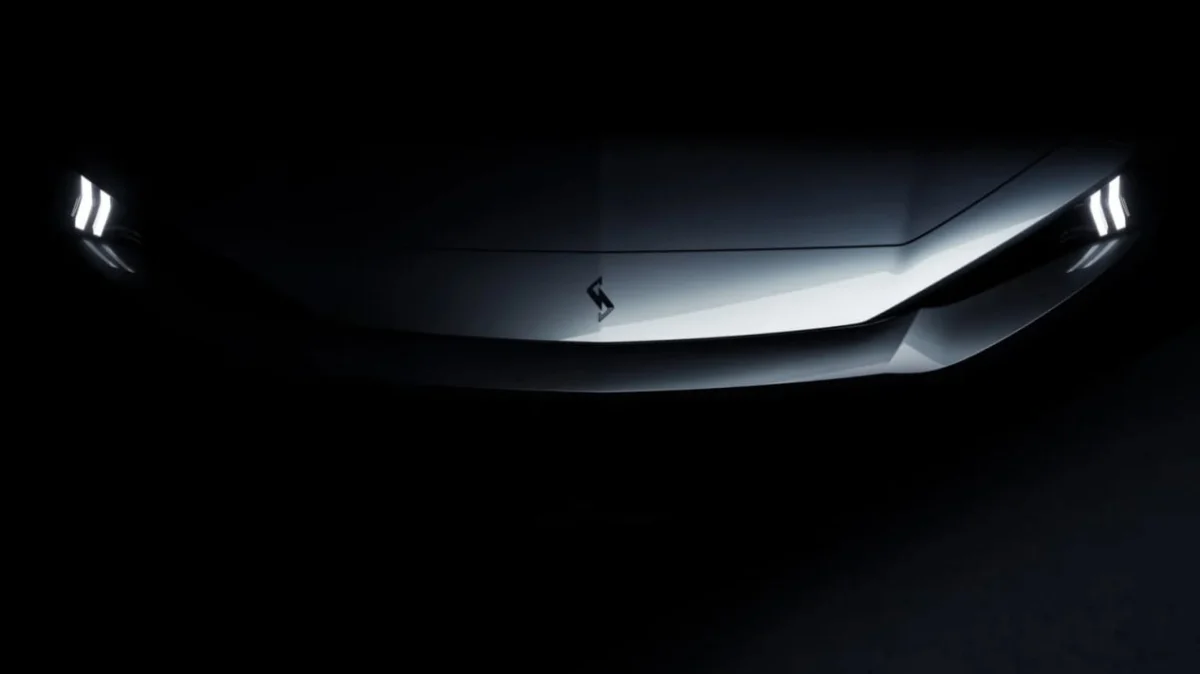
Early teaser campaigns and design previews released by Nissan indicate that the fourteenth-generation Skyline draws heavy visual inspiration from its rich heritage, blending nostalgic nods to classic models with contemporary, aggressive styling cues. The front fascia adopts an assertive stance, characterized by sharply sculpted body lines, a commanding grille profile, and a low-slung hood that projects aerodynamic efficiency and performance capability.
At the rear, the design philosophy pays homage to the legendary GT-R lineage, incorporating signature circular-themed taillight graphics that establish an undeniable visual kinship with Nissan’s ultimate supercar. While the overarching silhouette remains true to the traditional three-box sedan proportions that have defined the Skyline lineage for decades, modern aerodynamic touches ensure it meets contemporary efficiency standards. The sleek roofline flows seamlessly into an integrated decklid spoiler, emphasizing the vehicle’s dynamic road presence while optimizing high-speed stability.
Powertrain Speculation and Engineering Expectations
Despite pulling back the curtain on the vehicle’s timeline and design philosophy, Nissan has maintained strict confidentiality regarding the complete technical specifications of the new Skyline. Automotive insiders and industry analysts have engaged in widespread speculation concerning what lies beneath the sculpted hood.
Current reports strongly suggest that the upcoming sedan will remain faithful to its performance roots by retaining a traditional front-engine, rear-wheel-drive (FR) layout, ensuring the balanced driving dynamics and handling precision expected of a true driver’s car. Regarding propulsion, several viable powertrain avenues are being discussed within automotive circles. One prominent theory points toward the adoption of an advanced hybrid system, aligning with Nissan’s push toward electrification while maintaining robust performance figures. Alternatively, persistent rumors suggest that Nissan might refine or carry over its proven twin-turbocharged V6 engine architecture—an powerplant capable of generating in excess of 400 horsepower. Furthermore, niche motoring communities have buzzed with speculation regarding the possibility of a driver-focused six-speed manual transmission variant, though company executives have yet to confirm these mechanical details as official specifications.
Production Hub at the Legendary Tochigi Facility
Confirming the domestic roots of the iconic nameplate, Nissan has verified that the fourteenth-generation Skyline will be built exclusively in Japan. Production operations will be housed at the company’s advanced Tochigi manufacturing plant. This facility holds immense historical significance for Nissan’s performance division, as it is also the designated birthplace of the Fairlady Z.

By concentrating the manufacturing of its flagship performance models at the Tochigi plant, Nissan is effectively transforming the facility into a specialized global hub for its sports car and enthusiast vehicle production. This strategic manufacturing consolidation is expected to streamline quality control, optimize supply chain logistics for specialized components, and ensure that every vehicle meets the exacting craftsmanship standards demanded by buyers of high-end Japanese performance sedans.
Broader Market Implications and Strategic Significance
The impending launch of the 2027 Nissan Skyline carries profound strategic implications for the automaker’s global positioning. Over recent years, Nissan has faced intense competitive pressure to revitalize its product portfolio and recapture the imagination of automotive enthusiasts worldwide. By channeling resources into the revival of heritage nameplates like the Skyline, the company is making a calculated bet on emotional brand equity.
The successful introduction of the fourteenth-generation model could serve as a powerful catalyst for brand rejuvenation, demonstrating to consumers and investors that Nissan retains its engineering prowess and commitment to driving dynamics, even as the industry pivots aggressively toward electrification and autonomous technology. Furthermore, the successful deployment of generative AI in shortening the vehicle’s development cycle could provide Nissan with a scalable template for future vehicle programs, drastically reducing research and development expenditures while improving time-to-market agility.
As the December 2026 debut approaches, anticipation continues to build across global automotive markets. Whether the new Skyline will transcend its regional JDM (Japanese Domestic Market) heritage to achieve broader international availability remains one of the industry’s most closely guarded secrets. For now, enthusiasts and industry observers alike are watching closely as Nissan prepares to write the next thrilling chapter in the legendary history of the Skyline.