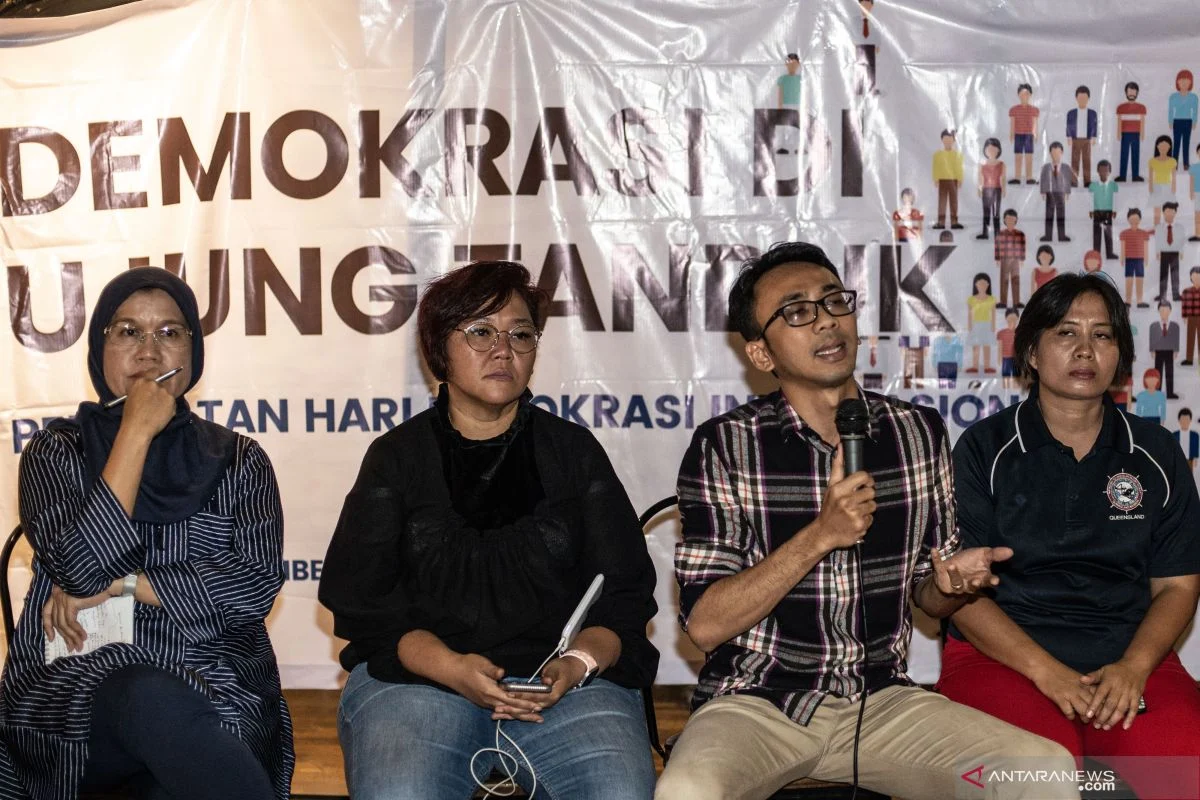
Every September 15, the global community observes the International Day of Democracy, serving as an annual milestone to evaluate the health, resilience, and evolution of democratic governance worldwide. This dedicated observance is designed to raise public awareness about the fundamental rights of citizens to actively participate in political processes, advocate for transparent governance, and uphold the core tenets that define a free society. Established to foster universal commitment to democratic ideals, the day transcends symbolic celebration, urging governments, civil society organizations, and international bodies to inspect the mechanisms that safeguard human rights and institutional accountability. As the world navigates complex geopolitical shifts and technological disruptions, the observance highlights that democracy is both a universal value and a continuous, dynamic process requiring constant cultivation.
Historical Foundations and the Path to Institutionalization
The formal establishment of the International Day of Democracy is rooted in extensive international diplomatic efforts spanning the late 20th and early 21st centuries. The foundational momentum began on September 15, 1997, when the Inter-Parliamentary Union (IPU)—the global organization of national parliaments—adopted the Universal Declaration on Democracy. This landmark text articulated the essential principles of democratic governance, emphasizing that democracy is rooted in the freely expressed will of people to determine their own political, economic, social, and cultural systems, as well as their full participation in all aspects of life.
Building upon this declaration, the international community sought to institutionalize a global day of reflection. On November 8, 2007, the United Nations General Assembly officially adopted Resolution 62/7, formally recognizing the importance of promoting and consolidating democracy globally. The resolution invited member states, organizations of the United Nations system, regional organizations, and non-governmental organizations to commemorate the day appropriately. Consequently, the inaugural International Day of Democracy was celebrated worldwide on September 15, 2008.
Choosing September 15 was a deliberate tribute to the IPU’s 1997 declaration, anchoring the United Nations’ modern diplomatic framework to a well-established history of parliamentary consensus. Over the nearly two decades since its inception, the date has served as a fixture on the international calendar, prompting annual assessments of how nations implement democratic reforms and address institutional decay.
Expanding the Definition: Beyond the Ballot Box
While popular perception often equates democracy strictly with the orchestration of periodic elections, political scientists, international jurists, and human rights advocates emphasize that electoral exercises represent merely one pillar of a robust democratic infrastructure. True democratic governance requires a holistic ecosystem comprising several interdependent elements: active citizen participation, rigorous protection of fundamental human rights, adherence to the rule of law, institutional checks and balances, judicial independence, and vibrant civic spaces.
In contemporary political science discourse, the quality of a democracy is frequently measured by how effectively it protects minority rights, ensures governmental transparency, and fosters an environment where public officials remain accountable to the citizenry between election cycles. The United Nations continually stresses that without substantive citizen engagement, freedom of expression, and equal access to justice, elections alone risk becoming superficial exercises rather than genuine expressions of the popular will.
Furthermore, civil society organizations play an irreplaceable role within this ecosystem. Acting as a bridge between the populace and state institutions, non-governmental organizations, academic institutions, and independent media watchdogs monitor governmental actions, advocate for policy reforms, and provide marginalized communities with a platform to articulate their needs. The International Day of Democracy serves as a vital reminder that strengthening these institutions is paramount to preventing democratic backsliding.
The Digital Frontier: Information Integrity and Civic Participation
As global societies advance further into the 21st century, the structural integrity of democratic discourse faces unprecedented challenges driven by the rapid evolution of digital communication technologies. The modern public square has largely migrated to digital platforms, fundamentally transforming how citizens access news, debate public policy, and engage with political leaders.
On one hand, digital platforms have democratized information access, enabling grassroots movements to mobilize rapidly, amplifying voices that historically lacked representation, and lowering barriers to political participation. On the other hand, the proliferation of misgoverned digital ecosystems has introduced severe vulnerabilities into democratic processes. The unchecked dissemination of large-scale misinforming content, orchestrated disinformation campaigns, weaponized hate speech, and algorithmic manipulation pose significant threats to social cohesion and public trust in democratic institutions.
International human rights frameworks, including the Universal Declaration of Human Rights, explicitly enshrine the freedom of opinion and expression as fundamental liberties. This encompasses the freedom to hold opinions without interference and to seek, receive, and impart information and ideas through any media regardless of frontiers. However, balancing these essential freedoms with the imperative to safeguard public discourse from malicious manipulation remains one of the most pressing legal and ethical dilemmas for modern democracies.
Scholars and institutional leaders argue that combatting digital threats to democracy cannot rely solely on censorship or top-down regulatory controls, which risk infringing upon legitimate freedom of expression. Instead, safeguarding the information space requires a multi-pronged approach: enhancing digital and media literacy among the general public, fostering transparency from technology platforms regarding algorithmic curation, and encouraging rigorous fact-checking and journalism rooted in accountability. Ultimately, the health of a democracy in the digital age depends on an informed citizenry capable of critically evaluating sources and participating constructively in public debate despite ideological divisions.
Global Perspectives and Institutional Responses
Reflecting on the state of global governance, international bodies and governance experts frequently analyze the cyclical nature of political regimes. Reports from prominent democracy watchdogs, such as International IDEA and Freedom House, have documented periods of democratic stagnation or recession in various regions over the past decade, citing rising polarization, democratic erosion from within institutions, and the shrinking of civic space as primary concerns.
In response to these diagnostic assessments, multilateral institutions and national governments utilize the International Day of Democracy as a strategic platform to announce legislative reforms, civic education initiatives, and judicial protections. Policymakers emphasize that reinforcing democratic resilience requires continuous investment in civic education from an early age, ensuring that younger generations understand not only their political rights but also their civic responsibilities.
Moreover, strengthening anti-corruption frameworks, protecting whistleblowers, and ensuring the financial sustainability and independence of public service journalism are routinely highlighted as critical operational necessities. When citizens observe tangible integrity within public administration and experience equitable access to justice, public confidence in democratic institutions naturally strengthens, inoculating society against populist demagoguery and authoritarian overtures.
Looking Ahead: The Significance of the 2026 Observance
As the international community marks the International Day of Democracy, the observance retains its foundational urgency. The official inclusion of September 15 on calendars worldwide underscores a collective global commitment to safeguarding government "of the people, by the people, for the people."
The 2026 observance arrives at a critical juncture where technological innovation, economic shifts, and social transformations demand renewed vigilance from all stakeholders. Political analysts note that contemporary democracies are continually tested by their capacity to deliver equitable economic growth, manage public health crises, address climate change, and integrate diverse populations without compromising fundamental human rights.
Ultimately, the commemoration serves as a powerful reminder that democracy is neither self-executing nor irreversible. It is a fragile, enduring project that demands constant stewardship. From the individual citizen casting a ballot or engaging in peaceful assembly to lawmakers drafting equitable legislation and judges upholding constitutional norms, the preservation of a free society rests upon collective responsibility. The International Day of Democracy calls upon all nations to renew their pledge to protect civic space, honor human dignity, and ensure that government remains fully accountable to the people it serves.