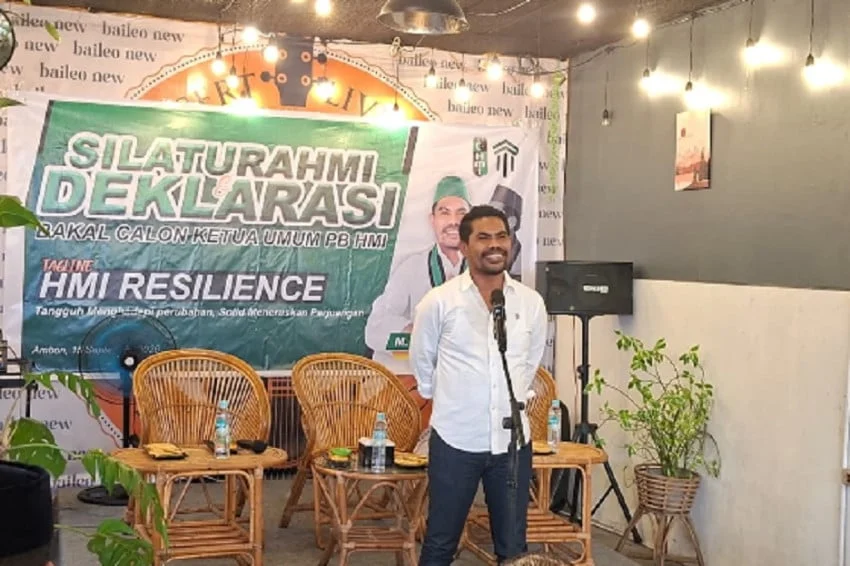
M Nur Latuconsina, a prominent figure within the Himpunan Mahasiswa Islam (HMI) and the current Chairperson for Labor Affairs of the organization’s Executive Board (PB HMI) for the 2024-2026 term, has officially declared his candidacy for the General Chairperson of PB HMI for the 2026-2028 period. The announcement took place during a formal gathering at Baileo Cafe in Ambon on Tuesday, September 15, 2026, marking a significant entry into the leadership race ahead of the upcoming HMI Congress XXXIII, which is slated to be held in Bandar Lampung.
Known among his peers as "Reno," Latuconsina’s candidacy is anchored in a strategic platform he describes as "HMI Resilience." This vision aims to navigate the organization through the complexities of a rapidly changing socio-political landscape. By positioning himself as a candidate of institutional reform, Latuconsina intends to shift the discourse of the HMI electoral process from mere political maneuvering to a substantive debate on the future direction of one of Indonesia’s largest student organizations.
The Strategic Vision of HMI Resilience
The "HMI Resilience" platform is not, according to Latuconsina, a superficial political slogan intended to win votes. Instead, he characterizes it as a comprehensive "blueprint for organizational renewal." The platform is built upon three foundational pillars that he argues are essential for the survival and relevance of HMI in the mid-21st century: intellectual vitality, the spirit of struggle (perjuangan), and institutional integrity.
Latuconsina emphasized that the first pillar—intellectualism—is the most critical. He proposes a fundamental overhaul of the HMI’s formal cadre training (perkaderan) curriculum. The current model, he suggests, must evolve to better bridge the gap between classical Islamic thought and the demands of modern science and technology. By integrating digital literacy, critical policy analysis, and advanced theological studies, Latuconsina hopes to produce graduates who are not only ideologically grounded but also technically equipped to address global challenges such as climate change, the digital economy, and labor rights.
Background and Context: HMI’s Role in National Discourse
Himpunan Mahasiswa Islam, founded in 1947, has long served as a training ground for Indonesia’s political, academic, and business elites. The organization has historically been a barometer for student activism in the country. However, in recent years, the organization has faced scrutiny regarding its relevance in an era dominated by social media and shifting student interests.
The upcoming Congress XXXIII represents a pivotal moment for the organization. As Indonesia approaches the latter half of the decade, the pressure on HMI to redefine its role in a democratic society is immense. The leadership chosen in Bandar Lampung will be tasked with steering the organization through the 2026-2028 term, a period likely to be defined by significant shifts in domestic policy and the ongoing digital transformation of the Indonesian workforce.
Latuconsina’s background as the Chairperson for Labor Affairs of PB HMI provides him with a unique vantage point. His work has focused on the intersection of student interests and the evolving labor market, particularly concerning the impact of automation and the gig economy on young graduates. This experience is expected to form the backbone of his policy proposals, specifically regarding how HMI can better serve as an advocate for student welfare and economic security.
Chronology of the Electoral Process
The declaration in Ambon serves as the starting point for a months-long campaign cycle leading up to the Congress. The timeline for the transition of power within PB HMI is strictly governed by the organization’s constitution and internal bylaws. Following the declaration, candidates typically engage in a series of regional dialogues and internal debates to socialize their visions among the various HMI branches (Cabang) across the archipelago.

Historically, the HMI Congress is a high-stakes event characterized by intense negotiations and multi-layered coalition building. The process generally follows these stages:
- The Declaration Phase: Candidates officially announce their intent and vision (as seen with Latuconsina’s event in Ambon).
- Socialization Period: Candidates visit major regional branches to secure endorsements and discuss their platforms with local chapter leaders.
- Pre-Congress Deliberations: Formal discussions regarding the agenda, committee formation, and constitutional amendments.
- The Congress (Kongres XXXIII): The formal assembly where the voting takes place, involving hundreds of delegates from across the country.
Analytical Perspective: Challenges and Implications
Analysts observing the HMI leadership race suggest that Latuconsina’s focus on "resilience" is a direct response to the "institutional fatigue" currently felt by many student organizations. In an environment where political participation is increasingly fragmented, the ability of a leader to articulate a clear, modern identity for a historic organization is crucial.
However, Latuconsina faces significant hurdles. The HMI is a massive, decentralized body with diverse regional interests. Bridging the gap between the urban intellectual centers and the regional branches is a perennial challenge for any PB HMI chair. Furthermore, the critique of the "intellectual" pillar of his platform will likely center on the practicalities of implementation: how can a volunteer-based student organization successfully reform a curriculum that has remained largely static for decades?
If Latuconsina’s platform gains traction, it could signal a broader trend toward a more technocratic leadership style within Indonesian student movements. Rather than relying solely on the traditional rhetoric of "protest politics," future leaders are being pressured to demonstrate expertise in policy and organizational management.
Official Responses and Internal Dynamics
While the race is in its early stages, internal reactions to Latuconsina’s announcement have been largely focused on the substance of his "three pillars." Supporters argue that his experience at the national level (PB HMI) makes him one of the most qualified candidates to handle the transition. Conversely, observers note that the upcoming months will see a flurry of competing declarations, each offering different interpretations of the "renewal" that the organization requires.
For now, the focus remains on the specific proposals Latuconsina will bring to the table in the coming weeks. His call for a modernized curriculum and a renewed commitment to integrity is expected to resonate with younger members who are increasingly concerned about the organization’s future professional and political impact.
Broader Impact on Student Activism
The outcome of the Congress XXXIII will not only affect the HMI but will have a ripple effect on the landscape of Indonesian civil society. As a feeder organization for the nation’s leadership, the health and direction of the HMI serve as a mirror for the aspirations of the country’s youth.
As the race intensifies, the public and the media are likely to watch how the candidates handle the balance between tradition and innovation. Latuconsina’s "HMI Resilience" platform is essentially a bet that the organization can be saved by becoming more disciplined, more intellectual, and more integrated into the modern professional world. Whether the delegates at the Bandar Lampung congress agree with this assessment remains to be seen, but the declaration in Ambon has undoubtedly set a high bar for the discourse that will define the next two years of the organization’s history.
In conclusion, M Nur Latuconsina has successfully opened the dialogue on what it means for HMI to be "resilient" in the late 2020s. His campaign, by centering on the necessity of reform, has invited a critical examination of the organization’s purpose. As the road to Bandar Lampung continues, the candidate’s ability to turn his abstract pillars into tangible policy will be the ultimate test of his leadership potential. The coming months will be a critical period for all stakeholders involved, as the organization prepares for a transition that will shape the ideological and professional paths of thousands of students across Indonesia.