The landscape of Indonesia’s automotive sector is undergoing a profound transformation, characterized by the aggressive influx of Chinese manufacturers into virtually every market segment. Among the most strategic and high-profile developments in this shifting paradigm is the official market entry of Hongqi, an iconic Chinese luxury automotive marque with deep historical roots, brought to the archipelago through a strategic partnership with the established automotive conglomerate Indomobil Group. Announced in Jakarta, this collaboration signals a bold attempt to redefine the parameters of premium and luxury mobility in Southeast Asia’s largest economy, directly challenging entrenched European, Japanese, Korean, and American automotive titans.
Hongqi, which translates literally to "Red Flag" in Mandarin, occupies a legendary status within the automotive history of the People’s Republic of China. Established in 1958, the brand initially served as the exclusive vehicle manufacturer for high-ranking government officials, state ceremonies, and visiting foreign dignitaries. For decades, seeing a Hongqi sedan gliding through Tiananmen Square was synonymous with supreme state power and political prestige in China. However, in recent years, the marque has undergone a massive modernization and internationalization initiative, transitioning from a rigid symbol of state bureaucracy into a globally minded producer of luxury electric vehicles (EVs) and high-end passenger cars. By leveraging Indomobil Group’s extensive distribution network, deep market expertise, and established reputation in Indonesia, Hongqi is positioning itself to capture the attention—and wallets—of the nation’s growing affluent demographic.
The Evolution of Indomobil Group and Its Strategic Bet on Chinese Luxury
Indomobil Group has long been a heavyweight in the Indonesian automotive landscape, holding distribution rights for a diverse portfolio of international brands spanning commercial vehicles, passenger cars, and two-wheelers. The decision to introduce Hongqi to the Indonesian consumer base reflects a broader corporate strategy: capturing the high-growth potential of the upper-crust automotive market while simultaneously riding the sweeping wave of electrification sweeping through the region.
The Indonesian government’s aggressive push toward green mobility, highlighted by various tax incentives, luxury sales tax exemptions for electric vehicles, and stringent carbon reduction targets, has created a fertile ground for electric vehicle manufacturers. While the initial wave of Chinese EV adoption in Indonesia was largely concentrated in the mass-market and affordable segments—dominated by compact hatchbacks and utility crossovers—the arrival of Hongqi proves that Chinese automakers are now fully prepared to compete at the absolute apex of the automotive pyramid.
Andrew Nasuri, Director of Indomobil Group, emphasized that the introduction of Hongqi goes far beyond merely adding another nameplate to their sprawling catalog. Speaking in Jakarta, Nasuri noted that the historical weight carried by the brand provides a unique storytelling advantage, provided it is properly translated for modern, discerning consumers.
"The journey of Hongqi since its inception has indeed been closely intertwined with various milestone moments of leadership in China," Nasuri stated. "However, for us, what matters is not just that history itself, but how the values born from it remain relevant today."
This philosophy of bridging historical prestige with contemporary relevance forms the cornerstone of Hongqi’s market entry strategy. Rather than relying solely on nostalgic heritage, the brand is banking on forward-looking engineering, opulent styling, and state-of-the-art zero-emission powertrains to win over skeptical luxury buyers who have traditionally defaulted to legacy German, British, or Japanese flagships.
Introducing the Hongqi E-HS9: A Statement of Size and Sustainability
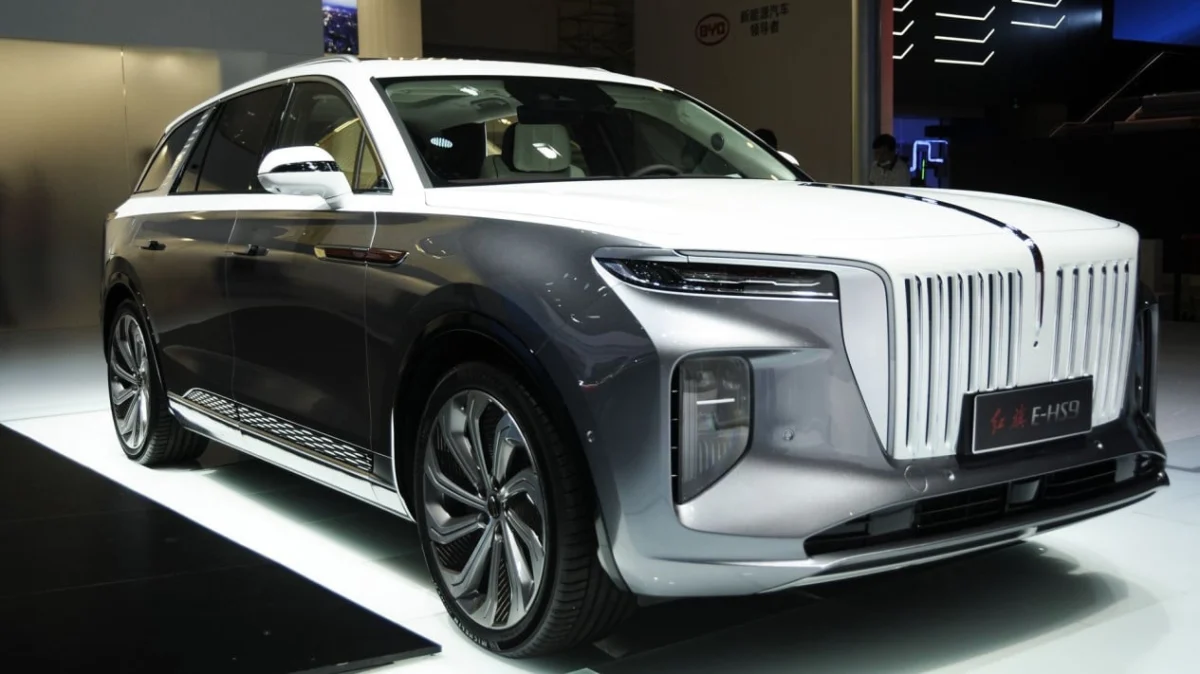
At the vanguard of Hongqi’s Indonesian market penetration is the Hongqi E-HS9, an imposing, full-sized electric SUV that serves as a rolling billboard for the brand’s design language and technological capabilities. Stretching over 5.2 meters in length, the E-HS9 commands an undeniable road presence, easily rivaling established ultra-luxury SUV heavyweights such as the BMW X7, Mercedes-Benz GLS, and even select offerings from Range Rover.
The E-HS9 introduced to the Indonesian public features a luxurious six-seat configuration arranged in a 2+2+2 layout, catering directly to affluent families, corporate executives, and high-net-worth individuals who prioritize rear-seat comfort and executive-level amenities. Inside the cabin, the vehicle is a showcase of modern automotive opulence, featuring expansive digital displays spanning the dashboard, premium leather upholstery, advanced biometric security features, multi-zone climate control, and meticulously crafted acoustic insulation that ensures a library-quiet ride.

Powering this massive luxury liner is an advanced battery-electric propulsion system designed to deliver effortless acceleration paired with refined cruising capabilities. By introducing a battery-electric vehicle as its primary halo product in Indonesia, Hongqi is strategically positioning itself at the intersection of two major automotive trends: the unstoppable rise of electrification and the insatiable demand for spacious, imposing sport utility vehicles.
The Concept of Neo-Chinese Luxury: Blending Heritage with Modernity
One of the most fascinating aspects of Hongqi’s brand building exercise in Indonesia is the introduction of a design and philosophical framework known as "Neo-Chinese Luxury." In a global luxury market historically dominated by European design sensibilities—characterized by British understated elegance, German functional precision, and Italian artistic flair—Hongqi is attempting to carve out a distinct cultural niche.
Neo-Chinese Luxury seeks to merge traditional Chinese architectural motifs, philosophical concepts of balance and grandeur, and rich cultural symbols with cutting-edge automotive technology and contemporary modernist design principles. For instance, the front fascia of Hongqi vehicles often features a prominent, waterfall-style chrome grille reminiscent of classic heritage models, flanked by sleek, futuristic LED lighting arrays. Inside, subtle touches of traditional craftsmanship are woven into modern digital interfaces, creating an interior environment that feels distinct from the austere minimalism of Scandinavian EVs or the aggressive sportiness of German performance machines.
Andrew Nasuri and the broader Indomobil team believe that this unique cultural proposition will resonate strongly with a subset of Indonesian consumers who are looking for alternatives to traditional status symbols. As globalization continues to redefine wealth and luxury, high-net-worth individuals in emerging markets are increasingly drawn to brands that offer a distinct identity and a compelling narrative, moving away from cookie-cutter expressions of affluence.
Beyond the Showroom: Building an Ecosystem of Experience
Entering the ultra-luxury segment requires a fundamentally different playbook compared to the mass market. Recognizing that prestige is built as much on service as it is on sheet metal, Indomobil and Hongqi are implementing a holistic approach to customer experience in Indonesia.
Central to this strategy is the development of Hongqi’s first dedicated flagship establishment in the country—frequently referred to internally as the brand’s "first home" in Indonesia. Rather than a conventional, high-traffic dealership floor, this upcoming facility is designed to function as an immersive brand experience center. Prospective buyers will be invited into a curated environment where they can explore the history of the marque, examine bespoke material samples, configure custom vehicle specifications, and receive personalized consultations in a private, high-end setting.
This experiential retail model mirrors global trends in the luxury sector, where physical stores are transforming into lifestyle hubs and galleries. For Indomobil, building this ecosystem involves much more than importing vehicles; it requires establishing rigorous technical training programs for service technicians, securing a robust supply chain for high-value spare parts, and offering white-glove concierge services to cater to the demanding lifestyle of elite clientele.
The Competitive Landscape: Challenging Established Giants
Hongqi’s entry into the Indonesian market does not occur in a vacuum. The local premium and luxury automotive segments are fiercely contested arenas, currently dominated by venerable European marques such as Mercedes-Benz, BMW, Audi, and Porsche, alongside long-standing luxury offerings from Japanese manufacturers like Lexus. Furthermore, American electric vehicle pioneer Tesla and an increasing number of rival Chinese EV makers are actively vying for slices of the pie.
However, industry analysts note that Hongqi occupies a unique psychological space. While European luxury brands are often viewed through the lens of established global prestige, Hongqi brings the backing of China’s immense industrial might and technological prowess, particularly in the realm of software-defined vehicles, intelligent driving assistants, and battery manufacturing ecosystems.

At the same time, the broader economic context reveals shifting consumer attitudes toward status symbols. Recent global industry data highlights evolving dynamics among elite buyers—even in traditional strongholds like mainland China, where domestic luxury marques have increasingly begun to challenge historical icons like Rolls-Royce and Bentley in terms of cultural cachet and sheer technological sophistication. By channeling this momentum outward into regional markets like Indonesia, Hongqi is testing whether the prestige of the "Red Flag" can successfully transcend its domestic borders and capture the imaginations of international elites.
Broader Implications for the Indonesian Automotive Industry
The arrival of Hongqi via Indomobil Group carries several profound implications for the future direction of Indonesia’s automotive industry:
-
Acceleration of Luxury Electrification: By anchoring its initial lineup with large, high-end electric SUVs like the E-HS9, Hongqi normalizes the concept of zero-emission luxury, potentially accelerating the adoption of EVs among affluent buyers who have traditionally been hesitant to transition away from internal combustion engines.
-
Diversification of Cultural Aesthetics in Design: The introduction of Neo-Chinese Luxury broadens the stylistic vocabulary available to Indonesian consumers, proving that high-end design is not the exclusive domain of Western Europe.
-
Deepening Bilateral Industrial Ties: The partnership underscores the deepening economic integration between Indonesia and China, particularly within the high-value technology and automotive sectors. As local assembly incentives and green technology frameworks evolve, future localization of these premium platforms remains an intriguing possibility.
-
Heightened Competition in Customer Service Standards: As new luxury entrants vie for market share, legacy brands will be forced to elevate their own retail environments, after-sales service quality, and bespoke customization offerings, ultimately benefiting the high-end consumer.
Conclusion: A New Chapter for Prestige Mobility
As Indomobil Group prepares to roll out Hongqi’s full suite of products, experiential spaces, and customer care initiatives across Indonesia, the local automotive market stands at a fascinating crossroads. The venture is undeniably ambitious, requiring a delicate balance between honoring a storied, politically resonant heritage and convincing modern luxury consumers of the brand’s contemporary worth.
With the imposing presence of vehicles like the Hongqi E-HS9 leading the charge, supported by Indomobil’s decades of institutional knowledge and market reach, Hongqi is poised to test the limits of what Indonesian luxury buyers expect from their vehicles. Whether the "Red Flag" can successfully flutter at the pinnacle of Indonesia’s premium automotive hierarchy will depend heavily on the execution of its experiential strategy, the reliability of its technology, and the enduring appeal of its unique blend of history and modern electric innovation. What is certain, however, is that the luxury segment in Indonesia will never be quite the same again.