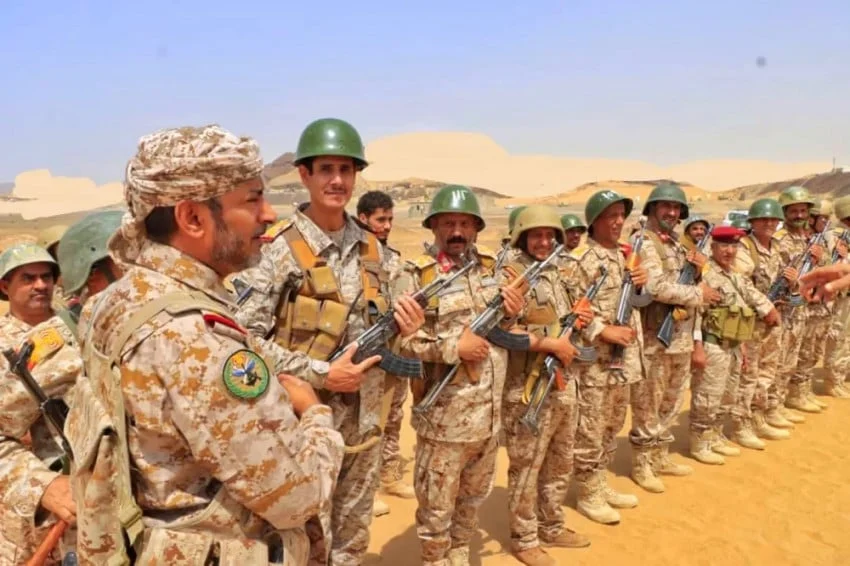
The rapid territorial advances made by the Houthi movement across Yemen have ushered in a profound strategic inflection point, fundamentally reshaping the trajectory of the protracted conflict in the Middle East. As regional tensions continue to cascade across multiple interconnected fronts, security analysts and geopolitical experts are closely monitoring the shifting balance of power on the Arabian Peninsula. The developments highlight a volatile new phase in a broader regional confrontation that increasingly threatens global supply chains, maritime security, and the diplomatic architectures designed to maintain stability in the Gulf.
According to Adam Baron, a nonresident fellow at the Future Security Program at the New America think tank, recent escalations—such as drone strikes originating from Iraq targeting critical energy infrastructure within Saudi Arabia—vividly reflect the inherently volatile reality plaguing the contemporary Middle East. Baron noted that since the onset of intensified regional flashpoints involving various state and non-state actors over the past half-year, the landscape has transformed into a complex matrix of overlapping conflicts. These multifaceted skirmishes exhibit fluctuating levels of intensity spanning across diverse geographic fronts, leaving regional governments and international stakeholders scrambling to adapt to an increasingly unpredictable security environment.
At the core of this escalating crisis is the unprecedented momentum demonstrated by the Houthi movement, formally known as Ansar Allah, as they consolidate territorial gains and challenge the internationally recognized Yemeni government alongside its regional coalition backers. Strategic analysts have identified four primary drivers behind these rapid advancements, illuminating why the current situation marks a definitive turning point for the entire Middle East.
Strategic Significance of the Bab al-Mandeb Strait
The most critical dimension of the Houthi movement’s recent territorial expansion involves the swift capture of vital urban centers and strategic terrain along Yemen’s western coastline, wresting control from forces backed by Saudi Arabia. Speaking in an interview, Baron characterized these rapid maneuvers as a tangible and irreversible turning point in the decades-long conflict.
The acquisition of this coastal corridor carries immense geopolitical weight due to its proximity to the Bab al-Mandeb Strait, one of the world’s most crucial maritime chokepoints. Connecting the Red Sea to the Gulf of Aden, the strait facilitates a significant percentage of global commercial shipping, including a vast volume of international energy supplies and consumer goods moving between Asia, Europe, and the Middle East. From a military and economic standpoint, the capacity to project power over or directly influence the Bab al-Mandeb Strait provides any controlling faction with unparalleled strategic leverage. Consequently, the consolidation of Houthi authority along this littoral expanse alters the strategic calculus for international naval coalitions operating in the region, introducing heightened risks for commercial vessels navigating these contested waters.
The Limitations of Air Power and the Need for Unified Ground Forces
The second pillar defining this turning point involves the military limitations faced by the Saudi-led coalition in attempting to check Houthi advances solely through aerial campaigns. Recent weeks have witnessed the withdrawal of pro-government forces from certain strategic positions without engaging in protracted ground combat. While military planners suggest this tactical retreat could be part of a broader consolidation effort in preparation for future counteroffensives, independent analysts remain skeptical about the efficacy of current defense strategies.
Baron emphasized that ongoing aerial bombardment campaigns led by Saudi Arabia are fundamentally insufficient to dislodge entrenched Houthi forces or reverse their territorial gains. While coalition airstrikes have actively targeted advancing military units and supply lines to mitigate the speed of the Houthi push, military doctrine dictates that maintaining long-term control over captured terrain requires robust, coordinated ground forces.
The rapid collapse or tactical withdrawal of internationally backed government troops underscores a chronic deficiency in cohesive ground-level capabilities. Without a unified, well-trained, and strategically coordinated ground force capable of holding liberated territory, aerial interventions risk becoming reactive and ultimately futile. This dynamic exposes a critical vulnerability in the coalition’s defense architecture, suggesting that military containment alone cannot substitute for a comprehensive political and ground strategy.
Entrenched Determination and the Push Toward Marib
The third factor cementing this phase as a historical turning point is the unwavering resolve and operational momentum demonstrated by the Houthi leadership, signaling that the group has no intention of scaling back its military ambitions. Despite intense military pressure, including a recorded wave of 129 separate airstrikes executed within newly contested territories controlled by Ansar Allah, the movement’s forces continue to press forward.
A primary theatre of this relentless push is the northern periphery surrounding Marib, a strategically vital urban stronghold that serves as the last major northern redoubt for the internationally recognized Yemeni government. Marib is not only politically significant as a government bastion but also economically critical, housing major energy infrastructure, including significant natural gas reserves and power generation facilities that supply electricity to millions of civilians. The concerted Houthi offensive toward Marib illustrates a calculated strategy to dismantle the remaining centers of state authority in northern Yemen, thereby securing complete domestic hegemony and establishing an unassailable position for any future political negotiations.
Broader Regional Implications and the Interconnected Conflict Matrix
Beyond the immediate territorial shifts within Yemen, these developments underscore the fourth and perhaps most dangerous aspect of the current crisis: its integration into a wider, borderless regional confrontation. The contemporary Middle East is no longer defined by isolated, localized civil wars; rather, it operates as an ecosystem of deeply interconnected conflicts where local actors possess transnational reach and alignment.
The ripple effects of the Houthi advance extend far beyond the borders of the Arabian Peninsula, impacting regional security frameworks from the Levant to the Persian Gulf. Incidents such as long-range drone incursions originating from external territories like Iraq—targeting critical Saudi energy pipelines—demonstrate that non-state actors are increasingly capable of projecting asymmetric power across vast distances. This decentralization of threat vectors complicates traditional deterrence strategies employed by regional governments and international superpowers alike.
Furthermore, the escalation exacerbates humanitarian concerns in a country already enduring what the United Nations has frequently characterized as one of the world’s worst humanitarian crises. Protracted fighting around critical urban infrastructure disrupts supply chains for food, clean water, and vital medical supplies, amplifying civilian suffering on an unprecedented scale.
As diplomatic channels face severe strains, the international community finds itself grappling with a complex diplomatic and security dilemma. The realization that conventional military campaigns have failed to decisively alter the balance of power on the ground necessitates a fundamental reassessment of foreign policy approaches toward Yemen and the broader region.
Ultimately, the rapid advances achieved by the Houthi movement serve as a stark reminder of the shifting paradigms governing Middle Eastern geopolitics. By seizing control of invaluable maritime corridors, exposing the structural limitations of traditional coalition warfare, maintaining an unyielding offensive posture, and embedding their struggles within a wider network of regional hostilities, the Houthi forces have irrevocably altered the strategic landscape. As policymakers in Riyadh, Washington, and international bodies evaluate their next steps, the events unfolding across Yemen will undoubtedly serve as the primary crucible testing the future security and stability of the entire region.