Queen Máxima of the Netherlands has officially concluded a comprehensive four-day working visit to Indonesia, spanning from Monday, November 24, to Thursday, November 27, 2025. This high-profile mission was conducted not in her royal capacity as the Queen of the Netherlands, but under her international mandate as the United Nations Secretary-General’s Special Advocate (UNSGSA) for Financial Health. Her visit underscores the long-standing partnership between the United Nations and the Indonesian government in fostering a more inclusive financial ecosystem that empowers vulnerable populations, including women, youth, and small-scale entrepreneurs.
The 2025 visit marks a significant evolution in the Queen’s advocacy. While her previous visits to the archipelago in 2012, 2016, and 2018 focused primarily on "financial inclusion"—the effort to ensure citizens have access to basic bank accounts and digital payment systems—this latest mission pivoted toward "financial health." This broader concept measures not just whether an individual has a bank account, but whether they have the tools and knowledge to manage daily expenses, build resilience against economic shocks, and invest in their future.
Throughout her three-day field itinerary, which began in earnest on Tuesday, November 25, Queen Máxima engaged with a diverse cross-section of Indonesian society. Her travels took her from the industrial hubs of Central Java to the suburban residential developments of West Java, culminating in high-level policy discussions in the capital city of Jakarta.
A Strategic Itinerary: From Grassroots to Governance
The Queen’s mission was characterized by a "bottom-up" approach, beginning with field visits to understand the lived experiences of Indonesian citizens before presenting her findings to the nation’s top leadership.
On Tuesday, November 25, the UNSGSA began her journey in Central Java. Her first stop was a garment factory in Sragen Regency, where she observed the integration of digital payroll systems for workers. For many workers in the manufacturing sector, transitioning from cash wages to digital accounts is the first step toward formal financial security. Later that day, she traveled to the historic Kampung Batik Laweyan in Solo. There, she engaged with traditional artisans and small business owners to discuss how digital financial services can help preserve heritage industries while ensuring the financial stability of the families behind them.
The afternoon in Solo was dedicated to the "Women’s World Banking" forum held at the Pura Mangkunegaran. In this regal setting, Queen Máxima held informal but intensive dialogues with students, young entrepreneurs, and women leaders. The discussions centered on the barriers to financial autonomy, with participants sharing personal anecdotes about navigating loan applications, utilizing mobile banking apps, and the importance of financial literacy in the digital age.
Innovation in Housing and Sustainability: The Bekasi Visit
On Wednesday, November 26, the focus shifted toward the intersection of financial health, sustainable development, and affordable housing. Queen Máxima visited the Gran Harmoni Cibitung residential complex in Bekasi Regency, West Java. This project is a flagship example of low-emission housing designed for low-to-middle-income families.
During this visit, the Queen highlighted a groundbreaking "waste-to-mortgage" initiative facilitated by Bank Tabungan Negara (BTN). Under this program, residents can collect and sort recyclable waste, which is then weighed and converted into monetary value at a "waste bank" (Bank Sampah). These funds are applied directly toward their monthly mortgage installments. Queen Máxima praised this innovation as a "double-win" for society, as it simultaneously promotes environmental stewardship and eases the financial burden of homeownership.
She personally visited the home of a local resident and sat with first-time homebuyers to witness the signing of their mortgage deeds. This interaction allowed the UNSGSA to evaluate the accessibility of credit for the "missing middle"—segments of the population who are often overlooked by traditional commercial banks but are vital to the country’s economic stability.
High-Level Policy and Corporate Responsibility in Jakarta
The final phase of the visit took place in Jakarta, where the Queen transitioned from the field to the boardroom. On Wednesday morning, she participated in a roundtable discussion at the local United Nations office, coordinating with various development organizations to align international aid with Indonesia’s national financial goals.
She also met with representatives from the International Finance Corporation (IFC), a member of the World Bank Group. The dialogue focused on scaling up lending programs that specifically target micro, small, and medium enterprises (MSMEs), which constitute over 90% of Indonesia’s businesses. The goal is to ensure that credit is not just available, but affordable and structured to support long-term business growth.
Later that afternoon, Queen Máxima visited Deloitte Indonesia. This meeting was particularly significant as it addressed the role of the private sector in employee financial well-being. She urged employers to recognize that a financially healthy workforce is more productive and resilient, advocating for corporate programs that provide financial counseling and emergency savings tools for staff.
The mission reached its diplomatic peak on Thursday, November 27. The Queen participated in a strategic session on financial literacy involving the three pillars of Indonesia’s economic management: the Financial Services Authority (OJK), Bank Indonesia (BI), and the Ministry of Finance. These discussions aimed to synchronize the Queen’s field observations with Indonesia’s National Strategy for Financial Inclusion (SNKI).
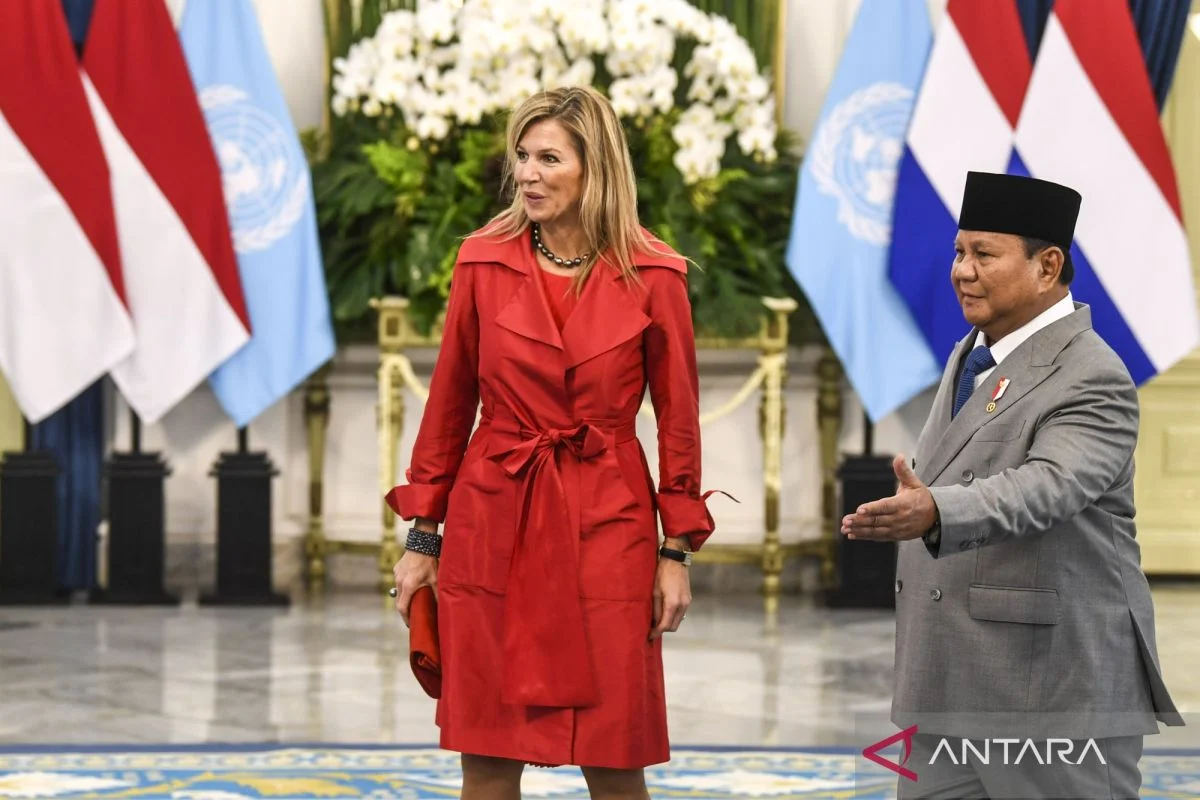
The visit concluded with a formal meeting at the Merdeka Palace, where Queen Máxima was received by President Prabowo Subianto. During a private one-on-one meeting followed by a state luncheon, the Queen presented her findings. She reportedly commended Indonesia’s rapid digital transformation but emphasized the need for robust consumer protection laws to prevent predatory lending in the burgeoning fintech sector.
Contextual Background and the Evolution of the Royal Role
Queen Máxima’s deep involvement in global finance is rooted in her professional background prior to her marriage to King Willem-Alexander in 2002. Born in Argentina in 1971, she enjoyed a successful career in international investment banking in New York and Brussels. This expertise has made her one of the most active and technically proficient members of the UN’s advocacy team.
Since being appointed as the UNSGSA in 2009, she has visited dozens of countries, but Indonesia remains a priority partner. This is due to Indonesia’s status as the world’s fourth most populous nation and its leadership role within the G20 and ASEAN. Indonesia’s success in financial inclusion is often cited as a model for other emerging economies. For instance, the OJK reported that Indonesia’s financial inclusion index reached approximately 88% in 2024, a massive leap from less than 20% a decade ago. However, the literacy rate—understanding how to use those services—still lags, which was a primary motivator for the Queen’s 2025 focus on "Financial Health."
Analysis of Implications: The Path Forward
The implications of Queen Máxima’s visit are multifaceted. First, it reinforces Indonesia’s international standing as a leader in digital finance. By hosting the UNSGSA, Indonesia signals to global investors and the UN that it is committed to transparent, inclusive economic growth.
Second, the visit highlighted the "Waste-to-Mortgage" model, which experts believe could be replicated in other developing nations. By linking financial services to environmental behavior, the program offers a blueprint for achieving multiple Sustainable Development Goals (SDGs) simultaneously.
Finally, the Queen’s emphasis on "Financial Health" over mere "Inclusion" signals a global policy shift. As digital accounts become ubiquitous, the challenge for the next decade will be ensuring that these accounts lead to genuine poverty reduction. The Queen’s discussions with President Prabowo and the OJK suggest that future Indonesian policy will likely focus more on data privacy, the regulation of "Buy Now, Pay Later" (BNPL) schemes, and the expansion of insurance products for farmers and small businesses.
As Queen Máxima departs Indonesia, the insights gathered from Sragen, Solo, Bekasi, and Jakarta will be compiled into a report for the UN Secretary-General. This report will not only influence global policy recommendations but will also serve as a guide for the Indonesian government as it strives to ensure that its economic growth is felt by every citizen, from the batik artisans of Java to the suburban families of West Java. The 2025 visit stands as a testament to the power of "Financial Health" as a cornerstone of modern national development.