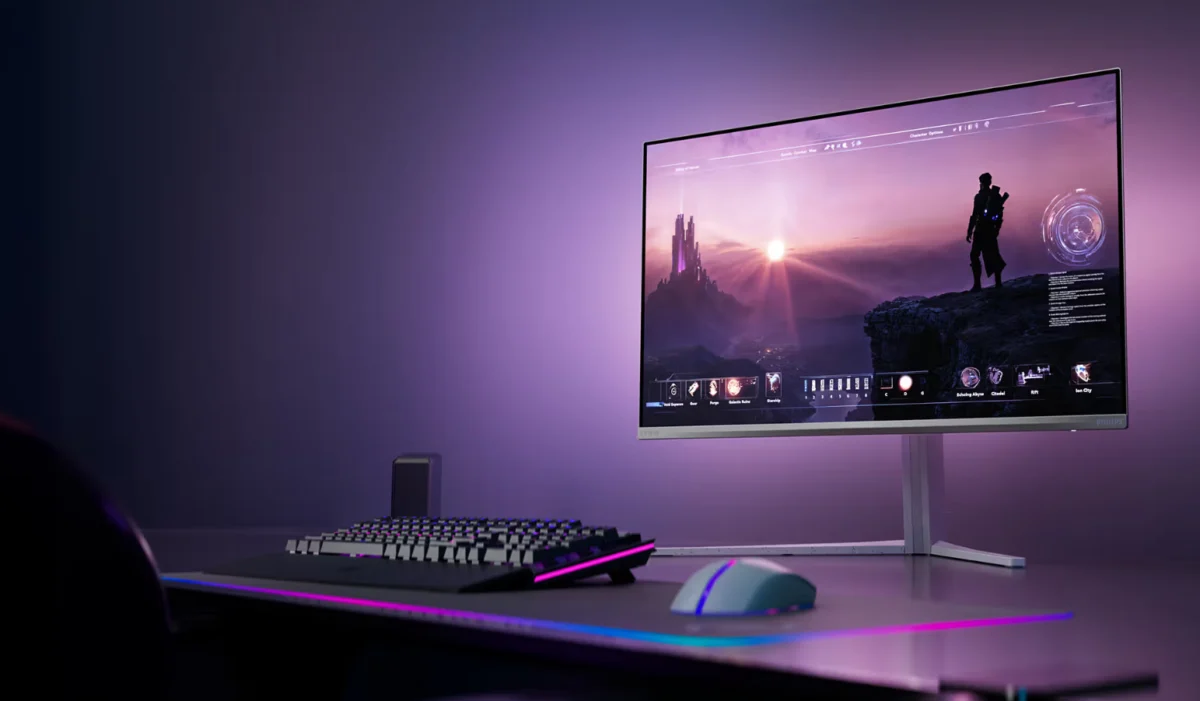
Philips has officially introduced the Evnia 32M2N6901A, a new gaming monitor poised to redefine expectations in the premium display segment. This latest offering, featuring a 32-inch 4K QD-OLED panel with a 165Hz refresh rate and the distinctive AI Ambiglow technology, signifies a strategic shift in the market toward a balanced blend of visual fidelity, performance, and accessibility. Priced at approximately US$868 (£649.99), with availability slated for August, the 32M2N6901A positions itself as a compelling option for gamers prioritizing immersive, high-resolution experiences over ultra-high refresh rates traditionally associated with esports-focused monitors.
The Rise of OLED in Gaming Displays: A Shifting Landscape
The adoption of OLED technology in gaming monitors has steadily progressed from a niche, high-cost luxury to a highly sought-after feature. Early iterations of OLED gaming displays often commanded exorbitant prices, primarily due to their cutting-edge technology and the initial manufacturing complexities. These first-generation models frequently focused on pushing the boundaries of refresh rates, reaching upwards of 240Hz, 360Hz, or even higher, to cater to the competitive esports market where every millisecond of response time can be critical. While impressive, such specifications often came with a significant premium, placing them out of reach for a broad segment of the gaming community.
Over the past few years, a notable evolution has been observed. As OLED panel production matures and becomes more efficient, manufacturers are increasingly exploring diverse product strategies. This involves moving beyond the singular pursuit of maximum refresh rates to offer a more holistic package that balances resolution, color accuracy, response time, and, crucially, price. The Evnia 32M2N6901A from Philips exemplifies this new philosophy, targeting a growing demographic of gamers who seek a premium visual experience for graphically intensive AAA titles without necessarily needing the extreme frame rates demanded by professional esports players.
Core Specifications and Advanced Display Technology
At the heart of the Philips Evnia 32M2N6901A is its 32-inch QD-OLED (Quantum Dot Organic Light Emitting Diode) panel. This technology represents a significant leap forward in display quality, combining the self-emissive properties of OLED with the color enhancement capabilities of quantum dots. Unlike traditional OLED (WOLED) panels that use a white sub-pixel alongside red, green, and blue, QD-OLED panels generate color directly from blue OLED sub-pixels passing through quantum dots, resulting in purer, more vibrant colors and enhanced brightness, especially in HDR content. This direct color generation process also typically leads to superior color volume at higher brightness levels compared to conventional OLED.
The monitor boasts a native 4K UHD resolution (3840 x 2160 pixels), delivering unparalleled clarity and detail that transforms gaming visuals. This high resolution, paired with the QD-OLED panel, ensures incredibly sharp images, deep, inky blacks, and an infinite contrast ratio – hallmarks of OLED technology. The 165Hz refresh rate, while not the highest available, is more than adequate for smooth gameplay in the vast majority of titles, particularly when rendering at 4K resolution where maintaining consistently higher frame rates (e.g., above 200 FPS) often requires extremely powerful and expensive graphics hardware. For most modern AAA games, achieving stable frame rates between 60-120 FPS at 4K is considered excellent, making a 165Hz refresh rate a highly practical and future-proof choice.
Further enhancing its gaming credentials, the 32M2N6901A features an astonishingly fast 0.03ms Grey-to-Grey (GtG) response time. This near-instantaneous pixel response virtually eliminates motion blur and ghosting, providing a crisp and fluid visual experience crucial for competitive and fast-paced gaming. The monitor also carries the VESA DisplayHDR True Black 400 certification. While 400 nits might seem modest for peak brightness compared to some IPS LCDs, for OLED panels, "True Black" certification signifies perfect black levels and incredibly precise local dimming (as each pixel is self-emissive), leading to a stunning HDR experience with exceptional contrast and detail in both highlights and shadows. The color accuracy is further bolstered by the QD-OLED panel’s ability to cover a wide color gamut, typically exceeding 99% of DCI-P3, ensuring faithful reproduction of in-game environments and character models.
AI Ambiglow: Elevating Immersion
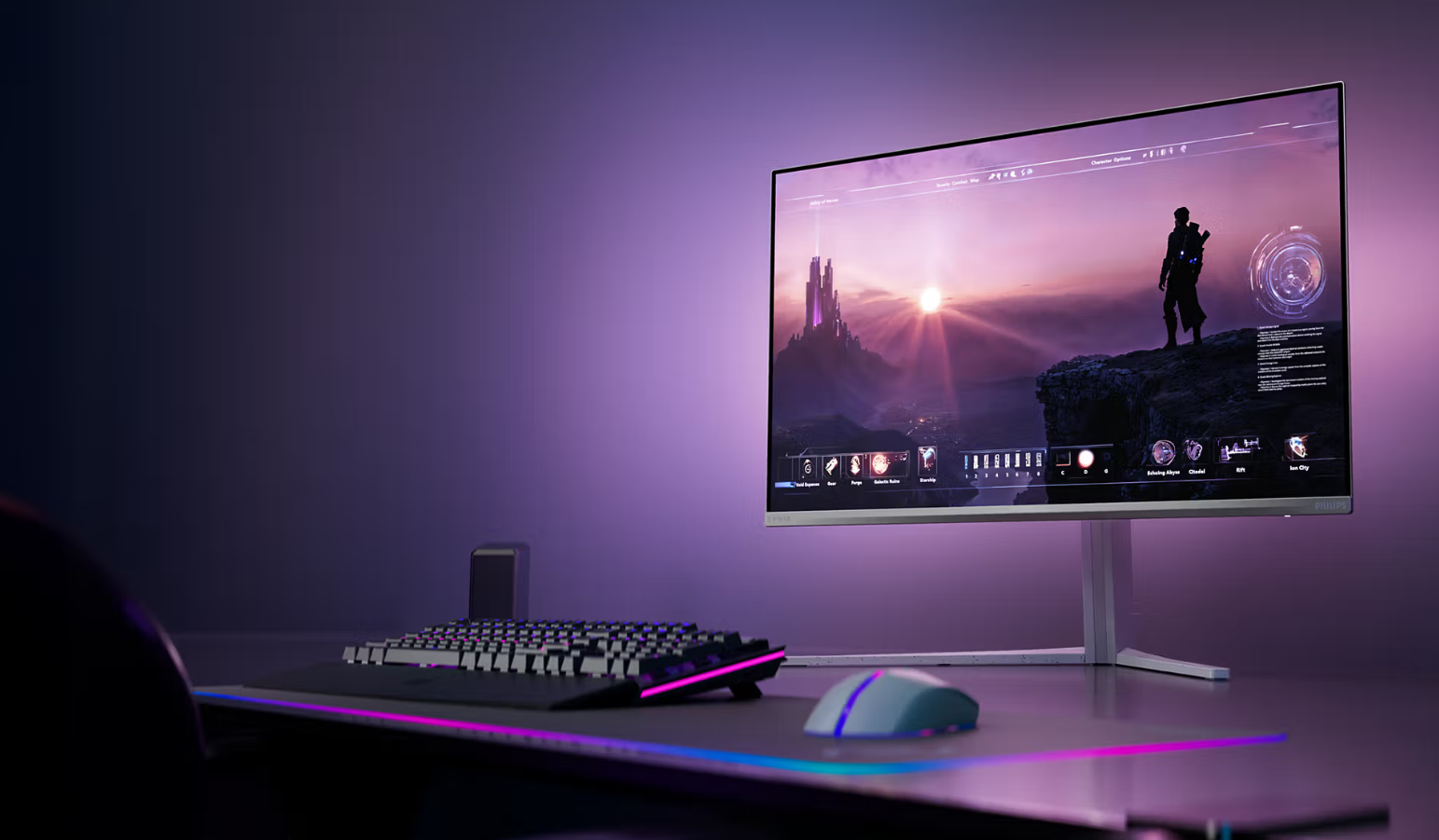
A distinctive feature of the Philips Evnia 32M2N6901A is its AI Ambiglow technology. Drawing inspiration from Philips’ well-regarded Ambilight televisions, Ambiglow utilizes intelligent algorithms to analyze the on-screen content and project corresponding RGB lighting onto the wall behind the monitor. This dynamic backlighting extends the perceived visual field beyond the screen’s bezels, creating a more expansive and immersive viewing experience.
The "AI" aspect implies a sophisticated processing unit capable of real-time analysis and adaptive light projection, potentially offering more nuanced and responsive lighting effects than simpler static or pre-programmed RGB systems. For gamers, this means explosions might trigger vibrant orange and red glows, serene landscapes could cast calming greens and blues, and intense action sequences could be amplified by rapid, pulsating lights. Beyond gaming, Ambiglow also enhances movie watching and general desktop use, transforming the viewing environment into a more engaging space. This proprietary technology serves as a unique selling proposition, differentiating Philips Evnia monitors from competitors who typically offer less integrated or sophisticated ambient lighting solutions.
Comprehensive Connectivity and Ergonomics
The Philips Evnia 32M2N6901A is designed with versatility in mind, offering a robust suite of connectivity options that cater to a wide array of devices and user setups. It includes two HDMI 2.1 ports, which are essential for fully leveraging the 4K 165Hz capabilities with modern graphics cards and next-generation gaming consoles like the PlayStation 5 and Xbox Series X, supporting features such as Variable Refresh Rate (VRR) and Auto Low Latency Mode (ALLM). A DisplayPort 1.4 port provides another high-bandwidth option for PC connectivity.
For users seeking streamlined setups, the inclusion of a USB Type-C port with 90W Power Delivery is a significant advantage. This single cable can transmit video, data, and power, making it ideal for connecting compatible laptops, charging them simultaneously, and turning the monitor into a docking station. Complementing this, a built-in USB hub provides convenient access for peripherals like keyboards, mice, and external storage. The integrated KVM (Keyboard, Video, Mouse) switch is a boon for users who operate multiple computers (e.g., a gaming PC and a work laptop) from a single set of peripherals, allowing seamless switching between inputs without replugging cables.
Further enhancing its utility, the monitor incorporates a pair of 5W stereo speakers. While external audio solutions are generally preferred for serious gaming, these integrated speakers offer a convenient option for casual use, video conferencing, or when external speakers are not feasible. The monitor’s stand is expected to offer full ergonomic adjustments, including height, tilt, swivel, and pivot, allowing users to achieve an optimal viewing position for comfort during extended gaming sessions or productivity tasks.

Market Implications and Philips’ Strategic Positioning
The launch of the Philips Evnia 32M2N6901A signals a noteworthy evolution in the premium gaming monitor market. For several years, the narrative around high-end displays was dominated by a "refresh rate race," with manufacturers striving to offer the highest possible Hz count, often at the expense of resolution or panel technology. While these ultra-high refresh rate monitors remain crucial for professional esports and highly competitive players, they cater to a relatively niche segment.
Philips’ decision to focus on a 4K QD-OLED panel at a still-excellent 165Hz refresh rate, combined with a competitive price point of US$868, indicates a strategic pivot towards broader market appeal. This approach acknowledges that a significant portion of gamers prioritizes stunning visual fidelity, deep immersion, and a balanced performance profile for single-player, graphically rich titles. Many gaming PCs, even high-end ones, struggle to maintain frame rates significantly above 120-144 FPS in modern AAA games at native 4K resolution without aggressive upscaling technologies. Therefore, a 165Hz ceiling is often more "realistic" and achievable for the majority of users.
This move by Philips, through its Evnia sub-brand, aims to democratize access to premium QD-OLED technology. By offering a compelling package that doesn’t over-spec on refresh rate for the sake of it, Philips makes QD-OLED more attainable for a wider audience. This could exert pressure on other manufacturers to reconsider their own high-end monitor strategies, potentially leading to a greater diversity of QD-OLED and OLED offerings at various price points and performance tiers.
A Philips spokesperson, commenting on the Evnia brand’s philosophy, has often emphasized a commitment to delivering "innovative solutions that enhance the gaming experience for all types of players." While not providing a direct quote for the 32M2N6901A’s launch, the product aligns perfectly with this stated mission: offering a premium, immersive experience that goes beyond raw speed. Industry analysts, like those at Display Supply Chain Consultants (DSCC), have consistently highlighted the growing demand for high-resolution OLED panels, predicting continued growth in the monitor segment as production costs decrease and diverse form factors emerge. The 32M2N6901A is well-positioned to capitalize on this trend, providing a strong value proposition in a rapidly expanding market.
Looking Ahead: The Future of Gaming Displays
The introduction of monitors like the Philips Evnia 32M2N6901A signifies a mature phase in the gaming display market. Innovation is no longer solely defined by pushing the highest single specification, but by crafting a balanced, feature-rich product that meets the practical needs and budgets of a wider consumer base. The synergy of 4K resolution, QD-OLED panel quality, a very respectable 165Hz refresh rate, ultra-fast response time, and value-added features like AI Ambiglow and comprehensive connectivity, all at a sub-$900 price point, presents a formidable package.
This strategic direction is likely to resonate strongly with gamers who have been waiting for QD-OLED technology to become more accessible without compromising on core performance or visual quality. It reinforces the idea that true innovation in the consumer electronics space often lies in optimizing the user experience and delivering exceptional value, rather than merely chasing abstract benchmarks. As the gaming monitor market continues to evolve, Philips’ Evnia 32M2N6901A stands as a testament to this more holistic approach, setting a new benchmark for what gamers can expect from their premium display investments. This development suggests a bright future for high-fidelity gaming, where cutting-edge technology becomes increasingly attainable for a broader spectrum of enthusiasts.