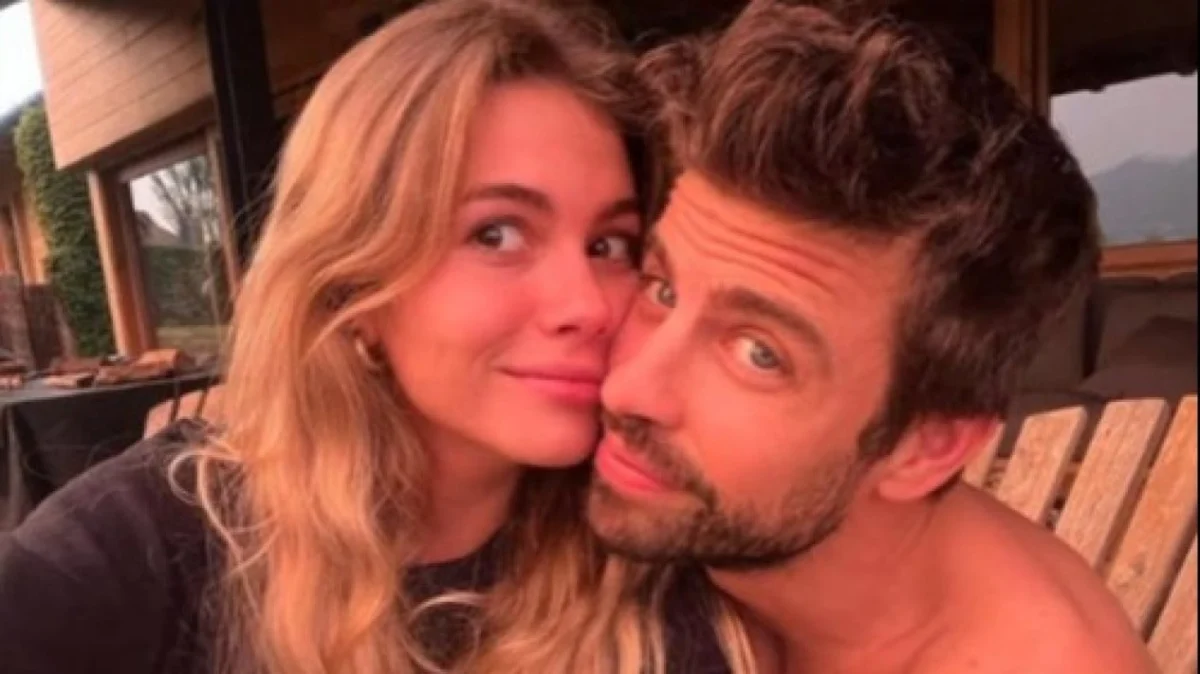
The 2026 FIFA World Cup final, hosted across North America, reached its emotional and athletic peak not only through the clash on the pitch but also via the high-octane entertainment provided during the historic halftime show. While the tournament itself broke records for viewership and attendance, the presence of former Spanish international and Barcelona legend Gerard Piqué in the stands created a secondary media frenzy. Piqué’s attendance coincided with a headline performance by his former partner, the global pop icon Shakira, whose appearance at the final marked a significant milestone in her career. This intersection of personal histories has reignited public interest in Piqué’s current relationship with Clara Chía Martí, thrusting their private life back into the global spotlight four years after their initial romantic entanglement became public knowledge.
The spectacle at the 2026 World Cup final served as a reminder of the enduring public fascination with the "Piqué-Shakira" saga. As Shakira took to the stage to deliver a performance that many critics described as a "masterclass in longevity," social media platforms were flooded with images of Piqué watching from the VIP sections. The juxtaposition of Shakira’s triumphant professional moment and Piqué’s presence as a spectator led to a resurgence of discussions regarding the circumstances of their 2022 split and the subsequent rise of his relationship with Clara Chía.
The 2026 World Cup Context and Shakira’s Resurgence
The 2026 FIFA World Cup was the first of its kind to feature 48 teams, with the final match drawing an estimated global audience of over 1.5 billion viewers. FIFA’s decision to include a Super Bowl-style halftime show was a strategic move to blend sports with high-tier entertainment, and Shakira, often dubbed the "Queen of World Cups" for her previous anthems like "Hips Don’t Lie" and "Waka Waka (This Time for Africa)," was the natural choice.
At 49 years of age, Shakira’s performance was lauded not just for its choreography and vocal prowess, but for her remarkably youthful appearance. This led to a wave of digital commentary comparing the singer to Piqué, who at 39 years old, was noted by some observers to appear more weathered by time than his elder ex-partner. The narrative of "aging gracefully" vs. the "stress of controversy" became a dominant theme on platforms like X (formerly Twitter) and Instagram, where fans analyzed every frame of the broadcast.
A Chronology of the Piqué-Clara Chía Relationship
To understand the current scrutiny, it is essential to revisit the timeline of Gerard Piqué’s relationship with Clara Chía Martí. The union first became a matter of public record in mid-2022, shortly after Piqué and Shakira announced their separation in June of that year. The couple had been together for 11 years and share two children, Milan and Sasha.
Clara Chía Martí, who is now 27, was 23 when she first became linked to the former footballer. Reports indicate that the two met through Kosmos, Piqué’s multifaceted sports and entertainment production company. At the time, Martí was a student specializing in public relations and was reportedly working on events for the firm. The professional setting provided the backdrop for a relationship that would soon become one of the most scrutinized romances in the world.
In January 2023, following months of paparazzi chases and tabloid speculation, Piqué made the relationship "Instagram official." He posted a selfie with Martí without a caption, a move that was interpreted by many as a defiant response to the lyrical attacks found in Shakira’s viral collaboration with Bizarrap, "Bzrp Music Sessions, Vol. 53." That song, which famously contained puns about Clara Chía’s name and compared the trade-off of the relationship to swapping a "Ferrari for a Twingo" or a "Rolex for a Casio," solidified the public’s polarized view of the new couple.
Public Scrutiny and the 12-Year Age Gap
One of the most persistent points of discussion among the public is the 12-year age gap between Piqué and Martí. While such age differences are common in celebrity circles, the context of Piqué’s long-term history with Shakira—who is ten years his senior—created a unique demographic narrative. Netizens have frequently pointed out the irony of Piqué leaving a partner older than him for a partner significantly younger, only for the public to perceive him as the one aging more rapidly.
During the 2026 World Cup final, Piqué’s Instagram account was reportedly inundated with comments from international users. The commentary ranged from critiques of his past decisions to observations about his physical appearance. This phenomenon highlights a broader cultural trend where the private lives of athletes are inseparable from their public personas, even years after their retirement from professional sports.
Professional Evolution: From the Pitch to Kosmos
Since his retirement from professional football in late 2022, Gerard Piqué has pivoted fully into his role as a businessman. His company, Kosmos, has been at the forefront of reinventing sports formats, most notably with the creation of the Kings League—a seven-a-side football tournament that blends traditional play with video-game-style rules and influencer involvement.
The success of the Kings League has been a double-edged sword for Piqué. While it has established him as a visionary in the sports-entertainment space, it has also kept him in a professional sphere where he frequently crosses paths with global entertainment events like the World Cup. His presence at the 2026 final was likely as much a business necessity as it was a personal interest, given Kosmos’s ongoing involvement in international sports marketing and media rights.
Clara Chía Martí has remained an integral part of this professional journey. Despite the initial media firestorm, she has continued to work within the Kosmos ecosystem, often seen accompanying Piqué to high-level meetings and sporting events. Unlike Shakira, who thrives in the global spotlight, Martí has maintained a relatively low profile, rarely granting interviews or engaging with the media, which has perhaps been a strategic move to de-escalate the public’s obsession with her personal life.
The "Shakira Effect" and the Economics of a Breakup
The 2026 World Cup performance was the culmination of what many economists and industry analysts call the "Shakira Effect." Following her split from Piqué, Shakira experienced a massive commercial resurgence. Her "revenge trilogy" of songs—"Te Felicito," "Monotonía," and the Bizarrap session—broke streaming records and re-established her as a dominant force in the Latin and global markets.
Data from 2023 to 2025 shows that Shakira’s brand value increased by an estimated 30%, driven by her relatability as a woman navigating a public betrayal. By the time she reached the 2026 World Cup stage, she was no longer seen as a victim of a breakup but as a triumphant survivor. This narrative has made it difficult for Piqué and Martí to escape the shadow of the past, as every success Shakira achieves serves as a reminder of the relationship’s end.
Official Responses and Privacy Struggles
While neither Piqué nor Martí have issued formal statements regarding the renewed social media vitriol following the 2026 final, Piqué has previously spoken about his mental health and his approach to public criticism. In various interviews throughout 2024 and 2025, he emphasized his commitment to his own happiness and the well-being of his children, stating that he does not feel the need to "clean up his image" for a public that only knows a fraction of the truth.
Legal representatives for the couple have, at various points, taken action against invasive paparazzi, seeking to establish a boundary between their professional activities and their private life in Barcelona. However, as the 2026 World Cup proved, when the world’s biggest sporting event intersects with the world’s biggest pop stars, personal privacy often becomes a secondary casualty to global entertainment.
Broader Implications and Cultural Impact
The continued fascination with Piqué, Martí, and Shakira reflects a broader societal interest in the dynamics of long-term celebrity relationships and the fallout of their dissolution. It also underscores the power of the "female gaze" in modern media; much of the support for Shakira and the criticism of Piqué is rooted in a collective empathy for the former, fueled by her candidness in her music.
As the 2026 World Cup concludes and the sporting world moves on to the next cycle, the story of Gerard Piqué and Clara Chía Martí remains a cautionary tale of fame in the digital age. Despite their efforts to move forward, the "ghosts" of past relationships—especially those as high-profile as Piqué and Shakira’s—are often just one halftime show away from returning to the front page. The 12-year age gap, the business connections at Kosmos, and the starkly different ways the parties have aged in the public eye continue to provide fodder for a global audience that seems unwilling to let the story go.
In the final analysis, the 2026 World Cup was a victory for FIFA and a triumph for Shakira’s career. For Gerard Piqué and Clara Chía Martí, however, it was a reminder that in the court of public opinion, the whistle never truly blows on a high-profile breakup. Their relationship, born in controversy and maintained under a microscope, continues to navigate the complex waters of international fame, where personal choices are analyzed with the same intensity as a VAR review in a World Cup final.