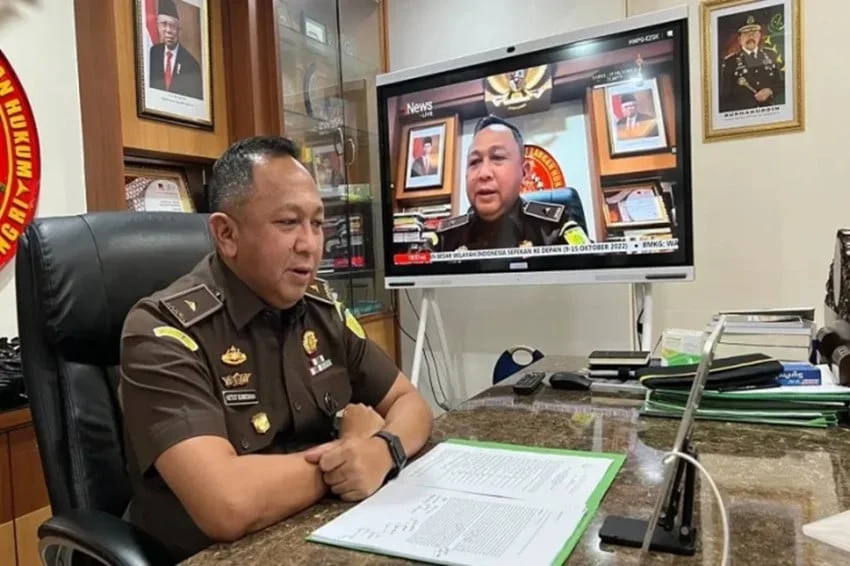
The Indonesian Attorney General’s Office (AGO) has officially confirmed that Ketut Sumedana is no longer serving as the Head of the South Sumatra High Prosecutor’s Office (Kajati Sumsel) following his strategic appointment to a high-ranking role within the newly established National Nutrition Agency (BGN). The transition marks a significant shift in the leadership of the South Sumatra prosecution service and underscores the government’s commitment to integrating legal oversight into its flagship social welfare programs. According to the Head of the Legal Information Center of the AGO, Anang Supriatna, Ketut Sumedana’s responsibilities in South Sumatra were formally terminated upon his inauguration as the Deputy for Monitoring and Oversight at the BGN. This move is part of a broader administrative restructuring aimed at ensuring that the National Nutrition Agency, which is tasked with managing the country’s massive "Free Nutritious Meal" program, operates with the highest standards of transparency and legal compliance.
Anang Supriatna clarified on Thursday, July 23, 2026, that the vacancy left by Sumedana in South Sumatra is currently being managed by the Deputy Chief Prosecutor (Wakajati) of South Sumatra, who serves as the acting head until a definitive successor is appointed by the Attorney General. The AGO emphasized that Sumedana’s status is now "seconded" to the BGN, a procedural move common for high-ranking prosecutors who are assigned to provide legal and supervisory expertise to non-ministerial government agencies. This transition is not merely a personnel change but a strategic deployment of one of the AGO’s most experienced figures to oversee a project of immense national importance and substantial budgetary allocation.
The Strategic Shift to the National Nutrition Agency
The appointment of Ketut Sumedana comes at a critical juncture for the National Nutrition Agency. Established to execute the ambitious "Free Nutritious Meal" (Makan Bergizi Gratis) program, the BGN is one of the most high-profile institutions in the current administration’s portfolio. The agency announced its complete organizational structure on Tuesday, July 21, 2026, revealing a lineup of officials drawn from various sectors, including the military, academia, and the judiciary. Sumedana’s role as Deputy for Monitoring and Oversight is viewed as a "firewall" against potential mismanagement and corruption within the agency’s extensive logistical and financial operations.
As the former Head of the Legal Information Center (Kapuspenkum) at the AGO and subsequently the Kajati of South Sumatra, Sumedana has built a reputation for firm leadership and clear communication. His move to the BGN signifies the government’s intent to utilize the AGO’s investigative and supervisory DNA to monitor the distribution of resources. The BGN is expected to manage a budget that reaches tens of trillions of rupiah, covering millions of students, toddlers, and pregnant women across the Indonesian archipelago. Given the scale of the program, the risk of leakage or procurement irregularities is a primary concern for the administration, making Sumedana’s oversight role pivotal to the program’s success.
Chronology of the Transition and BGN Formation
The timeline of Ketut Sumedana’s transition reflects the rapid pace at which the National Nutrition Agency has been operationalized. The process began in early 2026 with the formalization of the agency’s mandate via Presidential Regulation. By mid-2026, the focus shifted toward staffing the agency with experts capable of handling both the nutritional science and the administrative rigors of a national program.
On July 21, 2026, the BGN officially publicized its management board. The announcement confirmed that the agency would be led by a Head and a Deputy Head, supported by several specialized deputies. Ketut Sumedana was named among the key leadership figures, specifically tasked with the monitoring and oversight directorate. This directorate is responsible for auditing the supply chain, ensuring the quality of meals provided, and verifying that the funds are reaching the intended beneficiaries without illegal deductions.
On July 23, 2026, the Attorney General’s Office held a press briefing to clarify Sumedana’s status. Anang Supriatna stated that from the moment of his inauguration at the BGN, Sumedana’s operational authority in South Sumatra ceased. This clarification was necessary to avoid any overlap in authority and to ensure that the South Sumatra High Prosecutor’s Office could continue its local legal duties under the leadership of the Wakajati without interruption. The AGO has noted that a "mutasi" (transfer) order for a new definitive Kajati is currently being processed to ensure long-term stability in the regional office.
Understanding the National Nutrition Agency’s Mandate
The National Nutrition Agency was formed as a response to the urgent need to address stunting and malnutrition in Indonesia, which are seen as significant hurdles to achieving the "Indonesia Gold 2045" vision. The agency’s primary objective is the implementation of the Free Nutritious Meal program, which targets over 80 million beneficiaries at full scale. This includes school-aged children from preschool to high school, as well as vulnerable groups such as infants and nursing mothers.
The logistics of such a program are unprecedented in Indonesian history. It involves the establishment of thousands of "Service Units" or central kitchens across the country, which must source ingredients from local farmers and cooperatives. This localized procurement strategy is intended to boost the rural economy but also introduces thousands of points of potential financial risk. By appointing a career prosecutor like Ketut Sumedana to the oversight role, the government is signaling to the public and to international observers that the program will be subject to rigorous internal controls.
Supporting data suggests that the initial budget allocated for the BGN’s first year of full operation is approximately Rp 71 trillion. With such a significant portion of the national budget at stake, the monitoring and oversight deputy must establish a robust reporting system. Sumedana is expected to implement a "real-time" monitoring framework that integrates digital tracking of food quality and financial disbursements, a task that aligns with his previous efforts to modernize the AGO’s public information systems.
Leadership Vacuum and Continuity in South Sumatra
While Sumedana’s appointment is a gain for the national government, it leaves a temporary leadership void in South Sumatra. During his tenure as Kajati Sumsel, Sumedana was active in overseeing several high-profile corruption cases related to regional development and mining permits. His sudden departure necessitates a smooth transition to ensure that these cases do not lose momentum.
The AGO has assured that the Wakajati of South Sumatra is fully empowered to lead the office. In the Indonesian prosecutorial hierarchy, the Wakajati holds the authority to manage day-to-day operations and sign off on urgent legal matters in the absence of the Kajati. However, major policy decisions and final indictments for sensitive cases are usually reserved for a definitive head. The AGO’s Human Resources Bureau is currently reviewing candidates for the South Sumatra post, with a decision expected in the coming weeks.
This transition in South Sumatra is part of a larger wave of rotations within the AGO. Recent months have seen significant movement among high-ranking prosecutors, including the Director of Investigations at the Junior Attorney General for Extraordinary Crimes (Dirdik Jampidsus) and various regional heads. These rotations are designed to refresh the leadership and place experienced officers in positions where they can address emerging legal challenges, such as the oversight of national strategic programs.
Implications for Governance and Anti-Corruption Efforts
The secondment of a high-ranking prosecutor to an executive agency like the BGN has several implications for Indonesian governance. First, it reflects a "Whole-of-Government" approach, where resources from the judiciary are used to strengthen the executive branch’s internal controls. This prevents the "silo" mentality where agencies operate without external checks until a scandal erupts.
Second, Sumedana’s role is likely to involve a "preventive-repressive" balance. While his primary task is monitoring (prevention), his background as a prosecutor means he is well-versed in identifying the elements of criminal conduct. If irregularities are found, his office within the BGN can coordinate directly with the AGO or the Corruption Eradication Commission (KPK) to initiate legal action. This creates a powerful deterrent for vendors, local officials, or agency staff who might consider misappropriating program funds.
Furthermore, the focus on monitoring and oversight in the BGN is a response to criticisms regarding the feasibility and transparency of the Free Nutritious Meal program. Critics have previously expressed concerns about the "politicization" of food aid and the potential for the program to become a vehicle for patronage. By placing a career law enforcement officer in a deputy position, the administration aims to depoliticize the technical implementation of the program and ensure that it remains a merit-based social service.
The Role of the Attorney General’s Office in National Programs
The AGO’s involvement in the BGN is not an isolated event. Under the leadership of Attorney General ST Burhanuddin, the prosecution service has increasingly taken on roles in "escorting" national strategic projects (Proyek Strategis Nasional or PSN). Through the Jamintel (Intelligence) and Jamdatun (Civil and State Administrative) divisions, the AGO provides legal assistance to ensure that land acquisition, procurement, and contracting for major projects are legally sound.
Ketut Sumedana’s appointment as a Deputy in BGN is an extension of this philosophy. It moves the AGO from an advisory role into an embedded supervisory role. This "active supervision" is intended to catch errors in the early stages of the program’s rollout. For example, if a Service Unit in a remote province fails to meet nutritional standards or if there are discrepancies in the number of meals reported versus the number delivered, the oversight deputy’s office will be the first to flag the issue.
Conclusion and Future Outlook
As Ketut Sumedana begins his tenure at the National Nutrition Agency, the eyes of the public will be on how he manages the transition from a purely legal role to an administrative and supervisory one. His success will be measured by the agency’s ability to maintain a "clean" balance sheet and the efficient delivery of meals to millions of children.
The AGO, meanwhile, faces the task of filling the Kajati Sumsel position with an individual who can match Sumedana’s energy and commitment to law enforcement in the region. The broader impact of this personnel shift will likely be felt in the coming months as the BGN begins its full-scale implementation. If the oversight mechanism proves effective, it could serve as a blueprint for how other large-scale social programs in Indonesia are monitored, potentially leading to a new era of accountability in the management of public funds.
The National Nutrition Agency represents a significant investment in Indonesia’s human capital, and the inclusion of seasoned legal professionals like Ketut Sumedana in its core structure is a clear indication that the government recognizes that nutrition and justice must go hand in hand to build a prosperous nation. The official handover of responsibilities in South Sumatra, while marking the end of a chapter for the regional office, marks the beginning of a critical national mission to secure the health and future of the next generation of Indonesians.