The alleged Iranian nuclear site, dubbed "Mount Pickaxe," has emerged as a focal point in the escalating standoff between Tehran and Washington, with former U.S. President Donald Trump claiming an imminent strike against the deeply buried facility. The site, suspected by Israel and various intelligence agencies to house highly enriched uranium and advanced centrifuges, underscores the persistent international concerns over Iran’s nuclear ambitions and its potential for developing atomic weapons. This recent surge in rhetoric follows years of covert operations, diplomatic stalemates, and a deepening distrust that has brought the region to the brink of further conflict.
Introduction to Mount Pickaxe and Immediate Threats
In a statement delivered on Tuesday, former President Trump asserted, "We are most likely to strike that area soon. And there is nothing they can do about it." This stark warning, disseminated via social media platforms including X (formerly Twitter) and echoed in international media, immediately drew a stern rebuke from Tehran. Iranian state media, on Wednesday morning, reported an official response from the Islamic Republic, declaring that any U.S. assault on its nuclear facilities would be unequivocally interpreted as a significant expansion of the ongoing conflict in the region. This exchange highlights the volatile nature of the current geopolitical landscape and the high stakes involved in the debate over Iran’s nuclear program.
The facility, known colloquially as Mount Pickaxe, represents a new frontier in the long-running saga of Iran’s nuclear development. Unlike previous sites, which have faced numerous sabotage attempts and airstrikes, Mount Pickaxe is designed with an unprecedented level of fortification, making it a particularly challenging target for any military intervention. Its existence, largely pieced together through satellite imagery and expert analysis, symbolizes Iran’s strategic shift towards hardened, subterranean sites in response to perceived threats from the United States and Israel.
Background Context: Iran’s Nuclear Program and International Scrutiny
Iran’s nuclear program dates back to the 1950s, initially supported by the United States under the Atoms for Peace program. However, following the 1979 Islamic Revolution, the program continued under strict secrecy, raising international alarms, particularly after the revelation of undeclared enrichment facilities at Natanz and Arak in the early 2000s. These discoveries led to a decade of intense diplomatic efforts, U.N. Security Council sanctions, and covert actions aimed at curbing Iran’s nuclear capabilities.
The landmark Joint Comprehensive Plan of Action (JCPOA), signed in 2015 by Iran and the P5+1 group (China, France, Germany, Russia, the United Kingdom, and the United States), represented a temporary détente. Under the JCPOA, Iran agreed to significant restrictions on its nuclear program, including caps on uranium enrichment levels, centrifuge numbers, and intrusive inspections by the International Atomic Energy Agency (IAEA), in exchange for sanctions relief. This agreement was widely hailed as a critical step in preventing nuclear proliferation in the Middle East.
However, the future of the JCPOA was severely jeopardized when former President Trump unilaterally withdrew the U.S. from the agreement in May 2018, reimposing crippling sanctions on Iran. In response, Iran began incrementally scaling back its commitments under the deal, accelerating its uranium enrichment to levels far beyond the JCPOA limits and restricting IAEA access to certain sites and surveillance equipment. This withdrawal and subsequent Iranian actions reignited fears of a nuclear arms race in the region and led to renewed calls for a more robust international response. The current alleged development at Mount Pickaxe is viewed by many as a direct consequence of this breakdown in diplomacy and the escalating tit-for-tat actions.
Mount Pickaxe: A Deeply Buried and Fortified Enigma
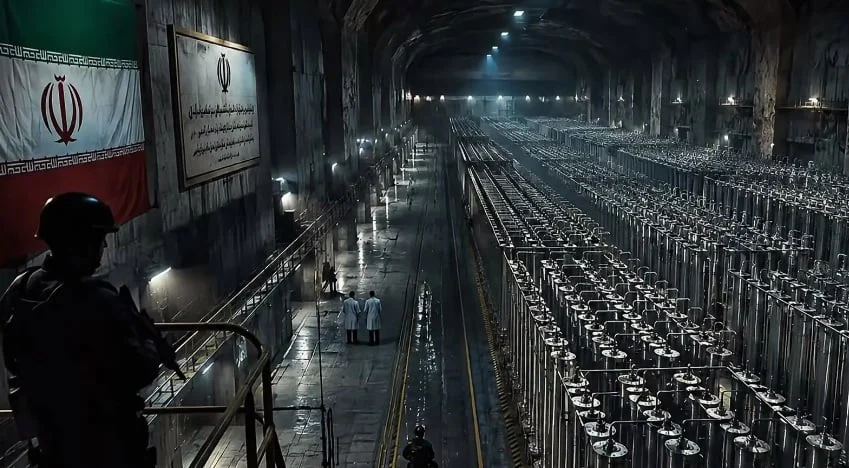
According to reports, primarily from CNN, Mount Pickaxe is an extraordinarily fortified facility nestled deep underground in the central region of Iran. It is situated approximately one mile south of the Natanz uranium enrichment facility, a site that has been the target of multiple alleged cyberattacks and bombings attributed to the U.S. and Israel. This proximity suggests a strategic decision by Iran to relocate and secure its most sensitive nuclear activities in response to past vulnerabilities.
The facility is reportedly buried at least 100 meters (328 feet) beneath a massive mountain known as Kuh-e Kolang Gaz La. The name "Kolang," meaning "Pickaxe" in Persian, lends the site its common English moniker. This depth is critical, as it makes the facility extremely resistant to conventional aerial bombardment, requiring specialized "bunker-buster" munitions that only a few nations possess, and even then, their effectiveness against such deep, hardened targets is uncertain. The Institute for Science and International Security (ISIS), a prominent non-profit, non-governmental institution dedicated to preventing nuclear proliferation, has been at the forefront of analyzing satellite imagery and providing insights into the site’s characteristics.
Construction on the Mount Pickaxe facility is believed to have commenced in 2020. At that time, Iran officially declared the facility to the IAEA as a future site for assembling centrifuges, which are essential for enriching uranium. This declaration, while seemingly transparent, is viewed with skepticism by many international observers, who fear that its true purpose could extend beyond mere assembly to encompass enrichment itself, especially given the facility’s extensive protective measures.
Architectural Features and Operational Status
The specifics of Mount Pickaxe remain largely shrouded in secrecy, with no publicly available blueprints or detailed schematics. Experts, including those at ISIS, have primarily derived their understanding of the site through meticulous analysis of commercial satellite imagery. These images have revealed several key features:
- Multiple Tunnel Complexes: The facility appears to comprise a network of tunnel complexes, suggesting a sprawling underground infrastructure capable of housing various nuclear-related activities.
- Extensive Security Perimeter: A large security perimeter encircles the visible entrance points, indicating a high level of concern for physical protection and access control.
- Concrete-Reinforced Entrances: Satellite imagery suggests that the facility’s entrances have been heavily reinforced with concrete. This measure is designed to protect against potential airstrikes, making it significantly harder for precision-guided munitions to penetrate and disable the site.
As of recent assessments, the Mount Pickaxe facility is not believed to be fully operational, with construction efforts still ongoing. However, there are indications that the pace of construction may have intensified significantly in recent years. This acceleration is often linked to a direct response to previous attacks on other Iranian nuclear sites. For instance, following the suspected sabotage and explosion at the Natanz uranium enrichment complex in July 2020, and other incidents in 2021, Iran has seemingly redoubled its efforts to move sensitive operations into more secure, underground locations. The strategic logic is clear: to render its nuclear infrastructure invulnerable to external attack, thereby preserving its long-term nuclear capabilities regardless of geopolitical pressures.
Chronology of Escalation and Discovery
The timeline of events leading to the current tensions over Mount Pickaxe is critical for understanding the context:
- 2015: JCPOA signed, imposing restrictions on Iran’s nuclear program in exchange for sanctions relief.
- May 2018: U.S. under President Trump withdraws from the JCPOA, reimposing sanctions.
- May 2019 onwards: Iran begins to scale back its JCPOA commitments in response to U.S. sanctions, gradually increasing uranium enrichment levels and expanding centrifuge production.
- July 2020: A major explosion and fire severely damage the centrifuge assembly plant at Natanz, attributed to sabotage by Israel. This event likely spurred Iran to accelerate construction of more secure, underground facilities.
- Late 2020: Satellite imagery and intelligence reports indicate the commencement of significant excavation and construction activities at a new, deeply buried site near Natanz, which would later be identified as Mount Pickaxe. Iran declares it to the IAEA as a future centrifuge assembly plant.
- April 2021: Another major incident at Natanz, suspected sabotage, damages the electrical system, leading to further Iranian vows to enhance nuclear security.
- 2021-Present: Iran consistently breaches JCPOA limits, enriching uranium to 60% purity (a short technical step from weapons-grade 90%) and accumulating significant stockpiles. IAEA reports detail these breaches and express growing concerns about undeclared nuclear material and sites.
- Recent Weeks/Months: Increased intelligence assessments and public statements from U.S. and Israeli officials highlight growing concerns about Iran’s rapid nuclear advancements and the development of new, hardened sites like Mount Pickaxe.
- Tuesday (as per article): Former President Trump issues a public threat of imminent strike on Mount Pickaxe.
- Wednesday (as per article): Iran warns of regional war expansion in response to any attack.
Statements and Reactions from Related Parties
The escalating rhetoric surrounding Mount Pickaxe has elicited strong reactions from various international and regional actors:
- United States (Donald Trump): Trump’s explicit threat to strike Mount Pickaxe, regardless of his current official capacity, underscores a persistent hardline stance against Iran’s nuclear program. Such statements, even from a former president, carry significant weight and can influence current policy discussions, potentially serving as a reminder of the "maximum pressure" campaign and the willingness to use military force. The underlying motive could be deterrence, a pre-emptive measure, or a political maneuver to exert pressure on the current administration and Iran.
- Iran: Tehran’s immediate and unequivocal warning that any attack would lead to a "regional war expansion" signals its readiness to retaliate and broaden any conflict beyond its borders. This is a consistent stance by Iran, aiming to deter potential aggressors by highlighting the severe consequences for regional stability, including potential impacts on shipping lanes, oil prices, and the involvement of proxy forces. Iran maintains its nuclear program is for peaceful purposes, such as energy generation and medical isotopes, despite its enrichment activities far exceeding civilian needs.
- Israel: Israel has long viewed Iran’s nuclear program as an existential threat and has advocated for a more aggressive approach to prevent Tehran from acquiring nuclear weapons. Israeli intelligence is widely believed to be the primary source for identifying and monitoring sites like Mount Pickaxe. Their concerns stem from the belief that Iran is actively seeking a nuclear arsenal and that sites like Mount Pickaxe are critical components of this clandestine effort, potentially housing enriched uranium and advanced centrifuges necessary for rapid weaponization. Israel has historically demonstrated a willingness to undertake covert and overt actions against perceived nuclear threats.
- International Atomic Energy Agency (IAEA): The IAEA, responsible for verifying Iran’s compliance with non-proliferation commitments, faces immense challenges. While Iran has declared Mount Pickaxe as a centrifuge assembly plant, the IAEA’s ability to fully monitor and verify activities at such deeply buried and fortified sites is often limited by access restrictions imposed by Tehran. The agency’s reports consistently highlight Iran’s growing stockpile of enriched uranium and the use of advanced centrifuges, expressing serious concerns about the lack of transparency and the potential for diversion of nuclear materials for military purposes.
- Regional Actors: Neighboring countries, particularly Gulf states like Saudi Arabia and the UAE, are deeply apprehensive about any escalation. A nuclear-armed Iran, or a direct military confrontation, would destabilize the entire region, potentially disrupting oil supplies, fueling proxy conflicts, and leading to an unprecedented refugee crisis. These nations often look to the U.S. for security guarantees but also fear being drawn into a wider conflict.
- P5+1 Nations: The remaining signatories of the JCPOA (China, France, Germany, Russia, and the United Kingdom) continue to call for diplomatic solutions and a return to the nuclear deal. However, their efforts have been largely stymied by the U.S. withdrawal and Iran’s subsequent actions. While generally aligned on the goal of preventing nuclear proliferation, these nations often differ on the best approach, with some advocating for more engagement and others for stronger pressure, but all generally wary of military escalation.
Brief Fact-Based Analysis of Implications
The emergence of Mount Pickaxe and the accompanying threats carry profound implications across several domains:
- Military Implications: Striking a deeply buried and hardened facility like Mount Pickaxe presents immense technical and strategic challenges. While "bunker-buster" bombs exist, their effectiveness against targets 100 meters underground within a mountain is unproven. Any military action would risk significant collateral damage, potential failure, and almost certainly trigger a severe retaliatory response from Iran, potentially escalating to direct conflict with U.S. forces in the region or through Iranian proxies. The concept of "pre-emption" versus "deterrence" becomes a critical, and dangerous, debate.
- Diplomatic Implications: A military strike would irrevocably shatter any remaining hopes of reviving the JCPOA or achieving a diplomatic resolution to Iran’s nuclear program. It would isolate Iran further, potentially pushing it to withdraw entirely from the Nuclear Non-Proliferation Treaty (NPT) and pursue nuclear weapons openly. Such an outcome would deal a severe blow to global non-proliferation efforts and could inspire other nations to develop their own nuclear deterrents, sparking a regional arms race.
- Regional Stability: The Middle East is already a volatile region plagued by multiple conflicts and proxy wars. A direct military confrontation between the U.S. (or Israel) and Iran over Mount Pickaxe would undoubtedly ignite a wider regional conflagration. This could involve attacks on oil infrastructure, shipping in the Strait of Hormuz, and an intensification of proxy conflicts in Iraq, Syria, Lebanon, and Yemen, with devastating humanitarian and economic consequences.
- Economic Impact: The immediate economic fallout of any military strike would be felt globally, particularly in energy markets. Oil prices would likely skyrocket, and global supply chains would face severe disruptions. For Iran, an attack would compound the already crippling effects of international sanctions, further impoverishing its population and potentially fueling internal dissent.
- Non-Proliferation Concerns: The existence of a highly protected, undeclared, or partially declared underground facility like Mount Pickaxe raises the most serious non-proliferation concerns. If Iran can successfully develop and operate such a site outside the full purview of international inspectors, it sets a dangerous precedent, undermining the entire global non-proliferation regime. It suggests a clear intent to protect and advance nuclear capabilities that could, at any moment, be diverted towards weapons production, significantly shortening the "breakout time" to a nuclear bomb.
Conclusion
The saga of Mount Pickaxe encapsulates the enduring and perilous standoff over Iran’s nuclear program. From the initial revelations of clandestine facilities to the collapse of the JCPOA and the current threats of military action, each step has brought the region closer to an unpredictable future. The alleged deep underground facility, designed for resilience against attack, symbolizes Iran’s determination to safeguard its nuclear infrastructure, while the vocal threats from international actors underscore their resolve to prevent nuclear proliferation. With diplomatic avenues increasingly strained and military options openly discussed, the world watches with bated breath, recognizing that the fate of Mount Pickaxe could well dictate the future stability of the Middle East and the integrity of global non-proliferation efforts. The choice between de-escalation through renewed diplomacy and the perilous path of military confrontation remains stark, with potentially catastrophic consequences hanging in the balance.