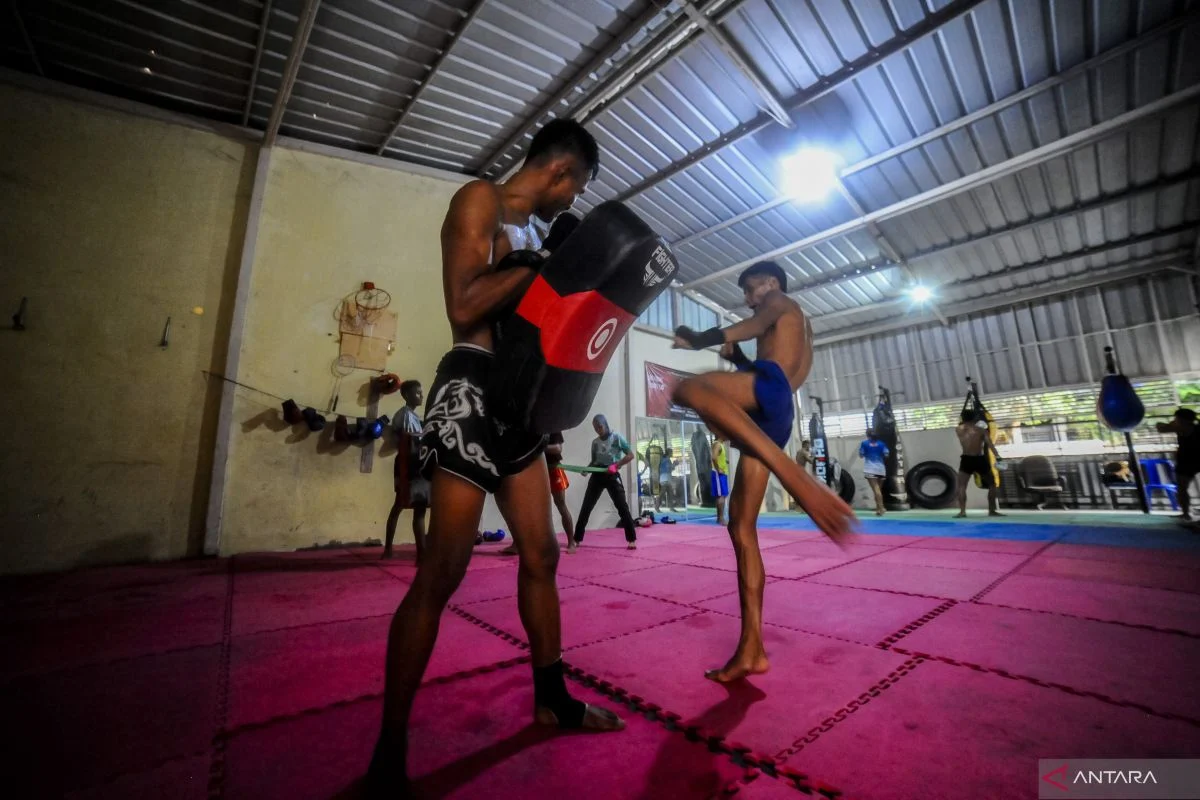
Jakarta (ANTARA) – Muay Thai, the revered martial art originating from Thailand, is poised to captivate audiences and athletes alike as it makes its anticipated debut as a medal sport at the Southeast Asian Games (SEA Games) in 2025. While superficially resembling boxing with its ring-based combat and glove-clad participants, Muay Thai boasts a distinct character, a broader arsenal of techniques, and a rich philosophical undercurrent that sets it apart from its Western counterpart. This comprehensive look delves into the essence of Muay Thai, its historical evolution, and the key differences that distinguish it from the sport of boxing.
The Essence of Muay Thai: The Art of Eight Limbs
The very name "Muay Thai" translates to "Thai boxing," a direct indication of its origins. However, the moniker that truly encapsulates its formidable nature is "The Art of Eight Limbs." This descriptive title highlights the unique combat system that utilizes eight points of contact for offense and defense: two fists, two elbows, two knees, and two shins/feet. This stands in stark contrast to conventional boxing, which primarily focuses on the strategic application of punches delivered by the hands.
Muay Thai’s expansive technique repertoire grants practitioners a significantly wider range of offensive and defensive maneuvers. Beyond the punches characteristic of boxing, Muay Thai incorporates powerful knee strikes, devastating kicks, sharp elbow blows, and the intricate art of the clinch. The clinch, a grappling position where fighters lock their arms around each other, is a crucial element in Muay Thai, allowing for close-range attacks with knees and elbows, as well as strategic sweeps and throws. This dynamic interplay of striking and close-quarters combat results in a fighting tempo that is renowned for its speed, fluidity, and sheer intensity.
Crucially, Muay Thai adheres to a standing combat protocol. Unlike martial arts that permit takedowns and ground fighting, Muay Thai engagements are confined to an upright position. Techniques such as wrestling to the mat or executing forceful throws are strictly prohibited, ensuring that the focus remains on the striking arts.
Historically, the movements and principles of Muay Thai are often interpreted as mirroring the weaponry of ancient warfare. The fists are likened to swords, the knees to maces or clubs, and the kicks to axes, reflecting a strategic approach to combat that emphasizes power and precision. This ancient lineage imbues Muay Thai with a profound cultural significance that transcends mere physical prowess.
A Journey Through Time: The Historical Tapestry of Muay Thai
The origins of Muay Thai are deeply rooted in the martial traditions of Thailand, with its development believed to have commenced around the 13th century. It emerged as a vital self-defense discipline for Siamese soldiers who often found themselves in battle without their primary weaponry. In such desperate circumstances, unarmed combat techniques became paramount for survival. Over centuries, Muay Thai evolved, shedding some of its most brutal and potentially lethal techniques, such as targeting joints and the back of the head, to align with modern safety standards and ethical considerations.
The art form permeated various strata of Thai society, even finding patronage within the royal court. Historical accounts suggest that the first king of the Sukhothai Kingdom, King Phokhun Sri In Tharatit, mandated that his son learn Muay Thai. This directive underscored the martial art’s dual role as a rigorous physical training regimen and a crucial tool for character development, instilling discipline, courage, and strategic thinking.
The formalization of Muay Thai into a more structured sport began in earnest around the 1930s. During this period, international boxing influences became apparent, leading to the adoption of standardized boxing gloves and a round-based competition format. This modernization paved the way for Muay Thai’s broader acceptance and its transition from a traditional martial art to a globally recognized sport.
A significant milestone in Muay Thai’s international ascendancy was the establishment of the International Federation of Muaythai Associations (IFMA) in 1993. This governing body has been instrumental in standardizing rules, promoting the sport worldwide, and facilitating the organization of global championships, bringing Muay Thai to a wider international audience.
The legend of Nai Khanom Tom, a 16th-century warrior, is an indelible part of Muay Thai’s lore. Captured by Burmese forces during a conflict, Nai Khanom Tom is said to have single-handedly defeated a contingent of Burmese fighters in a demonstration of his formidable Muay Thai skills. This act of defiance not only cemented his heroic status but also significantly enhanced the prestige and recognition of Muay Thai within Siam.
Today, Muay Thai is an integral part of Thailand’s cultural fabric, with matches drawing significant crowds and acting as a major tourist attraction. Its accessible training methods have also made it a popular choice for individuals of all ages seeking to learn a dynamic and effective martial art.
Distinct Disciplines: Unpacking the Differences Between Muay Thai and Boxing
While the visual similarities between Muay Thai and boxing – the ring, the gloves, the athletic combatants – are undeniable, a closer examination reveals profound differences in their fundamental techniques, strategic approaches, and even their underlying philosophies.
H2: Arsenal of Offense: Eight Limbs vs. Two Fists
The most striking divergence lies in the offensive capabilities. Muay Thai, as previously established, leverages eight points of attack: punches, elbows, knees, and kicks, along with sweeps and controlled throws from the clinch. The clinch itself is a dynamic phase where fighters can continue to attack with knees and elbows until the referee intervenes.
Boxing, conversely, is exclusively a punching sport. The strategic engagement of the clinch in boxing is typically brief, with referees quick to separate fighters to resume the core boxing action, which is centered on hand-based strikes.
H2: The Art of the Punch: Precision vs. Versatility
Boxing places an unparalleled emphasis on the refinement of punching techniques. Through rigorous training, boxers hone the precision, power, and efficiency of their hand strikes. Hip rotation, intricate footwork, and the ability to deliver devastating punches are cornerstones of boxing training.
Muay Thai incorporates punching techniques, often drawing inspiration from boxing. However, the training in Muay Thai is geared towards seamless transitions between different attack vectors. A Muay Thai practitioner must be adept at shifting rapidly from a punch to a kick, an elbow strike, or a knee, demanding a different kind of adaptability and multi-faceted striking prowess.
H2: Stance and Footwork: Agility vs. Stability
The characteristic stance in boxing is a slightly angled, semi-sideways posture, with fighters balanced lightly on the balls of their feet. This stance facilitates rapid pivots, lateral movements, and evasive maneuvers, crucial for dodging incoming punches.
Muay Thai practitioners, on the other hand, tend to adopt a more forward-facing stance. This position is optimized for delivering powerful kicks and maintaining a stable base for defensive leg blocks. While footwork is still important, it is generally less about agile evasion and more about maintaining balance and generating power for strikes.
H2: Rhythmic Combat: Flowing Combinations vs. Varied Exchanges
The rhythm of a boxing match is often characterized by rapid, sequential combinations of punches – jabs, straights, hooks, interspersed with defensive movements like slips and blocks. The flow is generally continuous and dynamic.
Muay Thai exchanges are more varied and can be punctuated. A sequence might involve a series of punches, followed by a powerful kick, a knee strike, or a transition into the clinch. This rhythmic variability requires fighters to constantly adapt to changing attack patterns and defensive opportunities.
H2: Head Movement: Freedom vs. Caution
Boxers enjoy a greater degree of freedom in their head movements. With no threat of elbow or knee strikes, they can bob, weave, and slip punches with considerable latitude.
In Muay Thai, excessive low or sideways head movements can be strategically disadvantageous. Such movements can expose an opening for an opponent to land a devastating knee strike or a high kick, making head movement more about maintaining defensive posture and awareness of the wider range of potential attacks.
H2: Attire and Tradition: Functional Gear vs. Symbolic Rituals
The equipment and attire also highlight distinctions. Boxers wear specialized shoes designed for grip and agility within the ring. Muay Thai fighters, however, compete barefoot, a practice that allows for greater connection with the canvas and enhances the power and effectiveness of kicks. Furthermore, traditional Muay Thai often incorporates symbolic elements, such as amulets or armbands worn on the upper arm, which hold cultural and spiritual significance, representing rituals and traditions passed down through generations.
Implications and Future Prospects
The inclusion of Muay Thai in the SEA Games 2025 signifies a major step forward for the sport’s international recognition and development. This platform will undoubtedly expose Muay Thai to a broader audience, potentially spurring increased participation and investment in the sport across Southeast Asia and beyond. The event is expected to draw considerable attention, showcasing the thrilling combat and rich cultural heritage of Muay Thai to a global viewership.
For aspiring athletes, Muay Thai offers a comprehensive martial art that cultivates diverse striking skills, tactical thinking, and physical conditioning. Boxing, with its specialized focus on punching, is an excellent choice for those seeking to master the art of hand-to-hand combat and enhance their cardiovascular fitness and stamina. Ultimately, the choice between Muay Thai and boxing depends on an individual’s training goals and preferences. Both disciplines, however, provide robust pathways for personal development, catering to both novice enthusiasts and seasoned athletes aiming for elite competition. The growing popularity and structured evolution of Muay Thai suggest a bright future for this ancient yet dynamic martial art.
Pewarta: Putri Atika Chairulia
Editor: Suryanto
Copyright © ANTARA 2025
Dilarang keras mengambil konten, melakukan crawling atau pengindeksan otomatis untuk AI di situs web ini tanpa izin tertulis dari Kantor Berita ANTARA.