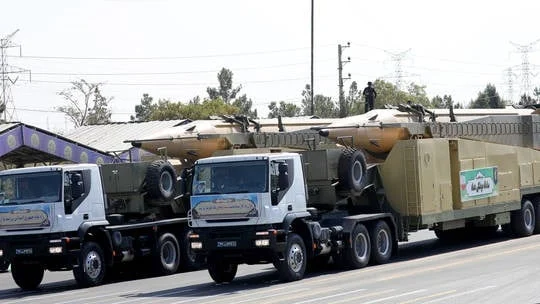
The United States Department of Defense and various intelligence agencies have expressed escalating concerns regarding the increasing effectiveness of the Iranian military in penetrating established air defense networks across the Middle East. According to internal assessments and reports from high-level officials, the technical proficiency of Tehran’s missile and drone programs has reached a threshold that poses a significant challenge to the United States’ regional security architecture. This alarm follows a series of high-stakes kinetic engagements, most notably a lethal strike on a military outpost in Jordan that resulted in the deaths of two American service members and left another missing, marking a grim milestone in the deteriorating security environment of the Levant.
For decades, the United States maintained a posture of relative air superiority and defensive dominance in the Middle East, relying on a sophisticated network of Patriot missile batteries, Terminal High Altitude Area Defense (THAAD) systems, and Aegis-equipped naval vessels. However, recent developments suggest that the technological gap is narrowing. Iranian engineers have transitioned from producing rudimentary, unguided rockets to deploying highly sophisticated, precision-guided ballistic missiles and loitering munitions capable of complex maneuvers. This evolution has forced a re-evaluation of US force protection strategies as the "invulnerability" of Western-aligned bases comes under scrutiny.
The Jordan Incident: A Turning Point in Regional Security
The recent attack in Jordan serves as a stark case study for the evolving threat. While Jordan has historically been viewed as a stable and relatively secure buffer zone—leading the Pentagon to relocate assets there from the Persian Gulf—the recent strike demonstrates that geographical distance no longer provides the sanctuary it once did. According to reports from the New York Times and the Wall Street Journal, the strike was not merely a matter of a lucky shot but rather a "sign that Iranian-backed forces not only possess an ample supply of munitions but have become significantly more adept at circumventing US air defense systems."
The Pentagon confirmed that the casualties occurred during a period of heightened regional tension, with the conflict between US-aligned forces and Iranian-backed groups reaching levels not seen in years. The loss of life in Jordan has intensified domestic pressure on the Biden administration to provide a more robust defensive framework or to take more direct action against the source of the munitions. The incident underscores a critical vulnerability: even the most advanced radar and interceptor systems can be overwhelmed by "saturation attacks" or bypassed by low-flying, high-speed projectiles that minimize detection time.
Technical Evolution of the Iranian Missile Arsenal
The core of Washington’s concern lies in the technical specifications of Iran’s newer missile classes, such as the Emad, the Fattah-1, and the Kheibar Shekan. The Emad, a liquid-fueled medium-range ballistic missile (MRBM), represents a significant leap in Iranian capability. Unlike older models, the Emad features a "maneuverable reentry vehicle" (MaRV). This technology allows the warhead to change its trajectory after re-entering the atmosphere, making it exceptionally difficult for traditional interceptors to calculate a collision point.
The Wall Street Journal, citing anonymous defense officials, noted that the Iranian military has "adapted to US defenses by firing missiles that move at extremely high speeds and can maneuver as they plunge toward Earth." This maneuverability is the primary factor in the reported "effectiveness" in penetrating air defenses. When a missile can alter its path in the terminal phase of its flight, it effectively negates the predictive algorithms used by systems like the MIM-104 Patriot.
Furthermore, Iran’s development of hypersonic technology—claimed with the unveiling of the Fattah missile—suggests an intent to render current missile defense systems obsolete. While Western analysts remain skeptical about the full extent of Iran’s hypersonic claims, the trend toward high-velocity, low-altitude, and maneuverable flight paths is undeniable. These characteristics reduce the "decision window" for US commanders, often leaving only seconds to identify, track, and attempt to intercept an incoming threat.
Strategic Relocation and the Illusion of Safety
In a strategic move initiated in early 2024, the Pentagon began shifting certain military assets and personnel from the United Arab Emirates (UAE) and Qatar toward Jordan and Israel. The rationale behind this shift was twofold: first, to de-escalate tensions in the immediate vicinity of the Persian Gulf, and second, to place troops in areas deemed "relatively safe" due to their distance from the Iranian mainland.
However, this strategy appears to have been based on an outdated assessment of Iranian reach. Daoud Kuttab, a prominent journalist and columnist for Al-Monitor, noted that while the US might have perceived Jordan as a safer haven, Tehran has demonstrated that it recognizes "no red lines" when it comes to its strategic objectives. The relocation of troops has, in some ways, simply moved the targets to a different theater without addressing the underlying vulnerability to long-range, precision strikes.
The NYT report highlights that the Pentagon’s campaign against the "Axis of Resistance"—a network of Iranian-aligned groups in Iraq, Syria, Lebanon, and Yemen—has struggled to keep pace with the sheer volume and variety of threats. The shift to Jordan was intended to provide a more stable operational base for regional surveillance and counter-terrorism, but the recent fatalities suggest that the "safe zones" of the past are now part of the active front line.
Analysis of Air Defense Challenges: The Cost and Quantity Gap
One of the most pressing issues facing US military planners is the economic and logistical disparity in missile warfare. Intercepting a relatively inexpensive Iranian-made drone or a tactical ballistic missile often requires the use of interceptors that cost millions of dollars per unit. A single Patriot PAC-3 interceptor can cost upwards of $4 million, whereas the drones and missiles being used by Iranian-backed groups may cost only a fraction of that amount.
This creates a "saturation vulnerability." By launching a swarm of low-cost drones alongside a few high-end ballistic missiles, Iran can force US defenses to deplete their interceptor stocks on less significant targets, leaving the base vulnerable to the primary strike. Military analysts refer to this as the "asymmetric cost-exchange ratio," and it is a strategy that Iran has perfected through its proxies in Yemen (the Houthis) and Iraq.
Moreover, the geographical layout of the Middle East presents unique challenges. Many US bases are situated in locations where the terrain or urban density can interfere with radar coverage, providing "blind spots" that Iranian-trained operators are increasingly skilled at exploiting. The use of "terrain-hugging" cruise missiles, which fly at low altitudes to stay below radar horizons, further complicates the defensive picture.
Official Responses and Geopolitical Implications
The White House and the Pentagon have maintained a firm public stance, emphasizing that the United States will take all necessary measures to protect its personnel. In the wake of the Jordan attack, President Joe Biden stated that the US "shall respond" at a time and place of its choosing, though the administration remains wary of a full-scale direct war with Iran.
In Tehran, the rhetoric has remained defiant. Iranian officials often frame their missile advancements as a purely defensive necessity, citing the presence of US bases surrounding their borders. However, the "maneuverable" nature of their newer weapons suggests a clear offensive capability designed to project power and deter Western intervention in regional affairs.
The broader implications of this technological shift are profound. If US air defenses are no longer perceived as an impenetrable shield, the diplomatic leverage of the United States in the Middle East may be diminished. Regional allies, such as Jordan, Saudi Arabia, and the UAE, may feel compelled to seek their own security arrangements or even pursue a "hedging" strategy between Washington and Tehran if they believe the US can no longer guarantee the safety of its own installations.
Chronology of Escalation (Late 2023 – Present)
- October 2023: Following the outbreak of the Gaza conflict, Iranian-backed militias in Iraq and Syria begin a systematic campaign of drone and rocket attacks against US bases.
- December 2023: The US increases its naval presence in the Red Sea to counter Houthi anti-ship ballistic missile attacks, marking the first time such weapons are used in combat.
- January 2024: The US military begins relocating assets from the Persian Gulf to the Levant, seeking to consolidate its defensive posture in Jordan and Israel.
- February 2024: A major escalation occurs with a direct strike on a facility in Jordan. The precision and timing of the strike suggest advanced intelligence and technical execution.
- Late February 2024: Reports emerge from the New York Times and Wall Street Journal detailing the Pentagon’s internal alarm regarding Iranian missile "maneuverability" and "evasion" capabilities.
Conclusion: A New Era of Missile Warfare
The situation in the Middle East has entered a dangerous new phase where the technological superiority of the United States is being actively challenged by a persistent and innovating adversary. The reports of Iranian missiles becoming "more mahir" (more proficient) at avoiding defenses are not merely tactical observations; they represent a strategic shift in the regional balance of power.
As the US military continues to investigate the failures that led to the casualties in Jordan, the focus will likely shift toward "Integrated Air and Missile Defense" (IAMD) upgrades. This involves not just better interceptors, but better sensor fusion, artificial intelligence to prioritize targets, and perhaps a more aggressive stance on "left-of-launch" operations—striking the missiles before they can ever be fired.
For now, the message from Tehran is clear: distance and traditional defenses are no longer a guarantee of safety. As the Pentagon adapts to this reality, the risk of miscalculation remains high, and the "gray zone" conflict between the US and Iran continues to teeter on the edge of a much larger conflagration. The effectiveness of Iranian weaponry has successfully shifted the calculus of American military presence in the region, forcing a transition from a posture of dominance to one of increasingly difficult defense.