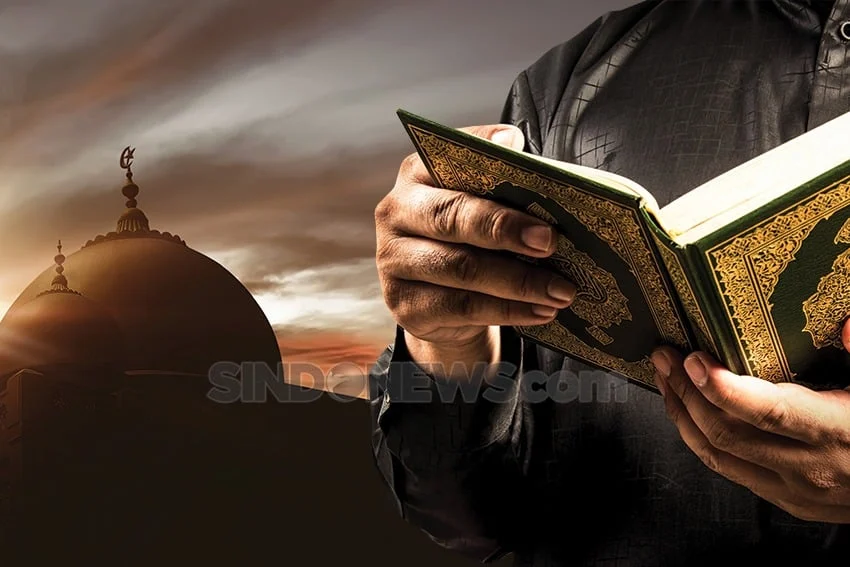
Surah Al-Baqarah, the second and longest chapter of the Quran, holds a position of unparalleled importance in Islamic theology and daily practice, with its final two verses, 285 and 286, carrying specific spiritual rewards and protections for the faithful. Known as the "The Heifer," this surah serves as a comprehensive guide covering law, morality, and the history of monotheism, but it is the concluding passage that scholars and practitioners highlight as a concentrated essence of Islamic creed and divine mercy. According to various prophetic narrations, these two verses were granted to the Prophet Muhammad under extraordinary circumstances, distinguishing them from much of the rest of the revelation. The Prophet is reported to have stated that whoever recites these two verses at night, they will be "sufficient" for him, a term that has sparked centuries of scholarly interpretation regarding its meaning, ranging from protection against evil to a replacement for the voluntary night prayer known as Qiyamullail.
The historical and theological framework of Surah Al-Baqarah is deeply rooted in the Medinan period of the Prophet Muhammad’s life, a time when the early Muslim community was transitioning from a persecuted minority to a structured society. While the surah as a whole addresses complex legalities—including fasting, pilgrimage, and financial transactions—it begins and ends with powerful declarations of faith. The final two verses, often referred to as "Amanar-Rasulu" after the opening words of verse 285, are unique because they were reportedly revealed during the Mi’raj, or the Night Journey, when the Prophet ascended to the heavens. Unlike other parts of the Quran brought by the Archangel Gabriel to Earth, Islamic tradition suggests these verses were given directly to the Prophet from a "treasure under the Throne of God" (‘Arash). This origin story underscores the weight and sanctity of the verses within the broader context of Islamic scripture.
The Prophetic Narrations and the Concept of Sufficiency
The primary evidence for the virtues of these verses comes from Sahih Bukhari and Sahih Muslim, the most authentic collections of Hadith. Abu Mas’ud al-Ansari reported that the Prophet Muhammad said, "If anyone recites the two verses at the end of Surah Al-Baqarah at night, they will be enough for him." The word "enough" (kafatahu) has been analyzed extensively by classical scholars such as Imam al-Nawawi and Ibn Hajar al-Asqalani. Some interpret this to mean they provide protection against any harm or evil spirits during the night. Others suggest that the reward for reciting these verses is equivalent to the reward of performing the night prayer (Tahajjud), particularly for those who are unable to wake up for the late-night vigil.
Furthermore, a narration by Abu Umamah highlights the broader excellence of Surah Al-Baqarah alongside Surah Ali ‘Imran. These two chapters are collectively referred to as "Al-Zahrawan," or the Two Bright Flowers. The Prophet described them as appearing on the Day of Judgment like two clouds, two shades, or two flocks of birds in ranks, shielding those who recited them frequently in this life. The specific mention of the final verses within this context emphasizes a spiritual "fortress" built through recitation. The Prophet’s instruction to "read Surah Al-Baqarah, for taking it is a blessing and leaving it is a grief, and the magicians cannot confront it," serves as a cornerstone for the belief that these verses provide a supernatural defense against sorcery and malevolent influences.
Chronology of Revelation and Theological Depth
To understand the impact of verses 285 and 286, one must look at the verses that immediately precede them. Verse 284 mentions that God knows everything in the hearts of men and will hold them accountable for their thoughts. Historical accounts suggest that when this verse was revealed, the Companions of the Prophet felt an overwhelming sense of fear, worrying that they would be punished for passing thoughts they could not control. They came to the Prophet in distress, kneeling and expressing their inability to bear such a burden.
In response to their sincerity and submission, God revealed the final two verses as a relief and a formalization of the Islamic creed. Verse 285 confirms the faith of the Messenger and the believers, establishing the pillars of belief: God, His angels, His books, and His messengers. It emphasizes the unity of the prophetic message, stating, "We make no distinction between any of His messengers." This verse serves as a declaration of total surrender to the Divine Will.
The final verse, 286, provides the ultimate theological comfort by stating, "Allah does not charge a soul except with that within its capacity." This principle of "Lā yukallifullāhu nafsan illā wus‘ahā" became a fundamental maxim in Islamic jurisprudence (Fiqh), ensuring that religious obligations remain within the realm of human possibility. The verse concludes with a series of supplications asking for forgiveness, mercy, and victory over those who reject faith, effectively turning the end of the longest surah into an intimate prayer between the creator and the created.
Supporting Data and Scholarly Analysis
Linguistic analysis of the Arabic text in these verses reveals a rhythmic and rhyming structure that differs from the legalistic tone of the middle of the surah. This shift is intended to facilitate memorization and emotional connection. Data from educational institutions across the Muslim world indicate that "Amanar-Rasulu" is among the most frequently memorized passages of the Quran, often taught to children immediately after the shorter chapters of the 30th Juz (Para).
Scholars point out that the "sufficiency" of these verses also extends to psychological well-being. In a modern context, the recitation of verse 286 is often used in pastoral care to alleviate anxiety and feelings of being overwhelmed. By affirming that God does not burden a soul beyond what it can bear, the verse acts as a spiritual cognitive-behavioral tool, reinforcing resilience and hope.
From a structural perspective, the placement of these verses is significant. Surah Al-Baqarah begins with the statement "This is the Book about which there is no doubt, a guidance for those conscious of Allah." It ends with a prayer for help and guidance, creating a perfect thematic circle. The beginning defines the path, the middle provides the laws for the journey, and the end provides the spiritual provisions and the prayer for success.
Practical Application in Contemporary Muslim Life
In daily practice, the final two verses of Al-Baqarah are integrated into several "Adhkar" (litanies of remembrance). It is a common tradition in many Muslim households to recite these verses before sleeping. This practice is not merely ritualistic but is viewed as a form of spiritual insurance. In congregational settings, especially in South Asia, Southeast Asia, and parts of the Middle East, these verses are often recited collectively after the Isha (night) prayer or during special gatherings known as "Majalis."
The impact of these verses is also seen in the realm of "Ruqyah" (spiritual healing). Practitioners of traditional Islamic medicine frequently use these verses as a means of seeking God’s protection for individuals suffering from nightmares, insomnia, or psychological distress. The belief that "the magicians cannot confront it" gives the verses a prominent place in the discourse regarding the "unseen" (Al-Ghaib), providing a sense of security to the faithful in a world they perceive as being inhabited by both physical and metaphysical challenges.
Broader Implications and Spiritual Resilience
The enduring relevance of the end of Surah Al-Baqarah lies in its ability to address the universal human condition of struggle and the need for divine support. By concluding the Quran’s most comprehensive legislative chapter with a prayer for mercy, the text suggests that while laws and structures are necessary for society, they are ultimately secondary to God’s grace and human humility.
The analytical implication of this is profound: Islamic law (Sharia) is framed by mercy. The fact that the longest surah in the Quran—which contains the most laws—ends with a plea for ease and a reminder of human limits suggests that the spirit of the law is intended to be one of facilitation rather than hardship. This perspective is vital for contemporary interpretations of Islam, providing a scriptural basis for moderate and compassionate approaches to faith.
Furthermore, the "sufficiency" mentioned in the Hadith can be seen as a spiritual shortcut. In a world where people are increasingly busy and may struggle to maintain lengthy nightly rituals, the Prophet provided a brief yet potent alternative. This reflects the "Yusr" (ease) that is a core characteristic of the Islamic tradition. By spending just two minutes reciting these verses, a believer is promised a level of protection and reward that would otherwise require hours of standing in prayer.
In summary, the final two verses of Surah Al-Baqarah represent more than just a conclusion to a chapter; they are a spiritual manifesto. They encapsulate the entirety of Islamic belief, offer a psychological balm for the weary, and provide a protective shield for the vulnerable. Their unique origin, coupled with the explicit promises of reward from the Prophet, ensures that they remain a focal point of Muslim devotion, bridging the gap between complex theology and the simple, heartfelt prayer of a believer seeking peace in the night. As the Prophet Muhammad indicated, for those who seek closeness to the Divine and safety from the trials of life, these two verses are indeed enough.