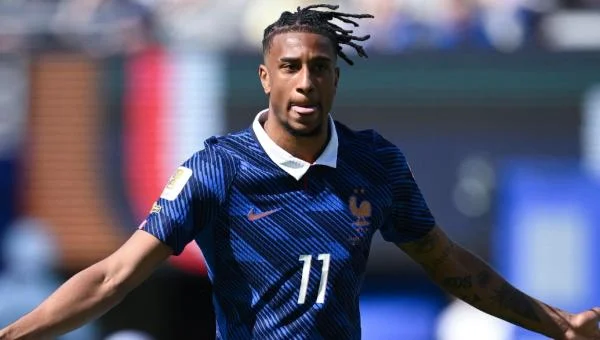
Michael Olise’s decision to represent the French national team over the English national team has been clarified, with former Crystal Palace manager Patrick Vieira revealing the player’s direct assertion that his chances of winning the World Cup with Les Bleus were significantly greater. Olise, a dynamic winger currently plying his trade for Bayern Munich, has become an integral part of Didier Deschamps’ squad, amassing 26 appearances and playing a crucial role in France’s campaign at the 2026 World Cup.
Despite France’s eventual elimination in the semi-finals, succumbing to Spain in Dallas, Olise’s performances throughout the tournament solidified his reputation as one of the world’s elite attackers. His contributions were vital, underscoring the strategic foresight behind his international allegiance.
A Multifaceted International Eligibility Landscape
Olise’s path to international football was far from straightforward, marked by a rich tapestry of eligible nations. Born in White City, West London, he possessed a clear claim to represent England, the country where he spent his formative years and nurtured his burgeoning football career. This connection included a significant period spent within the esteemed youth academies of Arsenal, Chelsea, and Manchester City, institutions renowned for developing top-tier talent. His early development in England provided a strong foundation, making the Three Lions a natural consideration.
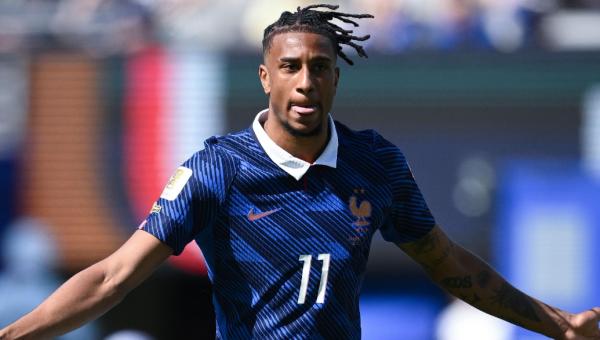
However, Olise’s heritage opened up a broader spectrum of international possibilities. Through his father’s lineage, he was also eligible to play for Nigeria, a nation with a passionate footballing culture and a history of producing skillful wingers. Furthermore, his maternal background provided avenues to represent Haiti and Algeria, adding further layers to his international eligibility. The allure of France, his eventual choice, stemmed from a complex interplay of perceived opportunity and national pride.
The "World Cup Dream" as a Deciding Factor
Patrick Vieira’s revelation sheds light on the core motivation behind Olise’s preference for France. The former Crystal Palace manager, who worked closely with Olise during his tenure at the club, stated that the player himself expressed a strong belief that a World Cup triumph was more attainable with the French squad. This statement suggests a calculated assessment of the national teams’ current strengths, potential for future success, and the competitive landscape of international football.
France, as a perennial powerhouse in international football, has a documented history of World Cup success, having lifted the coveted trophy in 1998 and 2018. Their consistent presence in the latter stages of major tournaments, coupled with a deep pool of talent, naturally positions them as strong contenders. Olise’s perspective, as articulated by Vieira, indicates he saw himself as a key component in a French machine geared towards achieving the ultimate global footballing prize.
The 2026 World Cup, which saw France reach the semi-finals, served as a significant stage for Olise to demonstrate his capabilities. His performances, marked by electrifying runs, precise dribbling, and crucial attacking contributions, validated his belief and that of his national team. Even in defeat against Spain, a testament to the high calibre of competition, Olise emerged as one of the tournament’s standout performers, further cementing his status and the validity of his choice.

The England Dilemma: A Competitive Field and Perceived Opportunities
While Olise’s potential for England was undeniable, the path to consistent selection within the Three Lions squad presented its own unique challenges. England boasts an exceptionally deep and talented pool of wingers and attacking midfielders, including established stars and emerging talents. Players like Bukayo Saka, Phil Foden, Jadon Sancho (prior to his move to the USA), and others have consistently vied for starting positions and significant game time.
For Olise, the prospect of breaking into a starting XI already rich with world-class options might have appeared more formidable compared to the opportunities within the French setup at the time of his decision. While he possessed the individual quality, the tactical integration and the perceived pathway to regular starts could have been factors influencing his choice. The desire for guaranteed playing time, especially in the lead-up to major tournaments, is a crucial consideration for any ambitious player.
Furthermore, the historical context of French football, with its emphasis on flair, technical ability, and a strong attacking philosophy, might have resonated more with Olise’s playing style. The French league, Ligue 1, has a reputation for nurturing creative and dynamic forwards, a tradition that France’s national team often embodies.
The Strategic Implications of Olise’s Allegiance
Michael Olise’s commitment to France carries significant implications for both national teams. For France, it represents the successful integration of a highly promising talent into an already formidable squad. His presence adds depth and versatility to their attacking options, potentially influencing their tactical approaches and providing crucial match-winning moments. The continued development of players like Olise is vital for France’s sustained success on the international stage and their pursuit of future titles.

For England, Olise’s decision, while a loss, also serves as a stark reminder of the competitive nature of international football and the importance of proactively engaging with dual-eligible players. The Three Lions will undoubtedly continue to monitor and develop their existing talent pool, while also focusing on ensuring that other promising players with multiple allegiances feel a strong connection and see a clear pathway to representing England.
A Look Ahead: Continued Development and Future Prospects
Michael Olise’s career trajectory at Bayern Munich and with the French national team is expected to be closely watched. His performances in the Bundesliga and in subsequent international competitions will be crucial in shaping his legacy. The decision to choose France, driven by the ambition of winning a World Cup, places him at the heart of a team with a proven track record and a clear vision for success.
The narrative surrounding Olise’s international choice highlights the complex decision-making processes that elite footballers face. It underscores the importance of not only individual talent but also strategic considerations regarding team strength, perceived opportunities, and the ultimate ambition of achieving the highest accolades in the sport. As Olise continues to evolve as a player, his choice to wear the French colours will be intrinsically linked to his pursuit of football’s most coveted prize. The footballing world will be keenly observing whether his calculated decision leads him and France to World Cup glory in the years to come.