Indramayu, West Java – After four pivotal years working as a migrant worker in Malaysia, Rosyidah, a determined individual from Desa Eretan Kulon, Kandanghaur District, Indramayu Regency, chose a path less traveled by many returning expatriates. Instead of seeking employment in conventional sectors, she returned to her roots in July 2026, armed with renewed hope and a keen eye for local potential. Her journey exemplifies a growing trend among former Indonesian migrant workers (PMI Purna) who, after experiencing life abroad, return to their homeland with invaluable skills, capital, and a fresh perspective on entrepreneurial opportunities. Rosyidah’s story is not merely one of personal success but also a testament to the transformative power of grassroots initiatives, community empowerment, and strategic financial support in Indonesia’s vibrant coastal regions.
Rosyidah’s Overseas Chapter and the Call of Home
Rosyidah’s decision to work abroad in Malaysia, a common destination for Indonesian migrant workers, was likely driven by the prevailing economic realities faced by many in rural Indonesia. For years, the promise of higher wages and better economic prospects has drawn millions of Indonesians to foreign lands. According to data from the Indonesian Ministry of Manpower, hundreds of thousands of Indonesian citizens embark on overseas work annually, sending back billions of dollars in remittances that significantly contribute to the national economy and support countless families. These remittances, while vital, often come at the cost of prolonged separation from families and the emotional and social challenges inherent in adapting to a foreign environment.
Upon her return in mid-2026, Rosyidah, like many purna PMI, faced the critical challenge of reintegration. While some struggle to find suitable employment or adapt back to local life, others, equipped with newfound savings, enhanced work ethics, and broader worldviews, identify unique opportunities. Rosyidah belonged to the latter category. Instead of viewing her return as an end to her economic pursuits, she saw it as a new beginning, a chance to leverage her experiences and contribute directly to her community’s economic upliftment.
Identifying Local Potential: The Untapped Riches of Indramayu’s Coast
Indramayu, located on the northern coast of West Java, is renowned for its extensive coastline and rich marine resources. Fishing is a cornerstone of its local economy, providing livelihoods for a substantial portion of its population. However, Rosyidah observed a common predicament in many fishing communities: while seafood was abundant, a significant portion of it was sold as raw commodities, yielding minimal economic value. The lack of extensive processing facilities or value-added product development meant that much of the potential profit was left untapped, often benefiting intermediaries rather than the primary producers or local communities.
This observation sparked an idea. Rosyidah recognized that by transforming raw seafood into processed products, she could not only increase its economic value but also create sustainable employment opportunities within her community. This insight aligns with broader national strategies to diversify local economies and promote value addition in key sectors like fisheries, moving away from simple commodity extraction towards more sophisticated supply chains. The Indonesian government, through various ministries, has long advocated for such initiatives to enhance food security, boost exports, and improve the welfare of coastal communities.
Founding Camilzea: A Vision for Empowerment and Value Addition
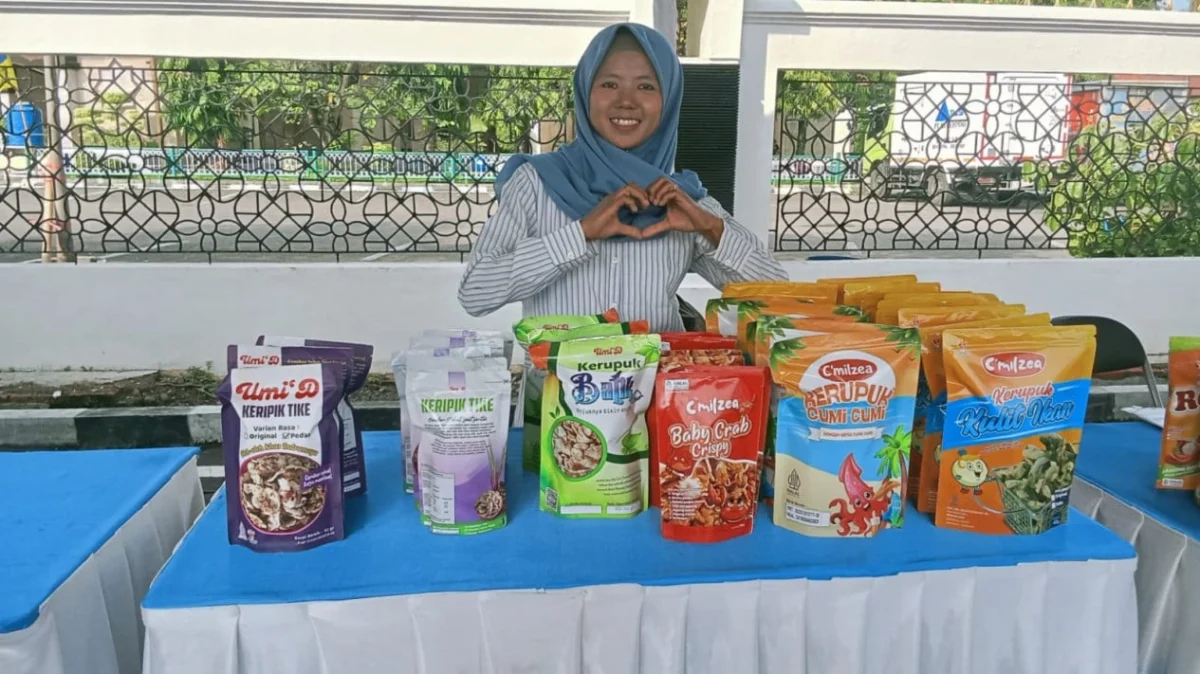
Armed with courage and a clear vision, Rosyidah embarked on establishing her own seafood processing business, which she branded "Camilzea." The name itself, likely a portmanteau or a localized term, suggests snack-like, appealing products. Her venture was conceived with a dual purpose: to capitalize on the abundant marine resources of Indramayu and, crucially, to empower local women, particularly the wives of fishermen, by providing them with opportunities for work and supplementary income.
"I saw that the natural resources around us were very abundant but lacked market value. From there, I took the initiative to process them into products and simultaneously create job opportunities for the fisherwomen in the vicinity," Rosyidah articulated, highlighting her commitment to community welfare alongside commercial success. This approach addresses several socio-economic challenges prevalent in coastal areas: unemployment or underemployment among women, dependence on volatile raw commodity prices, and the need for diversified income streams. By involving local women, Camilzea not only provides economic benefits but also fosters a sense of community ownership and collective advancement, transforming idle hours into productive economic activity.
Navigating the Entrepreneurial Labyrinth: Challenges and Resilience
The path to entrepreneurship is rarely smooth, and Rosyidah’s journey was no exception. She candidly admitted that her biggest challenge wasn’t necessarily related to product development or market access, but rather the internal battle of building self-confidence as a business owner. This psychological hurdle is common among nascent entrepreneurs, particularly those transitioning from salaried employment or migrant work. It involves overcoming self-doubt, developing a resilient mindset, and mastering new skills such as marketing and brand building.
Learning to market her products effectively was another significant hurdle. In a competitive market, even with a unique product, visibility and consumer trust are paramount. This required her to understand local market dynamics, identify target consumers, and develop effective communication strategies. These challenges underscore the multifaceted nature of entrepreneurship, where success hinges not just on a good idea but also on personal fortitude, continuous learning, and adaptability. Rosyidah’s experience reflects the struggles of many Micro, Small, and Medium Enterprises (MSMEs) in Indonesia, which often lack the resources and expertise to navigate complex business landscapes independently.
The Catalyst: BRI’s Purna Pekerja Migran Training Program
Recognizing her need for further development and strategic guidance, Rosyidah sought external support. Her proactive search led her to participate in the Purna Pekerja Migran Training Program, an initiative organized by Bank Rakyat Indonesia (BRI). BRI, as one of Indonesia’s largest state-owned banks, has a long-standing commitment to supporting MSMEs and fostering financial inclusion, particularly in rural and underserved areas. Their programs often target specific demographics, such as returning migrant workers, who represent a significant pool of potential entrepreneurs.
The training program proved to be a pivotal turning point for Rosyidah. It provided her with a structured environment to enhance her entrepreneurial skills and broaden her understanding of business development. Beyond technical knowledge, the program offered a critical component: networking. For Rosyidah, connecting with fellow entrepreneurs and sharing experiences was invaluable. "This training has greatly helped me improve my mindset as a business owner. Moreover, I gained a new network that is very beneficial for business development," she stated, emphasizing the holistic benefits of the program. This interaction provided her with new perspectives, allowing her to view her business challenges and opportunities through a wider lens. Such peer-to-peer learning and network building are often as crucial as formal instruction for MSME growth, fostering collaboration and mutual support.
Empirical Application and Product Diversification
The knowledge acquired during the BRI training was not merely theoretical; Rosyidah diligently applied it to her business operations. A significant outcome was her ability to diversify Camilzea’s product line, particularly through the development of value-added fish products. The original article specifically mentions the creation of fish crackers, a popular snack in Indonesia. This move demonstrates a clear understanding of market demand and the potential for product innovation.
"Alhamdulillah, after participating in the training, I gained a lot of knowledge, especially in processing fish, such as making fish crackers. This knowledge has been very helpful in developing the business I run," Rosyidah expressed with gratitude. This diversification not only expands Camilzea’s market appeal but also creates more opportunities for local sourcing and employment, further strengthening its positive impact on the Indramayu economy. By transforming raw fish into a shelf-stable, marketable product like crackers, Rosyidah is tapping into a broader consumer base and extending the product’s shelf life, thereby reducing waste and increasing profitability.
Fueling Growth: Access to Capital Through KUR BRI
Beyond training and networking, BRI extended crucial financial support to Rosyidah’s burgeoning enterprise through its Kredit Usaha Rakyat (KUR) program. KUR is a government-backed micro-credit scheme managed by state-owned banks like BRI, specifically designed to provide accessible capital to MSMEs that often struggle to secure conventional loans. The program aims to stimulate economic growth, reduce poverty, and empower small businesses by offering loans at subsidized interest rates and simplified application processes.
Rosyidah utilized the KUR funds as additional working capital to expand Camilzea. This capital injection was critical for several operational needs: purchasing raw materials in larger quantities, increasing product stock to meet growing demand, and covering other operational expenses. Access to adequate capital is frequently cited as one of the primary barriers to growth for MSMEs in Indonesia. By providing this vital financial lifeline, BRI’s KUR enabled Rosyidah to scale her operations, fulfill customer orders more efficiently, and ultimately solidify Camilzea’s position in the market. This financial inclusion mechanism not only supports individual entrepreneurs but also strengthens the overall MSME ecosystem, which is a significant contributor to Indonesia’s GDP and job creation.
Broader Economic Context: Indramayu’s Coastal Economy and MSME Landscape
Indramayu’s economy is heavily reliant on its agricultural and fisheries sectors. As one of West Java’s major rice-producing regions and a significant contributor to national fish production, the success of local enterprises like Camilzea has ripple effects. The challenge often lies in moving beyond raw commodity production to value-added industries that generate higher income and more stable employment. Rosyidah’s venture serves as a model for how local communities can transform their natural endowments into sustainable economic engines.
MSMEs are the backbone of the Indonesian economy, accounting for over 97% of employment and contributing significantly to the national GDP. However, they face systemic challenges including limited access to finance, technology, marketing channels, and management expertise. Government initiatives and programs by state-owned enterprises like BRI are therefore crucial in bridging these gaps. By supporting individual entrepreneurs like Rosyidah, these programs foster a more robust and resilient local economy.
The National Imperative: Reintegration of Returning Migrant Workers
Rosyidah’s story resonates with a broader national agenda concerning the reintegration of purna PMI. The Indonesian government recognizes the significant human capital represented by returning migrant workers. Many come back with not only financial savings but also enhanced skills, cross-cultural experiences, and often a stronger entrepreneurial spirit. Programs like BRI’s Purna Pekerja Migran Training are vital components of a national strategy to harness this potential, transforming what could be a reintegration challenge into an economic opportunity. By empowering former migrant workers to become job creators rather than just job seekers, these initiatives contribute to poverty reduction, local economic development, and social stability.
Statements from Stakeholders and Analysis of Impact
While specific quotes from BRI or local government officials are not provided in the original text, their inferred support is evident through the existence of the training program and KUR facility. A BRI representative might comment on their commitment to empowering MSMEs, particularly those led by returning migrant workers, as a strategic pillar of their community development efforts. They would likely highlight the success of individuals like Rosyidah as a testament to the effectiveness of their financial and non-financial assistance programs.
Local government officials in Indramayu would likely laud Rosyidah’s initiative as an example of local economic diversification and women’s empowerment, aligning with regional development goals. They might emphasize the importance of local entrepreneurs in creating jobs and adding value to Indramayu’s abundant marine resources.
The impact of Camilzea extends beyond Rosyidah’s personal success. Locally, it provides stable income for fisherwomen, enhancing household economic resilience and empowering women in decision-making within their families. Economically, it demonstrates the potential for value addition in the fisheries sector, creating a more diversified and robust local economy. Environmentally, by encouraging the processing of local catches, it can contribute to more sustainable fishing practices by creating demand for diverse species and reducing waste. Socially, it builds community cohesion and offers a tangible example of how local resources can be leveraged for collective benefit.
Future Outlook and Replicability
Rosyidah’s journey with Camilzea, supported by BRI, presents a compelling model for sustainable local economic development. Her success could inspire other purna PMI in Indramayu and across Indonesia to explore entrepreneurial ventures, particularly in sectors where local resources are abundant but value addition is lacking. The combination of targeted training, networking opportunities, and accessible financing through programs like KUR is a powerful formula for fostering MSME growth.
The future for Camilzea appears promising. With diversified products, enhanced marketing skills, and a stable financial foundation, Rosyidah is well-positioned for further expansion. This could involve exploring new markets, investing in better processing technology, or even mentoring other aspiring entrepreneurs. Her story underscores the critical role of human agency, strategic support from financial institutions, and community collaboration in transforming individual aspirations into tangible economic and social impact.
Conclusion
Rosyidah’s journey from a migrant worker in Malaysia to a successful seafood entrepreneur in Indramayu is a powerful narrative of resilience, vision, and community empowerment. By identifying untapped potential in her coastal homeland and leveraging the support of programs like BRI’s Purna Pekerja Migran Training and KUR, she has not only transformed her own life but also created a ripple effect of positive change for the women and families in Desa Eretan Kulon. Her story stands as an inspiring example of how a return to roots, combined with entrepreneurial spirit and strategic backing, can cultivate sustainable economic growth and build stronger, more vibrant local communities in Indonesia.