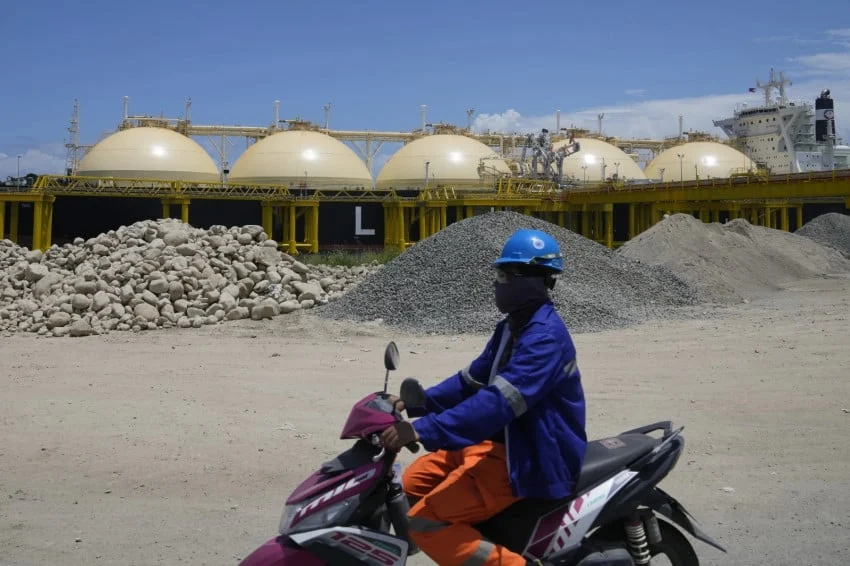
The global energy landscape is facing an unprecedented crisis as liquefied natural gas (LNG) supplies have plummeted by approximately 20%, a direct consequence of an escalating conflict involving Iran that has severely disrupted vital shipping lanes. The International Energy Agency (IEA) reported this alarming contraction, marking a dramatic reversal from previous growth trends and signaling a potential catastrophe for energy-dependent economies worldwide. The primary bottleneck, according to the IEA, is the Strait of Hormuz, a critical maritime chokepoint through which a significant portion of the world’s LNG, alongside crude oil, traverses. The disruption of distribution through this strategic waterway has not only depressed production but has also fundamentally altered market dynamics, shifting from robust expansion to a sharp and concerning contraction.
The IEA’s stark assessment, released on Thursday, April 30, 2026, highlighted that each month without uninterrupted LNG shipments through the Strait of Hormuz results in an estimated loss of 10 billion cubic meters (bcm) of supply. This substantial deficit has compelled the agency to revise downwards its demand outlook for major importing regions, casting a long shadow over global energy security and economic stability. The current situation represents a severe downturn from the nearly 17% growth in LNG supply recorded as recently as January of this year, underscoring the rapid deterioration of market conditions. This sharp decline is further exacerbated by a confluence of factors, including adverse weather patterns, persistently high energy prices, and the implementation of demand-saving policies across various nations.
The Geopolitical Catalyst: Strait of Hormuz Under Pressure
The Strait of Hormuz, a narrow waterway connecting the Persian Gulf with the Arabian Sea and the Gulf of Oman, is unequivocally the world’s most important oil transit choke point. Approximately one-fifth of global oil consumption and a substantial portion of the world’s LNG supply pass through it daily. Its strategic importance cannot be overstated, particularly for countries in Asia and Europe heavily reliant on Middle Eastern energy exports. The current "Iran conflict," while not fully detailed in its specific events, has evidently escalated to a point where maritime security in the Strait has been compromised, leading to significant delays, re-routing, or outright cessation of shipments. This inferred escalation has introduced an element of profound uncertainty and risk that shipping companies and energy traders are struggling to navigate.
Historically, the Strait of Hormuz has been a flashpoint for geopolitical tensions. Past incidents, including tanker attacks and naval confrontations, have repeatedly underscored its vulnerability. However, the current situation appears to be more severe and sustained, impacting the reliable flow of LNG specifically. Analysts suggest that the nature of the conflict, perhaps involving direct threats to commercial shipping or heightened naval activity, has made transit exceedingly perilous, forcing a de-facto blockade or extreme caution among carriers. The immediate consequence is a physical bottleneck, preventing LNG from reaching its intended destinations and thereby creating an artificial scarcity in a market that relies on seamless, predictable delivery.
IEA’s Alarming Assessment and Supply Deficit
The International Energy Agency, an autonomous intergovernmental organization established in the wake of the 1973 oil crisis, is a key global authority on energy statistics and policy. Its report serves as a critical barometer for the health of global energy markets. The IEA’s finding of a 20% drop in global LNG supply is not merely a statistical anomaly; it represents a significant structural shock to the system. To put 10 bcm per month into perspective, this figure is roughly equivalent to the annual gas consumption of a medium-sized European country or a substantial fraction of Japan’s yearly LNG imports. Over a quarter, approximately 27%, of the world’s total LNG trade traverses the Strait of Hormuz annually, highlighting the disproportionate impact of any disruption.
Prior to this crisis, the global LNG market was experiencing a period of robust growth, fueled by increasing demand from Asia and Europe’s post-Ukraine war efforts to diversify away from Russian pipeline gas. January’s almost 17% growth in LNG supply had pointed towards a resilient and expanding market capable of meeting rising global energy needs. The sudden shift to a 20% contraction within a mere three months illustrates the fragility of the global energy supply chain when confronted with acute geopolitical instability in critical regions. The IEA’s downward revision of demand outlooks for major importing regions is a direct acknowledgment that the supply crunch is so severe that even demand, usually a driver of growth, will be artificially suppressed due to unavailability and exorbitant costs.
Global Supply Chain Disruption and Price Volatility
The physical disruption at the Strait of Hormuz has cascading effects throughout the global energy supply chain. LNG cargoes that would typically traverse the Suez Canal and the Strait of Hormuz are now forced to undertake significantly longer and more expensive journeys around the Cape of Good Hope, adding weeks to transit times and substantially increasing fuel costs and insurance premiums. This re-routing alone creates delays that effectively reduce available supply in the market. Furthermore, the uncertainty surrounding future shipments has led to a speculative frenzy in spot markets, driving LNG prices to unprecedented levels. Futures contracts are also seeing significant upward pressure, reflecting market participants’ fears of prolonged shortages.
Major LNG producers, including Qatar, a key exporter through the Strait, face immense logistical challenges. While some might attempt to reroute or delay shipments, the sheer volume of gas involved makes such adjustments difficult and costly. Long-term contracts, which typically underpin LNG trade, are under strain as sellers may face force majeure clauses or struggle to meet delivery schedules, potentially leading to disputes and further market instability. The global fleet of LNG carriers, while substantial, is not infinitely flexible, and extended voyages tie up vessels for longer periods, effectively reducing global shipping capacity at a time of heightened demand for alternative routes. This combination of physical blockage, increased transit times, and skyrocketing costs is creating a perfect storm for global energy markets.
Impact on Key Importing Regions, Especially Asia
The ripple effects of the LNG supply crisis are most acutely felt in energy-importing nations, particularly those in Asia. Countries like Japan, South Korea, China, and India are heavily reliant on LNG to fuel their industries, generate electricity, and heat homes. For instance, Japan and South Korea, which lack significant domestic fossil fuel resources, depend on imported LNG for a substantial portion of their energy mix. A 20% global supply drop, coupled with disruptions from the Middle East, translates directly into critical energy shortages and economic instability for these nations.
In response to the crisis, several Asian nations are reportedly implementing drastic measures. These include aggressive demand-saving policies, such as energy rationing for industrial users, public appeals for reduced consumption, and even rolling blackouts in some areas to manage grid stability. There is also a renewed push for fuel switching, where possible, reverting to dirtier but more readily available alternatives like coal and fuel oil for power generation. While this provides a short-term reprieve from gas shortages, it comes at a significant environmental cost, undermining efforts to combat climate change. The IEA, with its 32 member countries and 13 associate countries, notes that this diverse group is collectively grappling with these dynamics, highlighting the global reach of the crisis. Europe, which significantly increased its LNG imports post-2022 to replace Russian pipeline gas, is also vulnerable, although its supply diversity might offer a slightly larger buffer than some Asian nations. However, any global LNG crunch inevitably impacts European prices and availability.
Reactions and Policy Responses
The escalating crisis has triggered urgent reactions from governments and international bodies. While specific statements are inferred, it is highly probable that energy ministers from IEA member and associate countries are holding emergency sessions to coordinate responses. Public statements from national leaders would likely emphasize national energy security, the need for immediate diplomatic solutions to the conflict, and calls for international cooperation to stabilize energy markets.
The IEA itself, beyond its initial report, would likely be engaged in continuous monitoring, providing updated forecasts, and advising member states on crisis management strategies. This could include advocating for coordinated strategic energy reserve releases, promoting demand-side management, and exploring all diplomatic avenues to de-escalate the conflict and ensure the safe passage of commercial shipping through the Strait of Hormuz.
Major energy companies, caught between contractual obligations and logistical impossibilities, would likely be issuing force majeure notices, revising their earnings forecasts, and seeking alternative supply arrangements, however costly. Shipping insurers would have undoubtedly hiked premiums for voyages through the Gulf region, reflecting the elevated risk profile, further contributing to the cost of energy. Maritime security organizations and naval forces from global powers would also likely be on heightened alert, potentially increasing their presence in the region to deter further disruptions, although any direct military intervention carries its own significant risks.
The Economic Fallout
The economic implications of a prolonged 20% drop in global LNG supply are profound and far-reaching. At a macro level, the surge in energy prices will inevitably fuel inflation, impacting manufacturing costs, transportation, and ultimately, consumer prices for a wide range of goods and services. Industries heavily reliant on natural gas, such as chemicals, fertilizers, and certain manufacturing sectors, face increased operational costs or even production curtailments, potentially leading to job losses and economic slowdowns.
For consumers, higher energy bills for heating and electricity will reduce disposable income, dampening overall economic activity. Governments may be forced to implement subsidies or relief packages, adding pressure to national budgets already strained by post-pandemic recovery efforts. The instability could also deter foreign investment in energy-dependent economies, further exacerbating long-term growth prospects. The specter of stagflation—high inflation coupled with stagnant economic growth—looms large over the global economy.
Long-Term Energy Security Outlook and Energy Transition
This crisis serves as a stark reminder of the inherent vulnerabilities in a globalized energy system, particularly when critical supply routes are susceptible to geopolitical conflict. In the long term, this event will undoubtedly accelerate efforts towards greater energy independence and diversification. Nations that have been slow to invest in renewable energy sources, nuclear power, or domestic energy production may now prioritize these initiatives with renewed urgency.
While the immediate need for fuel switching might temporarily increase reliance on fossil fuels like coal, the crisis is likely to reinforce the strategic imperative of the energy transition. Reducing reliance on volatile fossil fuel markets by expanding renewable energy capacity, investing in energy storage, and improving energy efficiency will be seen not just as environmental mandates but as crucial components of national security. Furthermore, countries may re-evaluate their energy procurement strategies, favoring suppliers with more stable geopolitical environments or exploring innovative solutions like floating LNG terminals to enhance import flexibility. The incident will also likely spark renewed debate on the resilience of global supply chains and the need for greater international cooperation in managing energy crises.
Chronology of Escalation (Inferred)
- Late 2025: Initial reports of heightened tensions in the Persian Gulf region, possibly related to naval exercises or political rhetoric.
- January 2026: Global LNG supply records robust growth of nearly 17%, reflecting strong demand and stable market conditions.
- February 2026: Isolated incidents involving commercial shipping near the Strait of Hormuz are reported, attributed to "unidentified actors," leading to minor disruptions and initial insurance premium hikes.
- Early March 2026: The "Iran conflict" escalates significantly, with more frequent and severe disruptions to shipping in the Strait of Hormuz. Major shipping companies begin advising caution or rerouting vessels.
- Mid-March 2026: LNG cargoes begin experiencing substantial delays or are forced to take the longer route around the Cape of Good Hope. Spot LNG prices start to surge.
- April 2026: The cumulative effect of sustained disruptions becomes evident, leading to a significant contraction in global LNG supply. Energy-importing nations initiate demand-saving measures and explore fuel switching.
- April 30, 2026: The International Energy Agency releases its critical report, confirming a 20% drop in global LNG supply and warning of an impending energy market crisis.
The current global energy market predicament, characterized by a substantial drop in LNG supply due to geopolitical tensions impacting the Strait of Hormuz, is a severe test for international cooperation and energy resilience. The IEA’s warning underscores the urgent need for diplomatic resolution of conflicts, enhanced maritime security, and accelerated diversification of energy sources and supply routes to mitigate the profound economic and social consequences of such disruptions. The path forward remains uncertain, but the lessons learned from this crisis will undoubtedly shape global energy policy for years to come.